


Outdoor activities for child development are crucial in fostering well-rounded growth. They offer physical exercise, mental stimulation, and social interaction that indoor environments often lack. In today’s sedentary world, promoting outdoor play has never been more important. Activities like running, climbing, and exploring nature enhance motor skills, boost cognitive abilities, and nurture emotional resilience. Dr. Richard Louv, author of Last Child in the Woods, states, “Nature inspires wonder and learning.” These experiences not only improve physical health but also build essential life skills like problem-solving and teamwork. Outdoor activities ensure a balanced foundation for every child’s overall development. But what are the Top outdoor activities for child development? Let’s explore these enriching activities and how they benefit children of all ages.
What is Outdoor Activities
Outdoor activities are any physical or recreational tasks performed in open, natural environments. These activities play a crucial role in child development by promoting physical, emotional and cognitive development. According to Dr. Richard Louv, author of Last Child in the Woods, “Time spent outdoors helps children connect with nature and develop essential life skills.” Walking, playing sports, gardening, and birdwatching improve motor skills, enhance problem-solving abilities, and boost creativity.
Moreover, outdoor play encourages social interaction, fostering teamwork and communication skills. Transitioning from indoor to outdoor settings exposes children to fresh air and sunlight, essential for health. Additionally, outdoor activities inspire curiosity and resilience as children explore and overcome challenges in natural settings. From fostering a love for nature to building lifelong skills, outdoor activities are vital for holistic growth. Engaging in them ensures a well-rounded development for every child.
Why Outdoor Activities is Crucial for Child Development
Outdoor play is essential for a child’s growth, offering unique learning experiences that indoor settings cannot replicate. As Dr. Maria Montessori wisely noted, “Play is the child’s work.” Furthermore, outdoor activities for child development boost creativity, problem-solving skills, and resilience. For example, running, climbing, or engaging in group games enhances gross motor skills. In addition, exposure to nature sharpens sensory awareness, introducing new sights, sounds, and textures. Moreover, outdoor play fosters social interaction, encouraging teamwork and communication. Ultimately, these experiences contribute to a child’s holistic development, nurturing their cognitive, physical, and emotional well-being.
Additionally, outdoor play improves focus and reduces stress. Dr. Richard Louv, author of Last Child in the Woods, explains, “Nature inspires wonder and learning,” fostering curiosity and emotional well-being. These experiences not only nurture cognitive, social, and emotional growth but also ensure a well-rounded foundation for children. Moreover, from building strong muscles to enhancing coordination and decision-making, outdoor play offers countless benefits. In addition, transitioning outdoors truly enriches a child’s development, creating opportunities for exploration, connection, and essential life skills. Furthermore, by engaging in outdoor activities, children improve coordination, boost cognitive abilities, and develop problem-solving skills. Consequently, outdoor play becomes a vital component in fostering overall well-being and lifelong learning including:
- Physical Development: Strengthening muscles, improving balance, and boosting endurance.
- Cognitive Development: Enhancing problem-solving skills, creativity, and focus.
- Social-Emotional Development: Encouraging cooperation, empathy, and emotional regulation.
Benefits of Outdoor Play: In a Chart
Here’s a more detailed and effective breakdown of why outdoor play is crucial for child development, presented in a structured chart format:
| Developmental Aspect | Benefits of Outdoor Play |
|---|---|
| Physical Development | – Strengthens muscles and bones through running, jumping, and climbing. |
| – Improves balance, coordination, and motor skills. | |
| – Boosts cardiovascular health and overall fitness. | |
| – Enhances sensory development by engaging with different textures, sights, and sounds. | |
| Cognitive Development | – Encourages problem-solving skills through obstacle courses and exploratory play. |
| – Boosts creativity and imagination with open-ended outdoor games. | |
| – Enhances focus and concentration by reducing screen time distractions. | |
| – Promotes critical thinking through hands-on learning experiences like gardening. | |
| Social-Emotional Development | – Fosters teamwork and communication skills through group activities and cooperative play. |
| – Encourages empathy and sharing when interacting with peers. | |
| – Strengthens emotional resilience by overcoming challenges in outdoor environments. | |
| – Reduces stress and anxiety, promoting overall mental well-being. |
Let’s dive into the Top outdoor activities that support these developmental milestones.
Nature Walks and Hiking
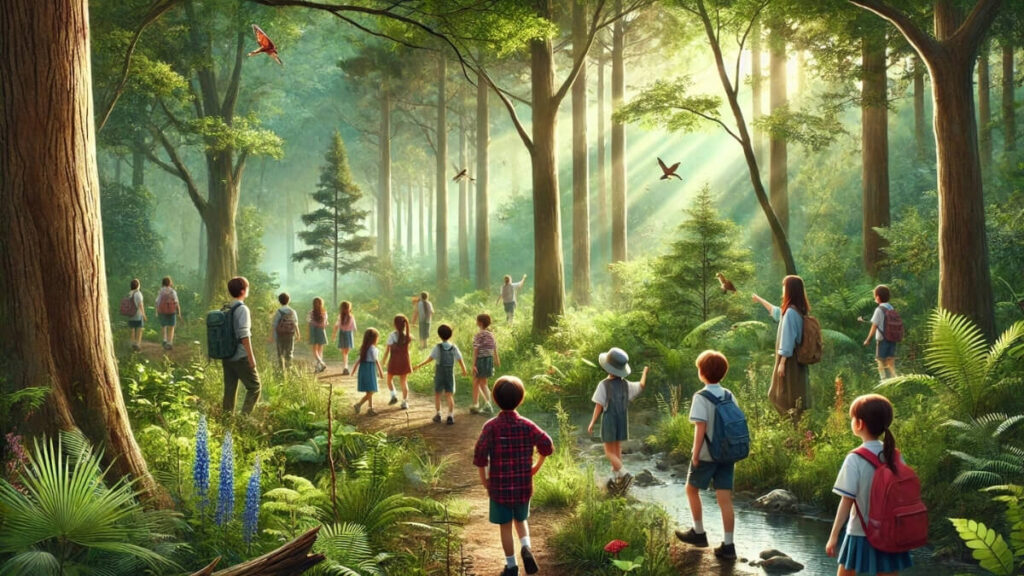
Nature walks and hiking offer children much more than physical exercise. They provide opportunities to explore, observe, and spark curiosity. Dr. Scott Sampson, author of How to Raise a Wild Child, states, “Exposure to nature fosters wonder and deepens connections to the world.” While walking, children improve gross motor skills by navigating uneven terrain. Additionally, they develop sensory awareness through new sights, sounds, and textures. Exploring plants and animals enhances observational skills and knowledge. Moreover, spending time outdoors reduces stress and boosts mental well-being. Transitioning into nature allows children to grow physically, mentally, and emotionally in a holistic way. Nature walks can help children develop:
- Gross motor skills: Walking, climbing, and navigating different terrains improves muscle coordination.
- Sensory awareness: Exposure to new sights, sounds, and smells enhances sensory development.
- Emotional benefits: Spending time outdoors has been shown to reduce stress and improve overall well-being.
Tip: Add a scavenger hunt to a nature walk. Ask children to find specific items like a pinecone, a bird feather, or a rock. This will spark their curiosity and make the activity more engaging.
Playground Activities

Playground activities offer children a perfect environment for growth, fostering social, emotional and physical development. Dr. Stuart Brown, founder of the National Institute for Play, emphasizes, “Play is not just an activity; it’s a profound biological process.” Climbing, swinging, and sliding improve strength, balance, and coordination. Additionally, interacting with peers on the playground teaches communication and teamwork. These activities also build emotional resilience as children face and overcome challenges. Furthermore, playgrounds encourage imaginative play, sparking creativity and problem-solving. Transitioning from structured indoor settings to open playground spaces allows children to explore, grow, and thrive in multifaceted ways.
- Physical development: Climbing structures and swinging help develop strength, balance, and coordination.
- Social skills: Interacting with other children on the playground teaches teamwork, sharing, and conflict resolution.
- Emotional regulation: Overcoming small challenges like climbing a wall or trying a new slide boosts confidence and resilience.
Tip: Encourage children to try new equipment on the playground to push their boundaries and develop new physical skills.
Outdoor Sports
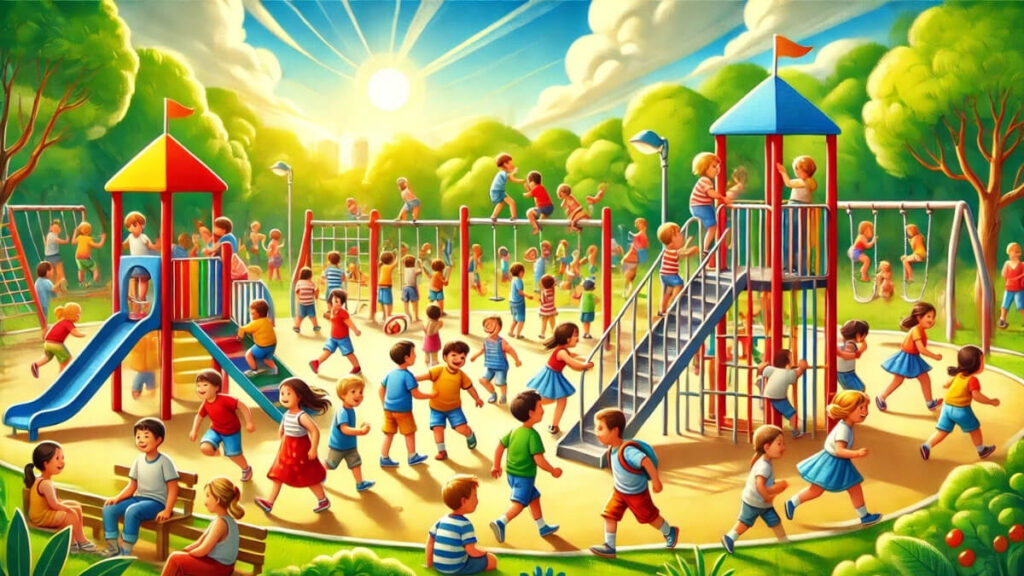
Outdoor sports are essential for a child’s overall development, blending physical activity with valuable life skills. Dr. Jean Cote, a leading sports psychologist, states, “Participation in sports promotes teamwork, leadership, and social connections.” Activities like soccer, basketball, or even a simple game of tag enhance motor skills, including coordination and balance. Additionally, outdoor sports improve cognitive abilities by teaching children to strategize and think quickly. Playing in teams fosters collaboration, communication, and empathy. These activities also build emotional resilience as children learn to handle wins and losses. Transitioning into Outdoor sports like soccer, basketball, or even simple games of tag or catch are fantastic for child development. These activities enhance:
- Motor skills: Dribbling a ball, running, and jumping all contribute to improved hand-eye coordination.
- Cognitive skills: Sports teach children to think quickly, plan, and strategize.
- Teamwork and communication: Playing in a team environment encourages cooperation, leadership, and social interaction.
Tip: Create opportunities for friendly competitions, emphasizing fun and teamwork over winning. This helps children focus on the joy of the activity.
Gardening and Nature Exploration
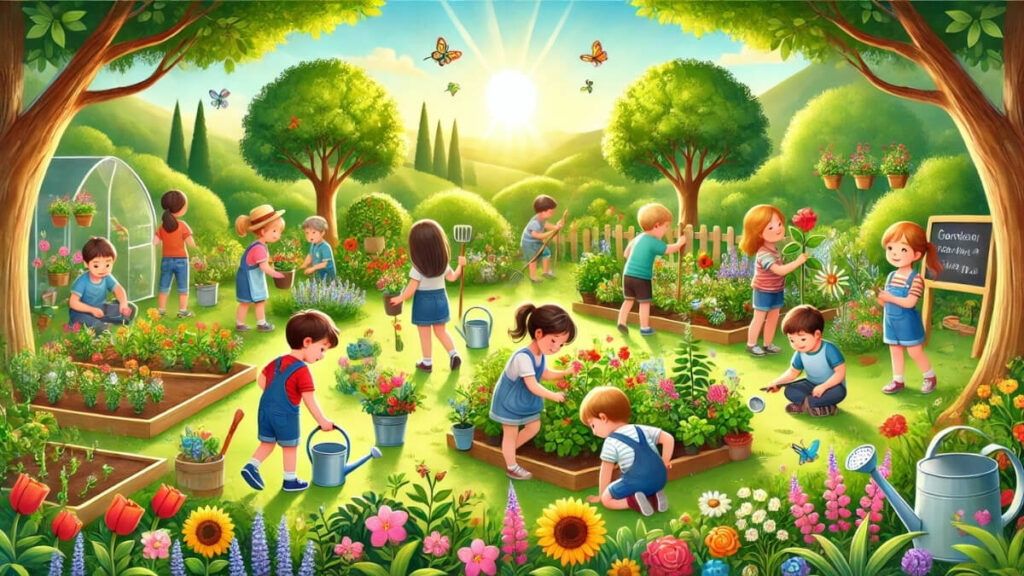
Gardening and nature exploration provide children with hands-on learning experiences that nurture growth and curiosity. Dr. Sue Stuart-Smith, author of The Well-Gardened Mind, states, “Gardening connects us to nature and fosters resilience.” Planting seeds, watering, and weeding improve fine motor skills while teaching responsibility. Children also gain knowledge about plant life cycles, weather, and ecosystems, enriching their understanding of science. Exploring soil, insects, and flowers sparks curiosity and enhances sensory development. Additionally, gardening reduces stress and promotes mindfulness. Transitioning into this activity helps children develop patience, environmental awareness, and a sense of accomplishment, all while having fun outdoors. Activities like planting seeds, watering plants, and observing growth foster:
- Cognitive skills: Understanding plant growth teaches patience and cause-and-effect relationships.
- Sensory development: Touching soil, smelling flowers, and seeing vibrant colors engage the senses.
- Emotional development: Gardening promotes mindfulness and calmness.
Tip: Start with easy-to-grow plants like sunflowers or beans, so children can see the results of their efforts quickly.
Water Play

Water play is an engaging outdoor activity that combines fun with developmental benefits. Dr. Heather Jenkin, a child development specialist, states, “Sensory play, like water activities, supports cognitive, physical, and social growth.” Splashing, pouring, and experimenting with water improves fine motor skills and hand-eye coordination. Additionally, water play fosters creativity and problem-solving as children explore concepts like buoyancy and volume. Socially, it encourages teamwork and communication when playing with peers. Moreover, the calming effect of water helps reduce stress and anxiety. Transitioning into water play allows children to learn, relax, and build essential skills while enjoying nature. Whether it’s playing with sprinklers, filling water balloons, or exploring a stream, water activities help:
- Fine and gross motor development: Filling, pouring, and splashing water improve hand-eye coordination and muscle control.
- Cognitive development: Water play encourages problem-solving skills as children learn about water flow and changes in volume.
- Socialization: Water games often involve group play, teaching children how to interact and collaborate with peers.
Tip: Introduce simple water-based experiments, such as testing how different objects float or sink, to spark curiosity about science.
Biking and Scootering
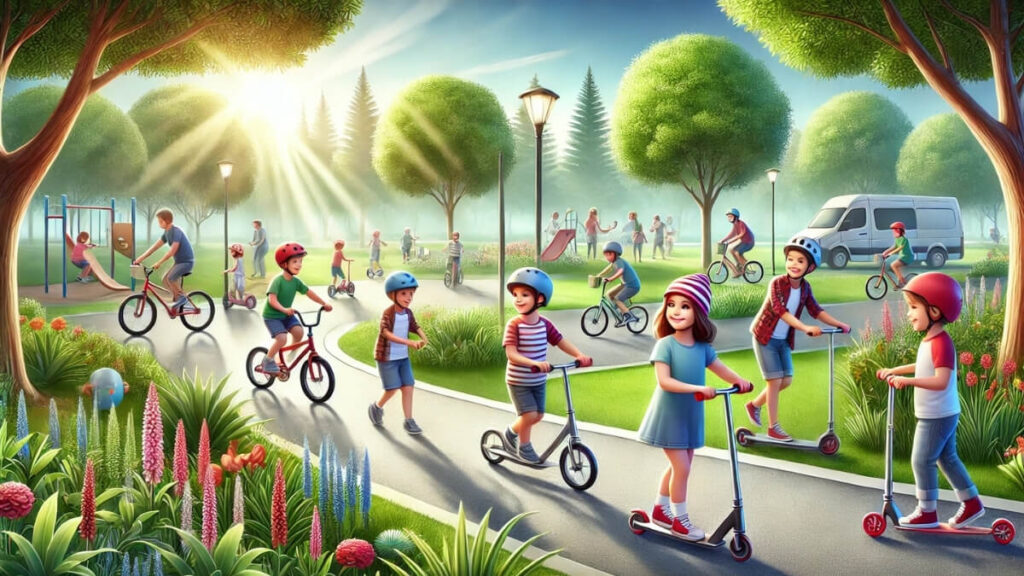
Biking and scootering are exciting outdoor activities that promote physical health and skill development. Dr. Angela Hanscom, author of Balanced and Barefoot, notes, “Outdoor movement strengthens coordination, balance, and confidence in children.” Riding bikes or scooters improves gross motor skills and builds endurance. It also enhances spatial awareness and decision-making as children navigate paths or avoid obstacles. Socially, group rides foster teamwork and communication. Additionally, these activities boost independence and resilience as children master new challenges. Transitioning to biking or scootering helps children stay active, develop essential life skills, and enjoy the freedom of outdoor exploration. These activities provide:
- Physical benefits: Riding a bike or scooter strengthens leg muscles and improves balance and coordination.
- Cognitive skills: Learning to navigate paths and avoid obstacles promotes spatial awareness.
- Independence: Cycling allows children to explore their environment independently, fostering confidence.
Tip: Start with short rides in safe, low-traffic areas, and gradually increase the distance as children gain confidence and skill.
Team Games and Obstacle Courses
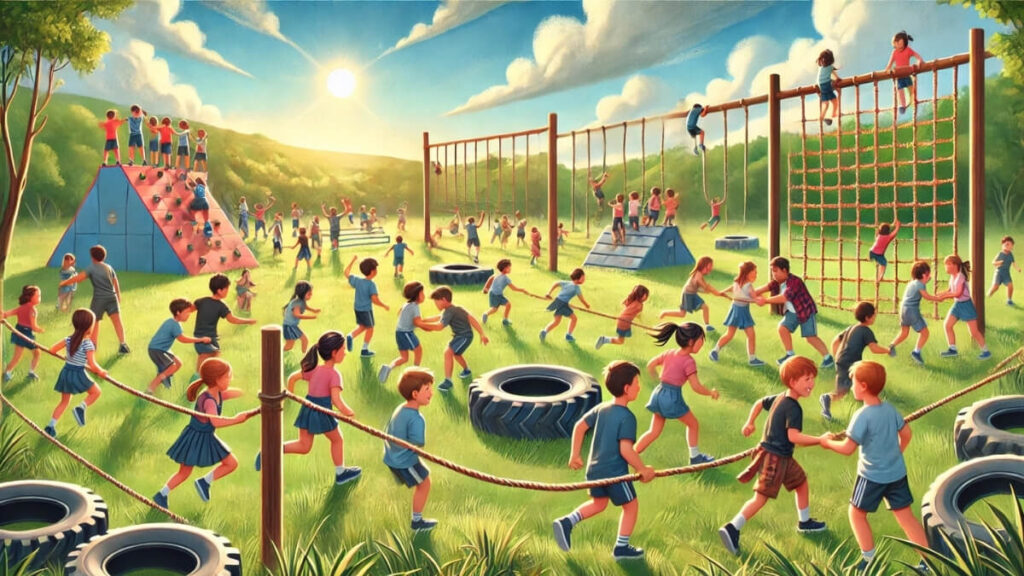
Team games and obstacle courses are dynamic outdoor activities that enhance multiple aspects of child development. Dr. Amanda Gummer, a child psychologist, emphasizes, “Team play nurtures cooperation, problem-solving, and emotional intelligence.” Games like relay races or dodgeball teach teamwork, communication, and leadership. Obstacle courses improve physical skills such as balance, agility, and coordination. Additionally, these activities encourage creative thinking as children strategize to complete tasks. Socially, they build camaraderie and empathy among participants. Overcoming challenges fosters resilience and boosts confidence. Transitioning to team games and obstacle courses ensures children grow physically, socially, and emotionally while having fun outdoors. These activities offer:
- Motor skills: Navigating an obstacle course improves agility and body control.
- Social skills: Working as a team in group games enhances communication and cooperation.
- Emotional benefits: Completing an obstacle course or winning a race builds self-esteem and resilience.
Tip: Create obstacle courses with household items or natural materials, such as logs or rocks, to encourage creativity and problem-solving.
Camping Adventures
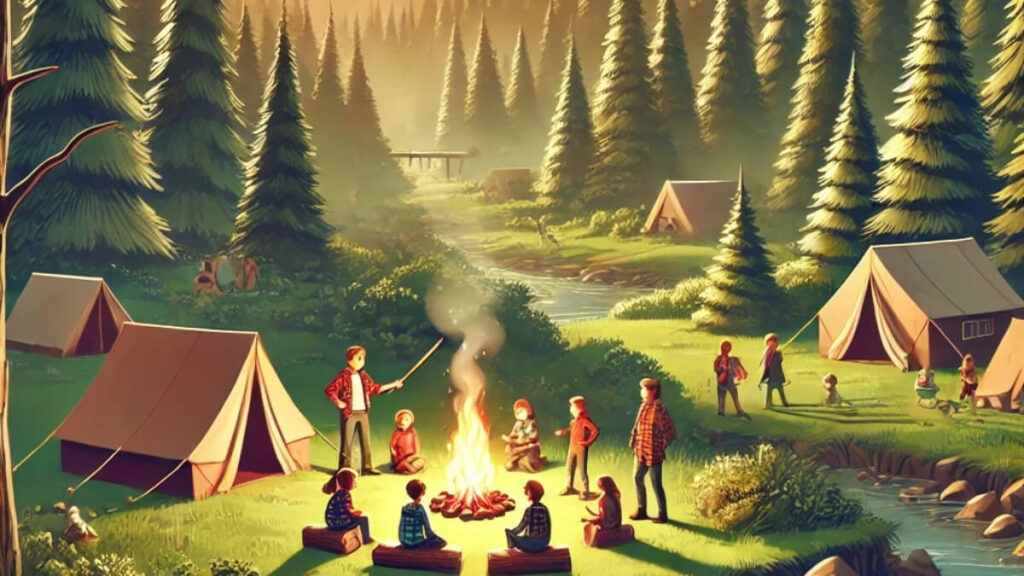
Camping adventures provide children with unique opportunities for growth and exploration. Dr. Scott Sampson, author of How to Raise a Wild Child, states, “Immersing children in nature fosters wonder and lifelong learning.” Setting up tents, building fires (with supervision), and cooking outdoors teach problem-solving and independence. Hiking and gathering wood improve physical fitness and coordination. Additionally, camping connects children to the natural world, boosting environmental awareness and mindfulness. The experience also strengthens family bonds through shared tasks and stories. Transitioning into camping adventures allows children to develop essential life skills, resilience, and a lasting appreciation for the outdoors. Benefits include:
- Survival skills: Setting up a tent, building a fire (with adult supervision), and cooking outdoors foster independence and problem-solving.
- Physical activity: Hiking, gathering firewood, or exploring the area builds endurance and strength.
- Connection to nature: Camping provides a unique opportunity for children to appreciate and respect the environment.
Tip: Engage children in planning the camping trip, from packing essentials to selecting camp activities. This helps them feel involved and excited.
Treasure Hunts
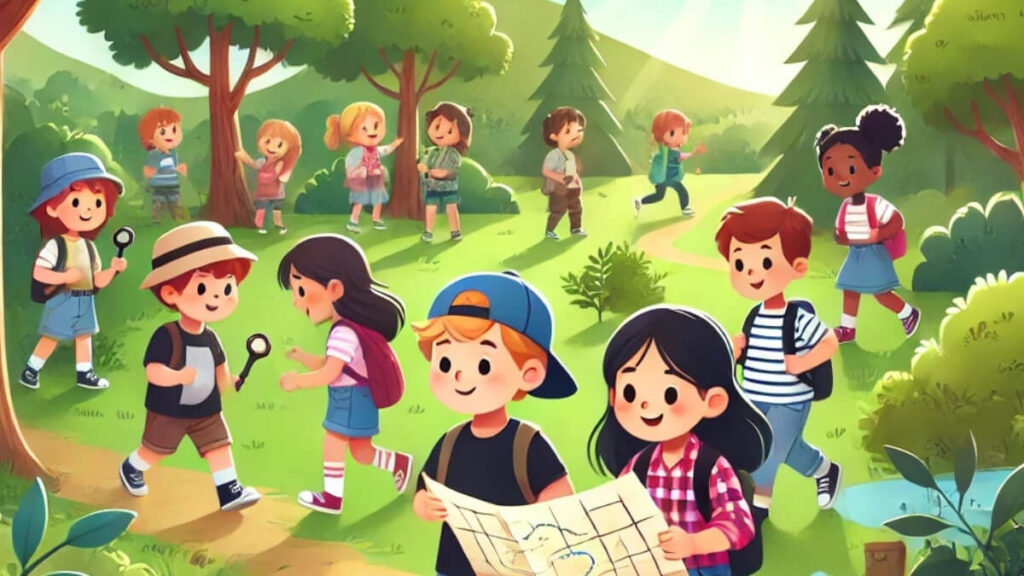
Treasure hunts are thrilling outdoor activities that not only spark curiosity but also foster learning in various ways. Dr. Peter Gray, author of Free to Learn, emphasizes, “Self-directed play, like treasure hunts, nurtures creativity and problem-solving.” Moreover, searching for hidden items encourages critical thinking and sharpens observational skills. In addition to mental stimulation, physical movement such as running and climbing helps build motor skills and improves endurance. Socially, group hunts further enhance teamwork and communication as children collaborate to solve clues. Furthermore, the joy of discovery boosts confidence and strengthens emotional resilience. By transitioning to treasure hunts, children gain a fun and engaging way to develop critical skills while enjoying memorable outdoor adventures. Treasure hunts promote:
- Critical thinking: Solving clues and navigating a map encourages problem-solving and logical reasoning.
- Physical fitness: Running and searching for items keep children active and engaged.
- Teamwork: Group hunts enhance cooperation and communication.
Tip: Tailor the difficulty of the hunt to the child’s age, and include educational clues related to nature, math, or geography for added learning.
Animal Observation and Birdwatching

Animal observation and birdwatching are excellent outdoor activities that encourage curiosity and patience in children. Dr. Richard Louv, author of Last Child in the Woods, emphasizes, “Spending time in nature strengthens children’s connection to the natural world.” As children observe wildlife, they gradually enhance their focus and attention to detail. Furthermore, identifying animals and birds fosters a deeper understanding of ecosystems and biodiversity. These activities also build patience and promote critical thinking as children wait and watch for animals. Moreover, spending time in nature supports emotional well-being and promotes calmness. Transitioning into animal observation and birdwatching nurtures environmental appreciation and develops essential life skills. Benefits include:
- Cognitive development: Identifying species and learning about their habitats enriches knowledge of biology and ecology.
- Focus and patience: Observing animals in their natural environment improves attention span and mindfulness.
- Emotional growth: Spending time in nature fosters a sense of peace and connection with the world.
Tip: Equip children with binoculars and a simple field guide to identify birds or animals. Keep a journal to record sightings, and drawings, or describe the observed wildlife.
Ways to Engage Children in Outdoor Activities
Engaging children in outdoor activities is essential for their holistic development. Dr. Maria Montessori once said, “Play is the work of the child.” To begin with, starting with simple outdoor options like nature walks or bike rides sparks curiosity while improving physical coordination. Additionally, structured activities such as scavenger hunts or outdoor storytelling not only make playtime engaging but also enhance cognitive and language skills. According to Dr. Peter Gray, author of Free to Learn, “Self-directed play nurtures creativity and problem-solving.” Moreover, team games like relay races or treasure hunts encourage cooperation, communication, and strategic thinking. At the same time, introducing gardening fosters responsibility as children learn patience while caring for plants. As Dr. Richard Louv, author of Last Child in the Woods, explains, “Spending time in nature strengthens children’s connection to the world.”
As children grow comfortable with outdoor play, transitioning to adventurous activities like camping or obstacle courses further boosts resilience, problem-solving, and motor skills. Furthermore, weekend camping trips provide opportunities for children to learn survival skills, build confidence, and develop independence. Meanwhile, obstacle courses enhance coordination while encouraging perseverance. According to Dr. John Ratey, author of Spark: The Revolutionary New Science of Exercise and the Brain, “Physical activity primes the brain for learning.” Likewise, engaging in creative activities such as painting landscapes or constructing nature-inspired crafts fosters self-expression. Notably, outdoor sports like soccer or basketball promote teamwork and discipline. Ultimately, these enriching experiences not only contribute to physical and mental well-being but also cultivate essential life skills, ensuring a strong foundation for lifelong learning.
Ways to Engage Children in Outdoor Activities: In a Chart
Here’s a structured chart detailing effective ways to engage children in outdoor activities:
| Strategy | Description |
|---|---|
| Make It a Routine | Set a daily or weekly schedule for outdoor play to create consistency. |
| Create Fun Challenges | Introduce scavenger hunts, obstacle courses, or nature quests to add excitement. |
| Incorporate Favorite Toys | Bring bikes, balls, kites, or outdoor-friendly toys to make playtime engaging. |
| Explore New Locations | Visit parks, nature trails, or beaches to keep activities fresh and interesting. |
| Encourage Group Activities | Organize team games, playdates, or family outings for social interaction. |
| Join in the Fun | Actively participate in activities to set a positive example and increase engagement. |
| Mix Learning with Play | Integrate educational elements like birdwatching, gardening, or rock collecting. |
| Limit Screen Time | Reduce indoor digital distractions to motivate children to play outside more. |
| Use Outdoor-Themed Rewards | Offer incentives like nature badges or outdoor adventure journals for participation. |
How Outdoor activitics Boost child Growth
Outdoor activities significantly boost a child’s growth by enhancing physical, cognitive, and social development. Running, climbing, and biking strengthen muscles and improve coordination, while problem-solving in nature fosters critical thinking. Additionally, outdoor play reduces stress and increases focus, supporting emotional well-being. Engaging in group activities also promotes teamwork and communication. As children explore nature, they develop resilience and confidence, ensuring well-rounded growth in a fun and interactive way.
In conclusion, engaging in top outdoor activities for child development boosts growth by enhancing physical, cognitive, and emotional skills. These activities promote creativity, teamwork, and resilience. By encouraging outdoor play, children gain essential life skills for holistic development. Transitioning outdoors ensures a healthier, happier, and more balanced childhood experience.
Outdoor activities promote physical, cognitive, and emotional growth by improving motor skills, boosting creativity, enhancing problem-solving abilities, and fostering social interaction. They also help reduce stress, build resilience, and increase focus, all while providing a healthy connection to nature.
Activities like running, climbing, and playing sports strengthen muscles, improve coordination, and enhance balance. Furthermore, these exercises engage large muscle groups, promoting gross motor skills, boosting endurance, and helping children develop better body control and agility.
Hiking, bike riding, gardening, sports, and outdoor games like tag or hide-and-seek not only provide physical exercise but also enhance motor skills and coordination. Moreover, these activities encourage social interaction, boost creativity, and strengthen a child’s connection with nature.

4 Comments
Transitioning into Outdoor sports like soccer, basketball, or even simple games of tag or catch are fantastic for child development.
Outdoor activities like hiking, cycling, and team sports enhance physical health, social skills, and creativity. Nature play boosts cognitive growth and overall well-being.
Outdoor activities like running, cycling, and playing sports help boost a child’s physical health, social skills, and cognitive development. They also encourage creativity and teamwork.
The blog post explore improve physical health but also build essential life skills like problem-solving and teamwork.