


A balanced diet is the cornerstone of a child’s health and development. Proper nutrition fuels their physical growth, supports cognitive function, and boosts emotional resilience. With a diet rich in fruits, vegetables, whole grains, proteins, and healthy fats, children can thrive academically and stay active. A balanced diet also strengthens the immune system, reduces the risk of chronic diseases, and promotes overall well-being. By making mindful food choices, parents and caregivers play a crucial role in ensuring children receive the essential nutrients they need to grow and succeed in life.
But what exactly is a balanced diet for children? In this guide, explore its key components, benefits, and practical tips to ensure children receive the nutrition they need.
What Is a Balanced Diet for Children?
A balanced diet for children includes all the essential nutrients in the right proportions to fuel their physical and cognitive growth. Dr. Sarah Krieger, a registered dietitian, explains, “Children need a variety of foods to ensure proper development. Each nutrient plays a critical role.” This diet includes fruits, vegetables, whole grains, proteins, and dairy. Fruits and vegetables supply vitamins and fiber. Whole grains provide sustained energy. Proteins build muscles and repair tissues, while dairy ensures strong bones. Healthy fats, like those in avocados and nuts, aid brain development. Dr. Mary Story, a nutrition expert, highlights, “Balanced meals set the foundation for lifelong health.” Consistency is key. Offer small portions of new foods alongside familiar ones. Limit sugary snacks and processed meals.
Remember, good nutrition shapes a child’s future. Make balanced meals a priority to help children grow, learn, and thrive.
It consists of the five food groups:
Fruits and Vegetables – Packed with vitamins, minerals, and fiber.
Grains – A primary source of energy, offering carbohydrates and essential nutrients.
Proteins – Crucial for muscle development and tissue repair.
Dairy or Dairy Alternatives – Rich in calcium for strong bones and teeth.
Healthy Fats – Supports brain development and energy storage.
Why Is a Balanced Diet Essential for Children?
A balanced diet is essential for children as it fuels their physical and cognitive development. Dr. Mary Story, a renowned nutritionist, emphasizes, “Proper nutrition fuels a child’s development, learning, and overall health.” Nutrients like vitamins from fruits and vegetables strengthen immunity, while proteins support muscle growth and repair. Whole grains provide sustained energy, and healthy fats aid brain development. Dr. Sarah Krieger adds, “Healthy eating habits formed early ensure lifelong wellness.” Balanced meals not only prevent health issues but also boost focus and emotional resilience. By prioritizing nutrition, caregivers empower children to grow, learn, and thrive every day.
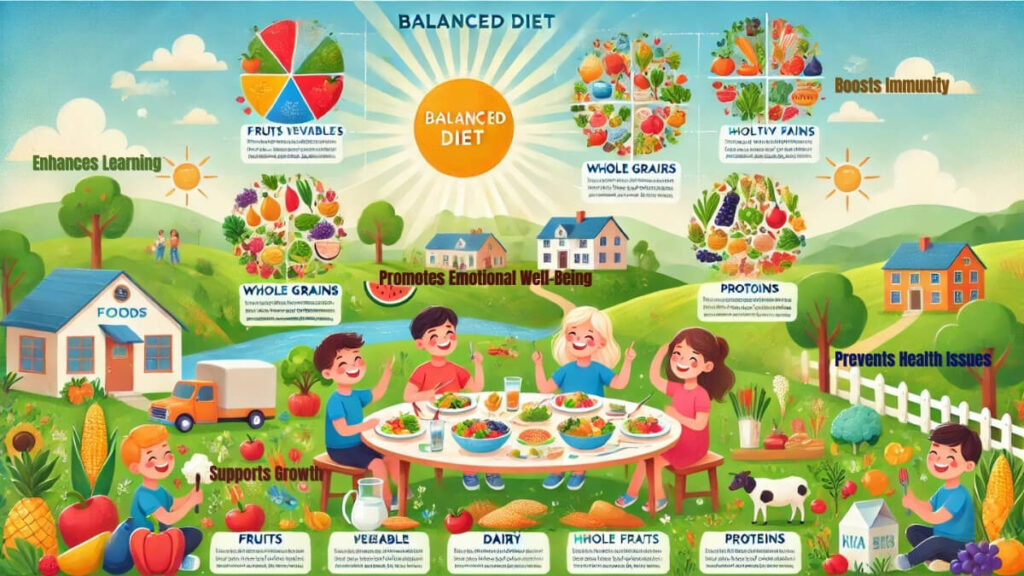
Supports Growth
A balanced diet is essential for children as it provides the building blocks for healthy bones, muscles, and organs. Dr. Mary Story highlights, “Good nutrition lays the foundation for strong bones, healthy muscles, and well-functioning organs.” Key nutrients like calcium strengthen bones, while proteins support muscle repair and growth. Vitamins and minerals play a vital role in enhancing organ health and overall functioning. Dr. Sarah Krieger adds, “Every meal contributes to a child’s physical and cognitive growth.” By prioritizing balanced meals, caregivers ensure children grow stronger, stay healthier, and reach their full developmental potential.
Boosts Immunity
A balanced diet is essential for boosting a child’s immunity. Dr. Mary Story explains, “Nutrient-rich foods help strengthen the immune system, protecting children from illness.” Vitamins and minerals from fruits, vegetables, and whole grains play a key role in immune function. For example, vitamin C from citrus fruits helps fight infections, while zinc supports immune cells. Dr. Sarah Krieger adds, “A well-rounded diet gives the body the tools it needs to ward off illness.” By providing a variety of nutrient-dense foods, parents can help build a strong immune system, ensuring their child stays healthier and better protected against sickness.
Enhances Learning
A balanced diet is essential for enhancing a child’s learning and cognitive development. Dr. Mary Story emphasizes, “Proper nutrition fuels brain function, boosting concentration and memory.” Nutrients like omega-3 fatty acids from fish support brain health, while iron from leafy greens improves focus. Additionally, complex carbohydrates from whole grains provide steady energy for the brain. Dr. Sarah Krieger adds, “Healthy eating directly impacts a child’s ability to learn and process information.” By prioritizing a nutrient-rich diet, caregivers can enhance a child’s cognitive skills, making it easier for them to concentrate, retain information, and perform well in school.
Prevents Health Issues
A balanced diet is essential for preventing health issues in children. Dr. Mary Story explains, “A well-balanced diet reduces the risk of malnutrition, obesity, and related diseases.” Nutrient-dense foods like fruits, vegetables, and lean proteins help maintain a healthy weight and prevent deficiencies. Additionally, whole grains and healthy fats support overall well-being. Dr. Sarah Krieger adds, “Proper nutrition is key to building a strong immune system and preventing chronic conditions.” By providing balanced meals, parents can ensure children grow without the risk of malnutrition or obesity, leading to long-term health benefits and fewer health complications.
Promotes Emotional Well-Being
A balanced diet is also crucial for promoting emotional well-being in children. Dr. Mary Story states, “Nutrition plays a significant role in regulating mood and behavior.” Nutrients like omega-3 fatty acids and vitamin D help reduce anxiety and depression. In addition, a steady intake of complex carbohydrates ensures stable blood sugar levels, preventing mood swings. Dr. Sarah Krieger adds, “Healthy eating can support a positive mental state, improving a child’s emotional resilience.” By providing balanced meals, parents can help their children maintain emotional stability, ensuring they feel more confident, happy, and equipped to handle daily challenges.
Components of a Balanced Diet

Fruits, vegetables, whole grains, proteins, and healthy fats are essential components of a balanced diet. These provide essential nutrients for growth and energy. Additionally, dairy or alternatives ensure strong bones with calcium and vitamin D. Transitioning to varied, nutrient-rich meals supports overall health, boosts immunity, and fosters better cognitive and physical development.
Fruits and Vegetables
Fruits and vegetables are vital components of a balanced diet. Including a variety of colors ensures a wide range of nutrients for children. Vibrant options like carrots, spinach, and berries provide essential vitamins and antioxidants. Dr. Sarah Krieger explains, “Each color offers unique benefits that support overall health.” Aim for at least five servings daily to meet nutritional needs. Transitioning between fresh, frozen, or steamed options adds diversity to meals. These foods improve immunity, aid digestion, and boost energy levels. By prioritizing fruits and vegetables, caregivers can create nutrient-packed meals that support a child’s growth and overall well-being.. Examples:
- Apples, bananas, and berries for vitamins.
- Spinach, broccoli, and carrots for minerals and fiber.
Whole Grains
Whole grains are a crucial part of a balanced diet for children. They provide sustained energy and essential nutrients like fiber, vitamins, and minerals. Dr. Sarah Krieger advises, “Choose whole grains over refined options to ensure better nutrition and steady energy levels.” Options such as whole-grain bread, brown rice, and oatmeal are healthier than refined grains like white bread. Transitioning to whole grains supports digestion and helps maintain a healthy weight. These grains release energy slowly, keeping children active throughout the day. By including whole grains in meals, caregivers can promote long-term health and steady physical and cognitive growth. Examples:
- Brown rice, quinoa, and whole wheat bread.
Protein-Rich Foods
Protein-rich foods are essential for a balanced diet as they build and repair tissues. Encourage lean proteins like chicken, fish, and turkey for healthier options. Dr. Sarah Krieger emphasizes, “Proteins are the building blocks of a child’s growth and development.” Plant-based options such as beans, lentils, and tofu are equally important for variety and nutrition. Transitioning between animal and plant proteins ensures a diverse intake of nutrients like iron and amino acids. These foods also support muscle development and energy production. Including a mix of protein-rich foods in daily meals helps children grow stronger and maintain overall well-being. Examples:
- Chicken, eggs, fish, beans, and lentils.
Dairy or Dairy Alternatives
Dairy or dairy alternatives are vital components of a balanced diet. They provide calcium and vitamin D, essential for strong bones and teeth. Dr. Mary Story highlights, “Calcium-rich foods support healthy growth and prevent bone-related issues.” Options like milk, yogurt, and cheese are excellent sources. For those with dietary restrictions, fortified alternatives like almond or soy milk work well. Transitioning to low-fat or non-dairy choices ensures flexibility without losing nutrients. These foods also contribute to muscle function and overall health. Including dairy or its alternatives daily helps children meet their nutritional needs and supports long-term physical development. Examples:
- Milk, yogurt, cheese, and fortified almond milk.
Healthy Fats
Healthy fats are a crucial part of a balanced diet for children. Focus on unsaturated fats, as they support brain development and energy needs. Dr. Mary Story explains, “Healthy fats play a key role in cognitive growth and overall health.” Sources like avocados, nuts, seeds, and olive oil provide essential fatty acids. Transitioning from saturated to unsaturated fats can improve heart health and reduce bad cholesterol levels. These fats also help absorb vitamins like A, D, E, and K. Including moderate amounts of healthy fats in meals ensures children get the nutrients they need for growth and optimal well-being. Examples:
- Avocado, nuts, seeds, and olive oil.
Balanced Diet for Children: A Nutritional Chart
| Food Group | Examples | Key Benefits | Daily Servings |
|---|---|---|---|
| Fruits | Apples, bananas, oranges, berries | Provide vitamins, minerals, and fiber for energy and immune health | 2–3 servings |
| Vegetables | Carrots, broccoli, spinach, peas | Rich in fiber, vitamins, and antioxidants; support digestion and growth | 3–4 servings |
| Whole Grains | Brown rice, whole-grain bread, oatmeal | Supply sustained energy, fiber, and essential nutrients like iron | 3–5 servings |
| Proteins | Chicken, fish, eggs, beans, tofu | Build and repair tissues; essential for muscle and brain development | 2–3 servings |
| Dairy or Alternatives | Milk, yogurt, cheese, fortified plant milk | Provide calcium and vitamin D for strong bones and teeth | 2–3 servings |
| Healthy Fats | Avocados, nuts, seeds, olive oil | Aid brain development and support heart health | Small portions (daily) |
| Hydration | Water, fruit-infused water | Prevents dehydration; supports all bodily functions | 6–8 glasses of water |
| Occasional Treats | Dark chocolate, homemade baked goods | Teach moderation; provide satisfaction | Limited (weekly basis) |
Notes:
- Adjust portions based on the child’s age, activity level, and dietary needs.
- Focus on variety to ensure a full range of nutrients.
- Avoid excessive sugar, salt, and unhealthy fats.
Tips for Ensuring a Balanced Diet
Plan Meals Ahead
Planning meals is key to ensuring a balanced diet for children. Include a mix of food groups in every meal to meet nutritional needs. Dr. Sarah Krieger suggests, “A colorful plate makes meals both nutritious and visually appealing.” Incorporate fruits, vegetables, proteins, whole grains, and healthy fats for variety. Transitioning between different foods prevents monotony and ensures diverse nutrients. Preparing meals in advance saves time and reduces the temptation to rely on unhealthy options. Use fun presentations, like cutting fruits into shapes, to encourage children to eat. With thoughtful planning, balanced meals become a daily habit, promoting healthy growth.
Introduce New Foods Gradually
Introducing new foods gradually is essential for encouraging healthy eating habits. Children may resist unfamiliar tastes at first, but small portions can ease the transition. Dr. Mary Story advises, “Pairing new foods with familiar favorites increases acceptance.” For example, add a few spinach leaves to a favorite pasta dish or serve sliced fruits with a preferred yogurt. Consistency is key, as repeated exposure helps children adapt to new flavors. Avoid pressuring them to eat, as this may cause resistance. Instead, make it fun and stress-free. Over time, introducing variety ensures a balanced diet and builds a positive relationship with food.
Limit Sugary and Processed Foods
Involving children in meal preparation greatly encourages healthy eating habits. For instance, letting them help with planning and cooking can spark a strong interest in food. Moreover, Dr. Mary Story notes, “Engaging children in the kitchen fosters a positive attitude toward nutritious meals.” Additionally, starting with simple tasks like washing vegetables or arranging ingredients makes the process approachable. Furthermore, transitioning to hands-on activities ensures learning about healthy foods becomes enjoyable. This involvement not only builds confidence but also teaches valuable skills. Consequently, children are more likely to try meals they help create, which reduces picky eating habits. Ultimately, by making cooking a shared experience, caregivers strengthen bonds and promote balanced eating. As a result, it’s a fun and meaningful way to inspire lifelong health and well-being.
Involve Children in Meal Prep
Involving children in meal preparation significantly encourages healthy eating habits. To start, let them help with planning and cooking to spark their interest in food. Moreover, Dr. Mary Story notes, “Engaging children in the kitchen fosters a positive attitude toward nutritious meals.” Additionally, starting with simple tasks like washing vegetables or arranging ingredients makes the process approachable. Furthermore, transitioning to hands-on activities ensures learning about healthy foods becomes enjoyable. As a result, this involvement builds confidence and teaches valuable skills. What’s more, children are more likely to try meals they help create, which reduces picky eating habits. In addition, making cooking a shared experience strengthens bonds between caregivers and children. Ultimately, it promotes balanced eating in a way that is both fun and educational. Consequently, these habits inspire lifelong health and a positive relationship with food.
Make Hydration a Priority
Making hydration a priority is essential for children’s overall health. To begin with, ensuring they drink plenty of water throughout the day keeps them energized and focused. Moreover, Dr. Mary Story emphasizes, “Water supports vital body functions and prevents dehydration.” Additionally, transitioning from sugary beverages to water significantly reduces sugar intake while promoting better hydration. For a fun twist, offer alternatives like fruit-infused water to make drinking more appealing. Furthermore, encourage children to carry a water bottle as a regular reminder to stay hydrated. On the other hand, limiting sodas and juices prevents issues like weight gain and dental problems. Ultimately, prioritizing hydration ensures children maintain their energy levels and develop lifelong healthy habits.
Common Challenges and How to Overcome Them
Picky Eating
Picky eating is a common challenge for many caregivers. However, offering choices and involving children in meal selection can make a significant difference. For example, Dr. Sarah Krieger advises, “Giving children a say in their meals encourages them to try new foods.” Moreover, transitioning gradually by pairing new items with familiar favorites helps ease resistance. Additionally, being patient and persistent is crucial, as tastes often change with age. On the other hand, forcing or pressuring children may create negative associations with food. Instead, present new options in fun and appealing ways. Ultimately, by staying consistent and creative, caregivers can successfully overcome picky eating. Consequently, this approach promotes a balanced and nutritious diet over time.
Busy Schedules
Busy schedules often make healthy eating challenging for families. Preparing quick, nutritious meals can save time and ensure balanced nutrition. Dr. Mary Story highlights, “Simple recipes like smoothies or whole-grain wraps are excellent options for busy days.” Transitioning to meal prepping on weekends can further ease weekday stress. Keep fresh fruits, vegetables, and healthy snacks readily available for convenience. Plan meals to avoid relying on processed or fast food. Involve children in assembling easy dishes, making the process quicker and engaging. With small adjustments, even the busiest families can prioritize nutritious meals and maintain a healthy lifestyle.
Budget Constraints
Budget constraints can make balanced eating seem difficult, but smart choices can help. Buying seasonal produce is cost-effective and ensures freshness. Dr. Mary Story advises, “Affordable protein sources like eggs and beans are nutritious and budget-friendly.” Transitioning to meal planning prevents unnecessary spending and reduces waste. Opt for whole grains in bulk and frozen fruits and vegetables, which are equally nutritious. Limit pre-packaged snacks, as they are often expensive and less healthy. Cooking at home saves money while offering control over ingredients. With thoughtful planning and affordable options, families can overcome budget challenges and still provide balanced, nourishing meals.
Encouraging Healthy Eating Habits
Model Healthy Eating
Modeling healthy eating is key to encouraging children to eat well. Since children mimic adults, show them that nutritious food is enjoyable. Dr. Mary Story says, “Positive role modeling influences children’s choices.” Transitioning to family meals with balanced options reinforces good habits. Enjoy healthy foods together to inspire lifelong wellness.
Set Regular Mealtimes
Setting regular mealtimes helps establish healthy eating habits for children. Furthermore, a consistent routine promotes better digestion and reduces unhealthy snacking. Dr. Sarah Krieger notes, “Structured mealtimes create a sense of stability.” Moreover, transitioning to planned meals ensures balanced nutrition and supports overall well-being. Additionally, making mealtimes enjoyable fosters a positive relationship with food, encouraging lifelong healthy eating habits.
Reward Good Choices
Rewarding good choices greatly encourages healthy eating habits. For instance, praise children for selecting fruits or vegetables instead of less healthy snacks. Moreover, Dr. Mary Story suggests, “Positive reinforcement motivates children to continue making healthy choices.” Additionally, transitioning to rewards for these decisions helps build confidence and fosters long-term healthy habits. Furthermore, this approach reinforces the importance of balanced nutrition in their daily routine. Ultimately, using rewards as motivation creates a positive cycle that inspires children to make better food choices consistently.
Providing a balanced diet for children is one of the best investments in their future. Start by evaluating current eating habits and making gradual improvements. Additionally, consulting a pediatrician or nutritionist for tailored advice can be beneficial. Remember, small steps lead to big changes, ensuring lasting health and well-being.
A healthy child is a happy child. Make nutrition a priority today!
A balanced diet is crucial as it supports physical growth, boosts immunity, enhances cognitive development, and prevents health issues. It ensures children get all the essential nutrients needed for energy, learning, and overall well-being.
Introduce new foods gradually, involve children in meal preparation, and make meals visually appealing. Offer a variety of options and praise healthy choices to build positive eating habits.
A balanced diet includes fruits, vegetables, whole grains, lean proteins, dairy or alternatives, and healthy fats. It’s important to limit sugary and processed foods while ensuring adequate hydration.

3 Comments
Article writing іs alѕо a excitement, іf yoᥙ be familiar
ԝith then ʏou can wгite if not it is complicated tо write.
my webpage สล็อตเว็บตรง
obviously like your website but you have to test the spelling on quite
a few of your posts. A number of them are rife with
spelling problems and I to find it very bothersome to inform the truth on the other hand I will surely come
again again.
Thanks in support of sharing such a nice opinion, piece of writing is nice, thats why i
have read it completely