


Physical health milestones for children serve as essential benchmarks in their growth journey, helping monitor physical, motor, and coordination skills. These milestones highlight key achievements such as crawling, walking, and mastering fine motor tasks. Dr. Claire McCarthy of Harvard Medical School states, “Tracking physical milestones provides insight into a child’s overall development and helps detect potential delays early.” Parents, educators, and caregivers play a vital role in fostering these milestones through proper nutrition, active play, and nurturing environments, ensuring children thrive at every stage of growth. This comprehensive guide provides all the essential information about children’s physical health milestones.
Why Are Physical Health Milestones Important?
Physical health milestones are essential for understanding a child’s growth and overall development. According to Dr. Claire McCarthy, a pediatrician at Harvard Medical School, “Milestones act as guideposts, helping parents and caregivers monitor progress.” They reveal critical aspects like motor skills, strength, and coordination, offering insights into a child’s physical abilities. Moreover, early identification of delays allows timely interventions, which improve outcomes. As children grow, these benchmarks ensure they’re developing as expected. Experts agree that tracking milestones provides peace of mind while encouraging proactive care. Thus, paying attention to these indicators is vital for fostering healthy growth and well-being. Monitoring these milestones ensures:
- Early detection of developmental delays.
- Guidance for appropriate activities and exercises.
- Improved overall health and well-being.
Recognizing these milestones empowers caregivers to support children effectively during their formative years.
Key Physical Health Milestones by Age
Infancy (0-12 Months)
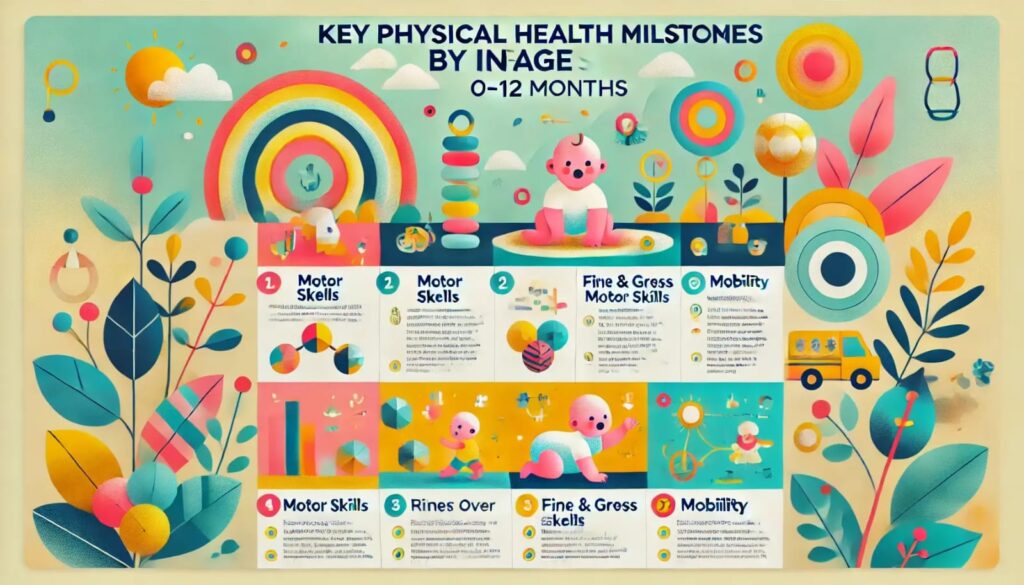
Infancy (0-12 months) is a period of rapid growth. During this stage, babies achieve key milestones like lifting their heads, rolling over, and sitting up. Additionally, fine and gross motor skills begin to develop. Consequently, providing proper care and stimulation helps foster essential physical growth during this critical phase. Key milestones include:
- Motor Skills: Lifting their head by 3 months, rolling over by 4-6 months, and sitting without support around 6-8 months.
- Coordination: Reaching for objects and transferring them between hands by 5-7 months.
- Mobility: Crawling by 9 months and standing with support by 10-12 months.
Tip: Encourage tummy time to strengthen neck and shoulder muscles.
Toddlerhood (1-3 Years)

Toddlerhood (1-3 years) is a time of refining motor skills and coordination. At this stage, toddlers begin walking, running, and improving hand-eye coordination. Moreover, they develop better balance and muscle strength. As a result, engaging in activities that promote movement helps enhance these physical abilities during this exciting stage. Milestones include:
- Walking and Running: Walking independently by 12-15 months and running steadily by 2 years.
- Fine Motor Skills: Stacking blocks, scribbling with crayons, and using utensils.
- Balance: Climbing stairs with support and kicking a ball by age 3.
Tip: Provide safe environments for exploration and movement.
Preschool Age (3-5 Years)

Preschool age (3-5 years) is when children gain greater control over their movements. During this stage, they master activities like hopping, running, and catching a ball. Additionally, fine motor skills improve, allowing them to use scissors or draw shapes. As a result, physical coordination becomes more refined and confident. Milestones include:
- Gross Motor Skills: Hopping on one foot, riding a tricycle, and throwing a ball.
- Hand-Eye Coordination: Catching a ball, cutting with scissors, and drawing shapes.
- Physical Independence: Dressing themselves and improving hygiene routines.
Tip: Provide safe environments for exploration and movement.
School-Age (6-12 Years)

During school age (6-12 years), children’s physical abilities become more refined. They develop stronger muscles, increased endurance, and improved coordination. Consequently, they engage in more complex activities like team sports, swimming, and biking. With consistent practice, these skills enhance their physical confidence and overall development during this stage. Key milestones include:
- Strength and Stamina: Increased endurance for sports and outdoor games.
- Coordination: Mastering skills like swimming, cycling, and team sports.
- Growth Spurts: Noticeable changes in height and weight, particularly during pre-adolescence.
Tip: Encourage participation in physical activities to support growth and fitness.
Adolescence (13-18 Years)

Adolescence (13-18 years) involves significant physical and hormonal changes. During this stage, children experience growth spurts, puberty, and increased muscle mass. As a result, physical strength and stamina improve. Additionally, hormonal changes influence mood and energy levels, shaping their overall physical and emotional development during these transformative years. Milestones include:
- Puberty: Development of secondary sexual characteristics.
- Muscle Development: Increased strength and physical capabilities.
- Bone Growth: Rapid height growth and peak bone mass development.
Tip: Promote a balanced diet and regular exercise to support healthy growth.
Factors Influencing Physical Health Milestones

Several factors can impact a child’s physical development:
Nutrition:
Proper nutrition is a cornerstone of physical development. According to Dr. William Sears, a renowned pediatrician, “Good nutrition fuels a child’s growth and brain development.” Essential vitamins and minerals, such as calcium, vitamin D, and protein, support bone strength and muscle growth. Moreover, a balanced diet promotes immunity, reducing illness that might hinder development. Without adequate nutrition, children may experience stunted growth or delayed milestones. Parents should provide nutrient-dense meals with fruits, vegetables, lean proteins, and whole grains. Therefore, prioritizing a well-rounded diet is essential to ensure children meet their physical health milestones effectively.
Genetics:
Genetics plays a significant role in determining physical health milestones. Dr. Mary Ellen Avery, a pediatric health expert, states, “A child’s growth pattern is often influenced by inherited traits.” Family history impacts height, weight, and body composition. While genetics set a baseline, environmental factors like nutrition and activity modify outcomes. For instance, a child may inherit a tall stature but still require proper nourishment to reach their potential. Therefore, understanding familial patterns can help caregivers set realistic expectations. Genetics serve as the foundation, but nurturing environments and healthy habits further influence a child’s development.
Environment:
A stimulating and safe environment fosters a child’s physical development. Dr. Jack Shonkoff from Harvard’s Center on the Developing Child emphasizes, “Children thrive when they feel secure and have opportunities to explore.” A well-structured environment encourages motor skill practice, such as running, climbing, or drawing. Unsafe or unstimulating surroundings, however, may limit a child’s growth opportunities. For example, access to parks and playgrounds supports gross motor skills, while indoor spaces can enhance fine motor skills. Therefore, creating an engaging and safe environment ensures children reach their milestones confidently.
Physical Activity:
Regular physical activity is vital for healthy development. Dr. Kenneth Cooper, the father of aerobics, says, “Movement strengthens not just muscles but also the heart and bones.” Activities like running, jumping, or swimming improve coordination, balance, and endurance. Moreover, active play boosts mental health, reducing stress and improving focus. Sedentary lifestyles, on the other hand, can delay physical milestones and increase health risks. Incorporating daily exercise into a child’s routine encourages a lifelong habit of staying active. Consequently, physical activity remains a critical factor in supporting milestone achievements and overall well-being.
Sleep
Adequate sleep is crucial for physical development. According to Dr. Rachel Dawkins, a pediatrician at Johns Hopkins Medicine, “Sleep is essential for growth as it allows the body to repair and regenerate.” During deep sleep, the body produces growth hormones, supporting bone and muscle growth. Additionally, sleep helps with memory consolidation, which impacts physical coordination. Children who lack sleep may experience delays in physical milestones, affecting both their motor skills and overall health. Therefore, ensuring consistent and quality sleep routines is vital in promoting healthy growth during the early years. Proper sleep is just as important as nutrition and exercise.
Here’s a detailed chart summarizing the Factors Influencing Physical Health Milestones:
| Factor | Key Influence on Physical Milestones | Expert Insights | Examples of Impact |
|---|---|---|---|
| Nutrition | Supports bone strength, muscle growth, and immunity | Dr. William Sears: “Good nutrition fuels a child’s growth and brain development.” | – Calcium & Vitamin D aid bone development – Protein builds muscles – Poor nutrition can cause stunted growth |
| Genetics | Determines baseline height, weight, and body composition | Dr. Mary Ellen Avery: “A child’s growth pattern is often influenced by inherited traits.” | – Family history affects height & weight – Environmental factors can modify genetic outcomes |
| Environment | Provides opportunities for motor skill development | Dr. Jack Shonkoff: “Children thrive when they feel secure and have opportunities to explore.” | – Playgrounds promote gross motor skills – Safe indoor spaces enhance fine motor skills |
| Physical Activity | Improves coordination, balance, and endurance | Dr. Kenneth Cooper: “Movement strengthens not just muscles but also the heart and bones.” | – Running and jumping improve motor skills – Sedentary lifestyle can delay development |
| Sleep | Supports growth hormone production and motor skills | Dr. Rachel Dawkins: “Sleep is essential for growth as it allows the body to repair and regenerate.” | – Deep sleep enhances muscle and bone growth – Lack of sleep may cause delayed milestones |
Note: Regular check-ups with a pediatrician are essential to monitor progress.
How to Support Physical Health Development
Create a Nurturing Environment
A nurturing environment supports children’s physical development by offering safe spaces to explore and practice skills. According to Dr. Jack Shonkoff from Harvard’s Center on the Developing Child, “Children need environments where they feel safe to take risks and try new activities.” Providing access to parks, play areas, and interactive spaces helps enhance gross and fine motor skills. Additionally, a secure environment reduces fear and builds confidence in physical abilities. Parents and caregivers can foster growth by encouraging exploration while ensuring safety measures are in place. As a result, children thrive in supportive and engaging surroundings.
Encourage Active Play
Active play is essential for strengthening muscles, bones, and coordination. Dr. Kenneth Cooper states, “Physical activity is foundational for a child’s growth and overall health.” Simple activities like running, jumping, and climbing improve both gross and fine motor skills. Play also fosters social interactions and problem-solving abilities. Moreover, outdoor play exposes children to fresh air and sunlight, benefiting their immune systems and vitamin D levels. Scheduling regular playtime helps children stay active and develop healthy habits. Consequently, active play remains one of the most effective ways to support physical health development.
Focus on Nutrition
Balanced nutrition fuels physical health development by providing essential nutrients. Dr. William Sears emphasizes, “A well-balanced diet is a child’s best defense against developmental delays.” Include proteins for muscle growth, carbohydrates for energy, and healthy fats for brain development. Incorporating fruits, vegetables, and dairy products ensures the intake of vitamins like calcium and iron. Avoid excessive sugar and processed foods, as they may hinder growth. Proper hydration also plays a critical role in maintaining energy and concentration. With a focus on nutrition, children can achieve their physical milestones efficiently and sustain long-term health.
Limit Screen Time
Reducing screen time encourages children to engage in physical activities. According to the American Academy of Pediatrics, “Excessive screen use can lead to sedentary behaviors and delays in development.” Prolonged sitting restricts opportunities for movement, affecting muscle strength and coordination. Instead, encourage outdoor play or hands-on activities like building blocks or painting. Setting daily screen time limits promotes a balance between digital engagement and physical activity. Additionally, parents can model healthy habits by participating in active play. Therefore, limiting screen time is essential to support a child’s physical health and overall development.
Monitor Growth
Regularly tracking a child’s milestones ensures timely interventions if needed. Dr. Claire McCarthy advises, “Monitoring growth helps identify delays or concerns early on.” Use growth charts and milestone checklists to track progress in height, weight, and motor skills. Consulting a pediatrician during routine checkups provides professional insight into a child’s development. Additionally, open communication with teachers and caregivers can help identify issues in different environments. Early detection and action ensure that children receive the support they need to thrive. As a result, growth monitoring plays a vital role in promoting healthy physical development.
Understanding physical health milestones for children is essential for tracking growth and ensuring timely support. These milestones provide insight into motor skills, strength, and overall development. By fostering a nurturing environment, encouraging active play, and prioritizing nutrition, caregivers can help children achieve their physical health milestones and thrive.
Physical health milestones are key developmental markers that indicate progress in a child’s physical growth and abilities, such as crawling, walking, and coordination. These milestones help monitor a child’s development and identify potential delays early.
Physical health milestones are crucial as they track a child’s motor skills, strength, and overall growth. Monitoring these milestones helps caregivers provide appropriate support and ensures early intervention if developmental concerns arise.
Caregivers can support milestones by encouraging active play, providing balanced nutrition, ensuring a safe environment, and regularly monitoring the child’s growth. Consulting healthcare professionals for guidance also ensures timely support.
