

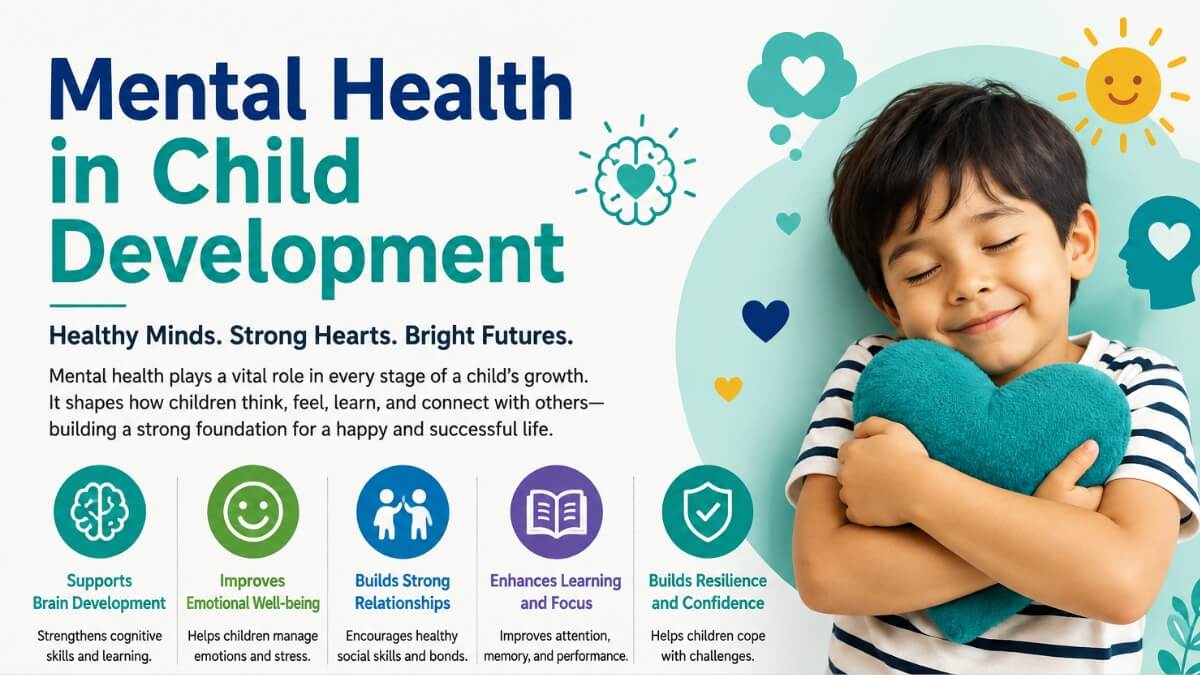
Mental Health is an important part of a child’s overall development. It affects how children think, feel, learn, behave, and interact with others. Moreover, good mental health helps children manage emotions, build confidence, develop healthy relationships, and cope with everyday challenges. A positive emotional foundation can also support healthy brain development, learning, social skills, and physical health.
During childhood, experiences at home, school, and within the community can shape emotional well-being. Therefore, supportive relationships, open communication, healthy routines, and a safe environment are important for healthy development. In contrast, ongoing stress, bullying, family conflict, or other difficult experiences may affect a child’s emotions and behaviour.
Furthermore, mental health supports every area of development, including cognitive, social, emotional, and physical development. A nurturing environment, supportive relationships, and healthy daily habits all contribute to emotional resilience and lifelong well-being. In contrast, untreated mental health challenges can affect learning, behaviour, and overall development. Therefore, understanding the mental health is essential for parents, caregivers, educators, and healthcare professionals who want to support children in reaching their full potential.
The Role of Mental Health in Child Development
Mental health plays a vital role in every stage of child development. It influences how children think, feel, learn, communicate, and build relationships. Moreover, good mental health helps children cope with everyday challenges while building confidence, resilience, and self-esteem. As children grow, emotional well-being becomes the foundation for healthy physical, academic, social, and cognitive development.
According to pediatrician Dr. T. Berry Brazelton, “Every child is unique.” This simple yet powerful reminder highlights the importance of supporting each child’s emotional and mental well-being according to their individual needs. Similarly, child psychologist Dr. Urie Bronfenbrenner emphasized that “Every child needs at least one adult who is irrationally crazy about him.” His work demonstrates that nurturing relationships with parents, caregivers, and teachers are essential for healthy emotional and psychological development.
Furthermore, positive mental health supports healthy brain development and encourages children to explore the world with curiosity and confidence. In contrast, ongoing emotional difficulties may affect learning, behaviour, emotional regulation, and social interactions. Dr. Daniel J. Siegel, a clinical professor of psychiatry and expert in interpersonal neurobiology, explains that secure and responsive relationships help shape the developing brain and strengthen children’s ability to regulate emotions and manage stress.
In addition, organizations such as the World Health Organization (WHO) and UNICEF emphasize that good mental health during childhood lays the foundation for lifelong health, learning, and well-being. Therefore, parents, caregivers, educators, and healthcare professionals all play a crucial role in creating safe, supportive, and nurturing environments that promote emotional well-being from an early age.
What Is Mental Health in Child Development?
Mental health in child development refers to a child’s emotional, psychological, and social well-being. It influences how children think, feel, behave, and respond to the world around them. Moreover, it affects how they understand emotions, manage stress, solve problems, build relationships, and make decisions throughout different stages of growth. Strong mental health provides the foundation for healthy development, enabling children to learn new skills, adapt to change, and face challenges with confidence.
According to child psychiatrist Dr. Daniel J. Siegel, “The mind develops as relationships shape the flow of energy and information.” This highlights the powerful role that positive relationships with parents, caregivers, teachers, and peers play in supporting a child’s emotional and mental well-being. Likewise, developmental psychologist Dr. Jean Piaget believed that children actively construct knowledge through their experiences, showing that supportive environments are essential for both cognitive and emotional development.
Healthy mental development does not simply mean the absence of mental illness. Instead, it reflects a child’s ability to recognize and express emotions appropriately, build resilience, develop empathy, and form healthy relationships. Furthermore, emotionally healthy children are more likely to communicate effectively, cooperate with others, and recover from setbacks. As a result, they are better prepared to succeed academically, socially, and emotionally throughout childhood and into adulthood.
Why Is Mental Health Important for Child Development?
Mental health is essential because it influences nearly every aspect of a child’s growth and development. It shapes how children think, learn, communicate, build relationships, and respond to challenges. Moreover, strong mental health provides the emotional foundation needed to reach important developmental milestones and succeed both academically and socially. When children feel emotionally secure, they are more likely to develop confidence, resilience, and healthy coping skills that benefit them throughout life.
According to Dr. Jack P. Shonkoff, founding director of the Center on the Developing Child at Harvard University, “Early experiences affect the quality of that developing brain architecture.” His research highlights that nurturing relationships and positive early experiences are critical for healthy brain development and lifelong well-being. Likewise, child psychologist Dr. Urie Bronfenbrenner emphasized that a child’s development is strongly influenced by supportive relationships and environments, reinforcing the importance of promoting good mental health from an early age.
Supports Healthy Brain Development
The brain grows rapidly during infancy and early childhood, making this period especially important for mental and emotional development. Positive experiences, such as responsive caregiving, affection, and secure relationships, strengthen the neural connections that support learning, memory, attention, and decision-making. Furthermore, children who feel safe and emotionally supported are better able to explore their environment, develop curiosity, and acquire new skills. In contrast, chronilc stress, neglect, or adverse childhood experiences can disrupt healthy brain development and affect cognitive and emotional functioning.
Dr. Bruce D. Perry, a renowned child psychiatrist and neuroscientist, explains, “The brain is built over time.“ His work shows that consistent, positive experiences during childhood shape brain architecture and lay the foundation for emotional regulation, learning, and healthy behaviour. Similarly, Dr. Daniel J. Siegel emphasizes that secure relationships help integrate brain functions, enabling children to manage emotions, focus attention, and respond effectively to everyday challenges.
Benefits of Healthy Brain Development
- Improves overall brain development and function
- Strengthens memory and information retention
- Enhances concentration and attention span
- Supports critical thinking and problem-solving skills
- Builds a strong foundation for lifelong learning
- Promotes emotional regulation and self-control
- Encourages creativity, curiosity, and innovation
- Increases readiness for academic success
Improves Emotional Regulation
Children experience a wide range of emotions every day, from happiness and excitement to frustration, fear, and disappointment. Good mental health helps children recognise, understand, and express these emotions in healthy and appropriate ways. Moreover, emotional regulation enables children to respond calmly to challenges instead of reacting impulsively. As a result, they develop stronger relationships, make better decisions, and cope more effectively with everyday situations.
According to psychologist Dr. John Gottman, “Helping children understand and regulate their feelings” is one of the most important responsibilities of parents and caregivers. His research on emotion coaching shows that children who receive guidance in managing emotions are more likely to develop resilience, empathy, and strong social skills. Furthermore, emotionally supportive environments help children build confidence and reduce the impact of stress and anxiety.
Benefits of Improved Emotional Regulation
- Better emotional control
- Reduced anxiety and stress
- Healthier coping strategies
- Increased resilience
- Greater self-confidence
- Improved empathy
- Better conflict resolution
- Stronger relationships
Enhances Cognitive Development
Mental health has a direct influence on cognitive development, including children’s learning,thinking, remembering and problems solving. Children who feel emotionally safe and supported are more likely to concentrate, ask questions, explore new ideas, and retain information effectively. In addition, positive mental health encourages curiosity, creativity, and independent thinking, all of which contribute to academic success.
Developmental psychologist Dr. Jean Piaget believed that children actively build knowledge through exploration and experience.His work highlights the importance of providing emotionally secure environments where children feel confident to learn and discover. Likewise, Dr. Lev Vygotsky emphasised that supportive interactions with parents, teachers, and peers strengthen cognitive development by helping children acquire new skills through guidance and collaborati
Emotional well-being improves executive functioning skills, including attention, memory, planning, and decision-making. Consequently, children with good mental health are better prepared to overcome learning challenges and achieve their full intellectual potential.
Benefits of Enhanced Cognitive Development
- Better attention span
- Improved memory
- Faster learning
- Enhanced creativity
- Stronger reasoning skills
- Improved problem-solving abilities
- Better decision-making
- Greater academic achievement
Promotes Social Development
Mental health plays a crucial role in helping children develop strong social skills and meaningful relationships. Children with positive mental health are more likely to communicate effectively, cooperate with others, and build lasting friendships. Moreover, they learn to understand different perspectives, show empathy, and resolve conflicts respectfully. These social skills help children feel accepted and emotionally secure in their families, schools, and communities.
Developmental psychologist Dr. Lev Vygotsky emphasized that children learn and develop through social interaction. His sociocultural theory highlights the importance of supportive relationships with parents, teachers, and peers in fostering both cognitive and social growth. Similarly, psychologist Dr. Albert Bandura demonstrated through his Social Learning Theory that children develop social behaviours by observing and interacting with others. Therefore, positive role models and nurturing environments play a significant role in promoting healthy social development.
Children with strong social skills are better equipped to work in teams, communicate their needs, and develop healthy relationships throughout life. As a result, they experience greater emotional well-being and increased confidence in social situations.
Benefits of Promoting Social Development
- Better communication skills
- Healthy and lasting friendships
- Increased empathy and compassion
- Improved cooperation and teamwork
- Strong conflict-resolution skills
- Greater emotional security
- Better listening and sharing skills
- Stronger sense of belonging
Strengthens Self-Esteem
Self-esteem is an essential part of healthy child development, and positive mental health plays a significant role in building it. Children who receive encouragement, affection, and emotional support develop a positive self-image and believe in their abilities. Consequently, they become more willing to explore new opportunities, take healthy risks, and overcome challenges with confidence.
According to psychologist Dr. Susan Harter, a leading researcher on children’s self-esteem, children’s sense of self-worth develops through supportive relationships, successful experiences, and positive feedback from significant adults. Likewise, Dr. Carl Rogers, one of the founders of humanistic psychology, believed that children thrive when they experience unconditional positive regard, which helps them develop confidence, resilience, and a healthy sense of self.
,Strong self-esteem encourages children to persevere through setbacks rather than fear failure. As a result, they become more independent, motivated, and emotionally resilient, laying the foundation for lifelong personal and academic success.
Benefits of Strengthening Self-Esteem
- Greater confidence
- Positive self-image
- Increased independence
- Better decision-making
- Higher motivation
- Greater willingness to try new experiences
- Improved resilience during challenges
- Healthier emotional well-being
Supports Academic Success
Mental health plays a significant role in a child’s academic achievement. Children with positive mental health are better able to concentrate, participate in classroom activities, complete assignments, and solve problems effectively. Moreover, emotional well-being improves attention, memory, and motivation, making learning a more enjoyable and productive experience. When children feel safe, valued, and supported, they are more likely to develop confidence in their abilities and actively engage in their education.
Educational psychologist Dr. Carol Dweck, known for her research on the growth mindset, explains that children who believe their abilities can improve through effort are more motivated to learn and overcome academic challenges. Likewise, child development expert Dr. Howard Gardner, creator of the Theory of Multiple Intelligences, emphasizes that every child has unique strengths and learning abilities. A positive mental state allows children to recognize these strengths and reach their full academic potential.
Furthermore, emotionally healthy children are less likely to experience school-related anxiety and are more likely to attend school regularly, participate in class discussions, and build positive relationships with teachers and classmates. As a result, they develop lifelong learning skills that contribute to future educational and career success.
Benefits of Supporting Academic Success
- Better academic performance and grades
- Improved focus and concentration
- Higher classroom participation
- Better school attendance
- Increased motivation to learn
- Stronger problem-solving skills
- Greater confidence in learning
- Improved critical thinking abilities
Encourages Healthy Relationships
Healthy relationships are essential for a child’s emotional and social development, and good mental health provides the foundation for building them. Children with strong emotional well-being learn to communicate openly, show kindness, develop empathy, and respect the feelings of others. Therefore, they are more likely to form positive relationships with parents, siblings, teachers, friends, and other members of their community.
Psychologist Dr. John Bowlby, the founder of Attachment Theory, demonstrated that secure and loving relationships with caregivers provide children with the emotional security needed to explore the world confidently and build healthy relationships throughout life. In addition, psychologist Dr. Mary Ainsworth expanded this research by showing that secure attachment during early childhood contributes to greater confidence, emotional stability, and stronger social connections.
Positive relationships help children feel supported during stressful situations and teach valuable life skills such as cooperation, trust, communication, and conflict resolution. As a result, children who develop healthy relationships are more likely to experience emotional well-being, stronger resilience, and lasting social success.
Benefits of Encouraging Healthy Relationships
- Strong family bonds
- Positive and supportive friendships
- Better communication skills
- Increased trust and mutual respect
- Greater emotional security
- Improved empathy and compassion
- Better teamwork and cooperation
- Stronger conflict-resolution skills
Builds Resilience
Resilience is the ability to recover from setbacks, adapt to change, and continue moving forward despite challenges. Mental health plays a fundamental role in developing this important life skill during childhood. As children grow, they encounter various difficulties, such as adjusting to a new school, coping with family changes, managing academic pressure, or navigating conflicts with peers. Positive mental health helps children face these situations with confidence, emotional balance, and optimism rather than becoming overwhelmed.
Psychologist Dr. Ann Masten, widely recognized for her research on resilience, describes resilience as “ordinary magic,” that it develops through supportive relationships, positive experiences, and everyday opportunities to learn and grow. Similarly, child psychiatrist Dr. Michael Rutter, often regarded as a pioneer in resilience research, found that protective factors such as caring adults, stable environments, and strong social connections help children overcome adversity and achieve healthy development.
Resilient children learn valuable coping strategies that enable them to manage stress, solve problems, and view challenges as opportunities for growth. Consequently, they become more independent, emotionally strong, and better prepared to handle future obstacles throughout adolescence and adulthood.
Benefits of Building Resilience
- Better stress management
- Increased adaptability to change
- Greater emotional strength
- Healthy coping strategies
- Improved confidence
- Stronger problem-solving skills
- Greater perseverance during challenges
- Better emotional well-being
- Increased independence
- Improved ability to recover from setbacks
Supports Physical Health
Mental and physical health are closely connected, and each significantly influences the other throughout childhood. Children with positive mental health are more likely to develop healthy daily habits, including eating nutritious foods, staying physically active, and maintaining consistent sleep routines. Moreover, emotional well-being reduces stress, supports healthy brain function, and encourages behaviors that promote overall wellness. As a result, children who feel emotionally secure often enjoy better physical health and are more prepared to participate in learning, play, and everyday activities.
According to pediatrician Dr. Kenneth Ginsburg, author of Building Resilience in Children and Teens, emotional well-being and supportive relationships help children develop healthy habits that strengthen both their mental and physical health. Similarly, Dr. John Ratey, a clinical professor of psychiatry at Harvard Medical School, explains that regular physical activity not only improves physical fitness but also enhances mood, memory, attention, and overall brain function. Their work highlights the strong connection between emotional wellness, healthy lifestyles, and lifelong development.
Regular exercise, balanced nutrition, and adequate sleep help reduce stress hormones while supporting healthy growth, immune function, and emotional regulation. Consequently, children who maintain healthy routines are more likely to experience higher energy levels, better concentration, and improved overall well-being.
Benefits. appetite
- Increased energy levels
- Stronger immune function
- Improved overall wellness
- Better physical growth and development
- Enhanced brain function and concentration
- Reduced stress and anxiety
- Healthier lifestyle habits
- Greater participation in daily activities
Reduces the Risk of Mental Health Disorders
Supporting children’s mental health from an early age can help reduce the risk of developing anxiety, depression, behavioural disorders, and other mental health challenges later in life. While no approach can completely prevent mental health conditions, nurturing relationships, positive childhood experiences, and early intervention can strengthen emotional resilience and lower the likelihood or severity of future difficulties. Therefore, recognising emotional or behavioural concerns early allows families, educators, and healthcare professionals to provide appropriate support before challenges become more serious.
According to child psychiatrist Dr. Bruce D. Perry, early childhood experiences have a lasting impact on brain development and emotional health. His research shows that safe, stable, and nurturing relationships help children build resilience and recover from stress more effectively. Likewise, psychologist Dr. Ann Masten, a leading resilience researcher, emphasizes that supportive families, caring adults, and positive environments are powerful protective factors that promote healthy development and reduce the effects of adversity.
Furthermore, organizations such as the World Health Organization (WHO) stress that early identification and timely support for children’s mental health concerns can improve lifelong health, educational achievement, and social well-being. Consequently, investing in children’s emotional well-being during the early years creates a strong foundation for healthier adolescence and adulthood.
Benefits of Reducing the Risk of Mental Health Disorders
- Encourages early identification and intervention
- Improves long-term mental health outcomes
- Reduces behavioural and emotional problems
- Strengthens emotional well-being
- Promotes healthier adulthood
- Increases resilience to future challenges
- Supports healthy brain development
- Improves academic and social success
- Strengthens family relationships
- Enhances overall quality of life
- Warning Signs of Mental Health Challenges in Children
Warning Signs of Mental Health Challenges in Children
Recognizing early signs allows timely support.
Common signs include:
- Persistent sadness
- Frequent anxiety or excessive worry
- Withdrawal from friends or family
- Sudden mood changes
- Difficulty concentrating
- Changes in eating or sleeping habits
- Frequent anger or irritability
- Loss of interest in favourite activities
- Declining academic performance
- Physical complaints without a clear medical cause
If these signs persist or interfere with daily life, consulting a qualified healthcare professional or child mental health specialist is recommended.
Factors That Influence Mental Health in Child Development
A child’s mental health is shaped by a combination of personal, family, school, and environmental factors. These influences affect emotional well-being, behaviour, relationships, and the ability to cope with everyday challenges. Moreover, positive experiences and supportive environments help children develop resilience, confidence, and healthy coping skills, while prolonged stress or adverse experiences may increase the risk of emotional and behavioural difficulties. Understanding these factors enables parents, caregivers, educators, and healthcare professionals to provide the support children need to thrive.
Family Environment
The family environment is one of the most important influences on a child’s mental health. A loving, supportive, and stable home helps children feel safe, valued, and emotionally secure. Moreover, consistent routines, open communication, and positive family relationships encourage healthy emotional development and strengthen resilience.
Psychologist Dr. John Bowlby, the founder of Attachment Theory, emphasized that secure relationships with caregivers provide children with the confidence to explore the world while developing emotional stability. Likewise, Dr. Mary Ainsworth demonstrated that children with secure attachments are more likely to develop healthy relationships and effective emotional regulation throughout life.
Parenting Style
Parenting style significantly influences a child’s emotional and psychological development. Warm, responsive, and supportive parenting helps children build self-esteem, confidence, and resilience. Furthermore, parents who listen, encourage, and set consistent boundaries teach children healthy ways to manage emotions and solve problems.
According to psychologist Dr. Diana Baumrind, the authoritative parenting style, which combines warmth with appropriate guidance, is associated with higher self-confidence, better emotional regulation, and stronger social skills in children.
School Environment
School is an important setting for children’s emotional and social growth. Positive relationships with teachers, classmates, and school staff create a safe and welcoming environment where children feel respected and supported. As a result, children are more likely to participate in learning, build friendships, and develop confidence.
Educational psychologist Dr. Lev Vygotsky believed that children learn and grow through meaningful social interactions. His research highlights the importance of supportive educational environments in promoting both cognitive and emotional development.
Physical Health
Physical health and mental health are closely connected. Nutritious meals, regular physical activity, adequate sleep, and routine healthcare all contribute to healthy brain development and emotional well-being. Additionally, healthy lifestyle habits improve mood, energy levels, concentration, and stress management.
Clinical professor of psychiatry Dr. John Ratey explains that regular exercise enhances brain function by improving memory, attention, and emotional regulation. His research demonstrates that physical activity benefits both mental and physical health throughout childhood.
Community Support
Supportive communities provide children with opportunities to develop confidence, social skills, and a sense of belonging. Safe neighbourhoods, recreational activities, libraries, sports programmes, and community organisations create positive environments where children can learn, play, and build healthy relationships.
Developmental psychologist Dr. Urie Bronfenbrenner proposed the Ecological Systems Theory, which explains that children’s development is influenced not only by their families but also by schools, communities, and the broader social environment. His work underscores the importance of strong community support in promoting children’s mental well-being.
Life Experiences
Life experiences have a lasting influence on children’s mental health. Positive experiences, such as supportive friendships, academic achievements, and caring relationships, help build confidence and resilience. In contrast, adverse experiences such as trauma, neglect, bullying, family conflict, or abuse may increase emotional and behavioural challenges if left unaddressed.
Child psychiatrist Dr. Bruce D. Perry emphasizes that early experiences shape the developing brain and influence lifelong emotional health. However, he also explains that nurturing relationships and timely intervention can help children recover from adversity and build resilience. Therefore, recognising challenges early and providing appropriate support can significantly improve long-term mental health outcomes.
Genetic and Biological Factors
Genetics and biology also play an important role in a child’s mental health. Some children may inherit a higher risk of developing mental health conditions such as anxiety, depression, or attention-deficit/hyperactivity disorder (ADHD). However, genetics alone do not determine a child’s future. Instead, supportive relationships, healthy environments, and early intervention can help children thrive despite genetic vulnerabilities.
Psychiatrist Dr. Thomas Insel, former Director of the National Institute of Mental Health (NIMH), has emphasized that mental health results from a combination of biological, psychological, and environmental factors. Therefore, understanding a child’s individual needs can help families and professionals provide appropriate support.
Technology and Screen Time
Technology has become a regular part of children’s daily lives, making healthy screen habits increasingly important for mental well-being. Educational technology can support learning and creativity. However, excessive screen time, social media use, and exposure to inappropriate online content may contribute to anxiety, poor sleep, reduced physical activity, and social isolation.
The American Academy of Pediatrics (AAP) recommends creating healthy media habits by balancing screen time with physical activity, quality sleep, face-to-face interactions, and family engagement. Consequently, setting reasonable limits helps protect children’s emotional and psychological health.
Peer Relationships
Friendships and peer interactions have a significant influence on children’s mental health. Positive peer relationships help children develop communication skills, empathy, cooperation, and self-confidence. Furthermore, supportive friendships provide emotional encouragement during stressful situations.
In contrast, bullying, peer rejection, or unhealthy friendships can increase the risk of anxiety, depression, and low self-esteem. Psychologist Dr. Jaana Juvonen, a leading researcher on peer relationships and bullying, has shown that positive peer connections contribute to children’s emotional well-being and academic success. Therefore, encouraging respectful friendships and addressing bullying early are essential for healthy development.
Socioeconomic and Cultural Factors
A family’s financial stability, access to healthcare, educational opportunities, cultural values, and community resources can all influence a child’s mental health. Children who have access to safe housing, nutritious food, quality education, and supportive services are generally better equipped to develop emotionally and socially.
Developmental psychologist Dr. Urie Bronfenbrenner explained through his Ecological Systems Theory that children’s development is shaped by multiple environments, including family, school, community, culture, and society. Therefore, reducing social inequalities and improving access to supportive resources can promote better mental health outcomes for children and adolescents
How to Support Mental Health in Child Development
Supporting children’s mental health requires consistent care, positive relationships, and healthy daily habits. Parents, caregivers, educators, and healthcare professionals all play an essential role in helping children develop emotional resilience, confidence, and healthy coping skills. Moreover, creating safe and nurturing environments allows children to express their emotions, overcome challenges, and build strong social connections. By taking proactive steps early in life, adults can help children develop the emotional foundation needed for lifelong well-being.
Encourage Open Communication
Open communication helps children feel safe, valued, and understood. Encourage children to express their thoughts, feelings, and concerns without fear of criticism or judgment. Moreover, active listening and responding with empathy teach children that their emotions matter. As a result, they become more comfortable discussing difficult situations and seeking help when needed.
Psychologist Dr. Carl Rogers emphasized the importance of empathy, acceptance, and genuine listening in building emotionally healthy relationships. His person-centered approach shows that children thrive when they feel accepted and understood.
Benefits
- Builds trust and emotional security
- Encourages healthy emotional expression
- Strengthens parent-child relationships
- Reduces stress and anxiety
- Improves problem-solving skills
Build strong relationship
Positive relationships provide children with a sense of belonging, safety, and emotional support. Spending quality time together, sharing meaningful conversations, and participating in family activities strengthen emotional bonds. Furthermore, supportive relationships help children develop confidence, resilience, and healthy social skills.
According to Dr. John Bowlby, secure attachments with caregivers provide the emotional foundation for healthy development and positive relationships throughout life.
Benefits
- Strengthens family connections
- Increases emotional security
- Builds self-confidence
- Improves social skills
- Promotes resilience
Promote Healthy Routines
Healthy daily routines provide children with structure, stability, and predictability. Regular sleep schedules, balanced nutrition, physical activity, and consistent family routines support both physical and mental well-being. Additionally, routines reduce stress and help children feel more secure.
The American Academy of Pediatrics (AAP) emphasizes that healthy sleep, nutrition, and physical activity are essential for children’s emotional, behavioural, and cognitive development.
Benefits
- Improves emotional stability
- Supports healthy brain development
- Enhances concentration and learning
- Promotes better sleep quality
- Reduces daily stress
Teach Emotional Skills
Helping children identify, understand, and manage their emotions prepares them to cope with life’s challenges. Teach children to recognize different emotions, express their feelings appropriately, and practice healthy coping strategies such as deep breathing, mindfulness, and problem-solving. Consequently, they become more emotionally resilient and confident.
Psychologist Dr. John Gottman explains through his Emotion Coaching approach that children who learn to understand and regulate their emotions develop stronger relationships and better emotional well-being.
Benefits
- Improves emotional regulation
- Develops healthy coping strategies
- Increases resilience
- Strengthens empathy
- Reduces behavioural challenges
Encourage Physical Activity
Regular physical activity benefits both the body and the mind. Exercise releases endorphins, reduces stress, improves mood, and supports healthy brain development. Moreover, activities such as sports, outdoor play, dancing, and cycling encourage social interaction and build self-confidence.
According to Dr. John Ratey,” regular exercise improves attention, memory, mood, and overall brain function, making it an important part of children’s mental health.”
Benefits
- Reduces stress and anxiety
- Improves mood
- Increases energy levels
- Enhances concentration
- Builds confidence
Limit Excessive Screen Time
Technology can support learning when used appropriately, but excessive screen time may interfere with sleep, physical activity, and face-to-face interactions. Therefore, creating balanced media habits allows children to enjoy technology while maintaining healthy emotional and social development.
The American Academy of Pediatrics (AAP) recommends balancing screen time with physical activity, family interaction, and adequate sleep to support children’s overall well-being.
Benefits
- Improves sleep quality
- Encourages physical activity
- Increases family interaction
- Supports healthy social development
- Reduces digital stress
Celebrate Achievements
Recognizing children’s effort, progress, and perseverance encourages confidence and motivation. Rather than focusing only on perfect results, praise persistence, improvement, and problem-solving. As Dr. Carol Dweck explains in her research on the Growth Mindset, children who are praised for effort are more likely to embrace challenges, learn from mistakes, and continue improving.
Benefits
- Builds self-esteem
- Increases motivation
- Encourages resilience
- Promotes a growth mindset
- Strengthens confidence
Seek Professional Help When Needed
Some emotional or behavioural challenges require professional support. If a child experiences persistent anxiety, sadness, behavioural changes, or difficulties that interfere with daily life, seeking guidance from a qualified healthcare professional can make a significant difference. Early identification and intervention often lead to better long-term outcomes.
Child psychiatrist Dr. Bruce D. Perry emphasizes that early support and nurturing relationships can help children recover from adversity and promote healthy brain development. Therefore, recognizing concerns early and accessing appropriate care can improve a child’s emotional well-being and future success.
Benefits
- Supports early intervention
- Improves long-term outcomes
- Reduces emotional and behavioural difficulties
- Strengthens family support
- Promotes lifelong mental well-being
Create a Safe and Supportive Environment
Children thrive when they feel safe, respected, and supported. A secure environment at home, school, and within the community allows children to express themselves freely, take healthy risks, and develop confidence. Moreover, maintaining consistent rules, showing kindness, and providing emotional reassurance help reduce stress and anxiety. When children know they have trusted adults to turn to, they are more likely to develop resilience and positive mental health.
Developmental psychologist Dr. Urie Bronfenbrenner emphasized through his Ecological Systems Theory that a child’s development is influenced by supportive environments, including family, school, and community. His research highlights that children flourish when these environments work together to provide stability and encouragement.
Benefits
- Creates a sense of safety and belonging
- Reduces stress and anxiety
- Strengthens emotional security
- Encourages healthy behaviour
- Improves confidence and resilience
Model Positive Mental Health Habits
Children learn by observing the adults around them. Therefore, parents, caregivers, and teachers should demonstrate healthy ways to manage emotions, handle stress, solve problems, and communicate respectfully. Showing empathy, practising self-care, maintaining a positive attitude, and asking for help when needed teach children valuable life skills. Consequently, children are more likely to adopt these healthy behaviours and develop strong emotional resilience.
Psychologist Dr. Albert Bandura, the founder of Social Learning Theory, explained that children learn many behaviours by observing and imitating others. His research demonstrates that positive role models have a powerful influence on children’s emotional, social, and behavioural development.
Benefits
- Encourages healthy coping behaviours
- Builds emotional resilience
- Improves communication skills
- Strengthens self-confidence
- Promotes lifelong mental well-being
Long-Term Benefits of Good Mental Health
Children with strong mental health are more likely to:
- Develop healthy relationships
- Perform better academically
- Build resilience
- Make responsible decisions
- Maintain healthy lifestyles
- Manage stress effectively
- Become confident adults
- Achieve greater life satisfaction
Mental health in extends far beyond emotional well-being in child development. . It influences brain development, learning, relationships, behavior, resilience, and overall health. Therefore, creating supportive environments at home, school, and within the community helps children develop the emotional skills needed for lifelong success.
By encouraging open communication, promoting healthy habits, and recognizing emotional needs early, parents, caregivers, and educators can nurture children’s mental well-being and help them thrive throughout every stage of child development.
1. What is the role of mental health in child development?
Mental health supports emotional, cognitive, social, and physical development. It helps children learn, build relationships, regulate emotions, and develop resilience.
Good mental health improves learning, confidence, emotional regulation, academic performance, social skills, and overall well-being while reducing the risk of future mental health challenges.
Parents can support mental health by providing love, maintaining routines, encouraging open communication, promoting healthy lifestyles, teaching coping skills, and seeking professional help when necessary.
