

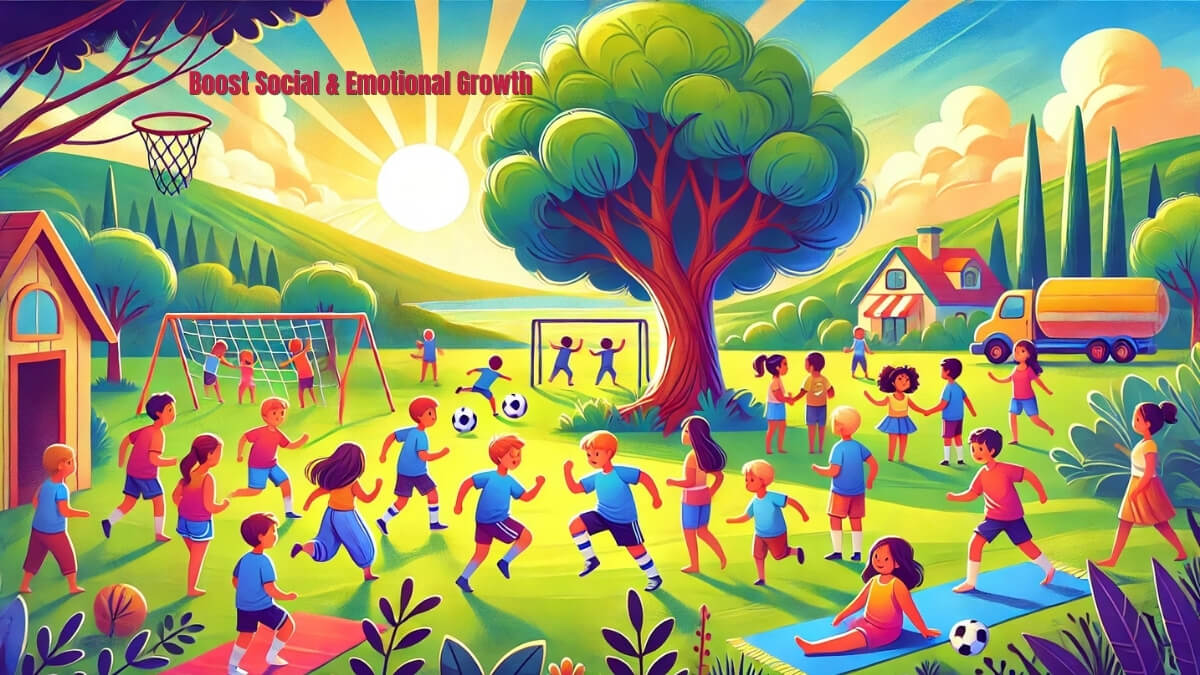
Promoting social and emotional development is essential in shaping well-rounded individuals. Physical activities play a crucial role in fostering these skills by blending physical Development with emotional intelligence and social bonds. Engaging in team sports, dance, outdoor adventures, and other physical activities not only improves motor skills but also encourages cooperation, empathy, and emotional regulation. This guide will explore how to use physical activities effectively to boost social and emotional growth in children. By integrating these activities into daily routines, parents, educators, and caregivers can help children develop stronger emotional resilience, communication skills, and social connections.
Understanding Social and Emotional Development
Understanding social and emotional development is essential to boosting social and emotional growth in children. Moreover, it involves learning to interact positively, manage emotions, and build meaningful relationships. Consequently, by fostering these skills, caregivers, and educators lay the foundation for stronger communication, empathy, and resilience in children’s daily lives.
What Is Social Development?
Social development is the process of learning how to connect and interact with others effectively. It encompasses essential skills like sharing, cooperating, and communicating in various social contexts. According to Dr. Urie Bronfenbrenner, a developmental psychologist, “Children’s social environments profoundly shape their ability to relate to others.” Interactions during playtime or group activities teach children how to navigate relationships, resolve conflicts, and build trust.
Transitioning from simple actions like taking turns to complex behaviors such as teamwork, children develop social intelligence. Encouraging activities like group sports or collaborative projects enhance these skills naturally. These experiences also foster inclusivity, helping children appreciate diverse perspectives.
By promoting positive social habits, caregivers lay the foundation for lifelong interpersonal success. With time, these skills grow into vital tools for thriving in school, work, and personal relationships.
What Is Emotional Development?
Emotional development focuses on understanding, expressing, and managing emotions. This includes recognizing feelings, empathizing with others, and practicing self-regulation. Renowned child psychologist Dr. John Gottman states, “Children’s emotional intelligence begins with learning to recognize and name their emotions.”
Through guided interactions, children learn to navigate their emotional world. For instance, comforting a friend during a game or expressing frustration constructively builds emotional resilience. Activities like yoga or storytelling encourage self-awareness and mindfulness.
Emotional growth also involves responding to challenges without being overwhelmed. A child practicing this skill learns how to recover from setbacks, enhancing their mental well-being. Gradually, these lessons shape a confident, empathetic individual.
In nurturing emotional development, caregivers equip children with tools to form meaningful relationships and face life’s ups and downs with resilience.
The Role of Physical Activities
Physical activities play a critical role in fostering social and emotional development, helping to boost social and emotional growth effectively. They promote teamwork, enhance confidence, and teach valuable life skills. Dr. James O. Prochaska, a behavioral psychology expert, states, “Physical activities provide a natural setting for learning interpersonal skills.” For instance, group sports like soccer or basketball demand cooperation and clear communication. These activities guide children to work collectively toward shared goals while valuing each other’s abilities. Transitioning from solo efforts to collaborative achievements nurtures a strong sense of belonging and builds essential interpersonal skills for lifelong development.
Moreover, physical activities create opportunities to practice emotional regulation. Whether celebrating a win or accepting a loss, children experience emotions in real-time. Activities like yoga or dance teach mindfulness and self-awareness, which are key to managing stress. According to Dr. Daniel Siegel, a leading neuroscientist, “Movement helps children integrate their emotional experiences with their physical state.” This connection enhances resilience and equips them to handle challenges confidently.
In addition, physical activities promote inclusivity and empathy. Team-based games involve diverse participants, encouraging children to respect differences and build trust. Friendly competition also teaches fairness and good sportsmanship. Transitioning from structured sports to free play allows children to navigate unplanned social dynamics, further refining their social skills.
Ultimately, physical activities offer a hands-on approach to personal growth. They blend the physical with the emotional, shaping well-rounded individuals. By integrating these activities into daily routines, caregivers and educators nurture children’s social and emotional intelligence effectively.
Benefits of Physical Activities on social and emotional Development
Physical activities significantly boost social and emotional growth by fostering key developmental skills. They enhance communication, promote teamwork, and improve emotional regulation, helping children build confidence and resilience. By engaging in structured and unstructured play, children learn to navigate social interactions and manage emotions effectively, supporting overall well-being.
Boosts Communication Skills
Group activities like team sports rely on effective communication. Children learn to express their needs and ideas clearly, enhancing verbal and non-verbal communication skills. For instance, calling for a pass in soccer or interpreting a teammate’s signals develops understanding and responsiveness. Dr. Deborah MacNamara, an expert in child psychology, states, “Children’s ability to communicate grows in environments that require collaboration and shared understanding.” Transitioning from individual actions to group dynamics encourages active listening and empathy. These skills not only improve relationships but also prepare children for effective communication in diverse settings, fostering personal and social success.
Encourages Teamwork
Physical activities teach the importance of collaboration. By working toward shared goals, children develop cooperation and mutual respect. Team sports, for example, require players to strategize together, building trust and interdependence. According to Dr. Richard Lerner, a developmental scientist, “Team-based activities nurture critical skills like accountability and shared responsibility.” Transitioning from solo activities to team efforts also helps children appreciate different roles within a group. They learn to value diverse strengths and perspectives, creating a foundation for inclusive relationships. This collaborative spirit supports their ability to work well in teams throughout life.
Enhances Self-Esteem
Physical milestones, whether big or small, boost children’s confidence. Overcoming challenges fosters a sense of accomplishment. Dr. Carol Dweck, a psychologist known for her research on motivation, explains, “Achieving goals reinforces a child’s belief in their abilities.” Participating in activities like dance or gymnastics allows children to track their progress and celebrate success. Transitioning from struggle to achievement builds resilience, teaching them that effort leads to growth. This enhanced self-esteem empowers children to take on new challenges, both physically and emotionally, fostering a positive self-image.
Improves Emotional Regulation
Physical exertion plays a vital role in managing emotions. Activities like running or yoga reduce stress and teach mindfulness. Dr. Daniel Siegel, a leading neuroscientist, states, “Physical movement integrates emotional regulation by calming the nervous system.” Through structured exercises, children learn to control their emotional responses, becoming more self-aware. Transitioning from high-energy play to calming activities allows them to experience different states of mind. This ability to regulate emotions benefits their mental health, improving relationships and overall well-being.
Fosters Problem-Solving Skills
Physical activities challenge children to think critically and find solutions. Games like obstacle courses or treasure hunts require quick decision-making and adaptability. Dr. Alison Gopnik, a cognitive scientist, explains, “Play-based activities stimulate problem-solving by encouraging exploration and experimentation.” Transitioning from structured tasks to free play allows children to test strategies and learn from outcomes. These experiences enhance creativity and analytical thinking. Moreover, solving challenges in a group setting builds collaboration skills. As children practice overcoming physical and mental obstacles, they gain confidence in their ability to tackle real-world problems, promoting holistic development.
Top Physical Activities to Foster Development
Engaging in physical activities is, therefore, a powerful way to boost social and emotional growth in children. For instance, activities like team sports, dance, and yoga encourage cooperation, self-expression, and emotional regulation. As a result, these experiences help children build strong social connections, develop resilience, and nurture essential life skills for well-rounded development.
Team Sports
Team sports like soccer, basketball, and volleyball encourage collaboration and leadership. These activities teach children to work together, respect rules, and value collective effort. Dr. Richard Lerner, a developmental scientist, explains, “Team sports provide children with the opportunity to build trust and accountability.” Transitioning from individual actions to coordinated strategies helps children appreciate the importance of shared goals. Leadership roles in such settings also boost confidence and decision-making skills. Beyond physical fitness, team sports foster social connections, creating a sense of belonging. These experiences prepare children for teamwork in various aspects of life.
Dance Classes
Dance classes promote self-expression and build confidence. The combination of rhythm and movement allows children to explore their emotions creatively. Dr. Howard Gardner, known for his theory of multiple intelligences, states, “Dance engages the body and mind, enhancing emotional intelligence.” Transitioning between choreographed steps and freestyle moments develops adaptability. Dancing with peers also improves communication and cooperation. Moreover, the joy of mastering new moves boosts self-esteem. Dance offers a safe space for children to express themselves while fostering social bonds and emotional awareness, making it a powerful tool for holistic development.
Outdoor Adventures
Outdoor adventures like hiking and scavenger hunts promote teamwork and problem-solving. These activities challenge children to navigate unfamiliar environments, enhancing critical thinking. Dr. Alison Gopnik, a cognitive scientist, highlights, “Exploration in natural settings nurtures curiosity and collaboration.” Transitioning from individual exploration to group tasks strengthens social bonds. These adventures also teach resilience as children adapt to challenges, such as finding hidden objects or completing trails. The combination of physical activity and social interaction supports emotional regulation and confidence. Outdoor experiences foster a deeper connection to nature while building essential life skills.
Yoga and Mindfulness
Yoga combines physical balance with emotional control. Through guided poses and breathing exercises, children learn to manage stress and enhance self-awareness. Dr. Daniel Siegel, a neuroscientist, explains, “Mindfulness practices help children integrate emotional and physical well-being.” Transitioning between active poses and relaxation techniques encourages self-regulation. Group sessions also provide opportunities to build patience and empathy. These practices improve focus, reduce anxiety, and promote mental clarity. Yoga offers a calm and structured environment for children to explore their emotions, equipping them with lifelong tools for resilience and emotional health.
Playground Games
Simple games like tag or hide-and-seek are excellent for fostering social interaction. These activities teach children about fairness, inclusion, and turn-taking. Dr. Peter Gray, an expert on play, states, “Playground games are natural ways for children to practice social negotiation.” Transitioning from structured rules to spontaneous play nurtures creativity and flexibility. These games often involve diverse groups, promoting inclusivity and empathy. Additionally, the active nature of play helps regulate emotions and build friendships. Playground games provide a fun, low-pressure environment for children to learn important social and emotional skills while staying active.
Top Physical Activities to Foster Development
| Activity | Description |
|---|---|
| Team Sports | Engaging in sports like soccer, basketball, or volleyball improves coordination, teamwork, and social skills while enhancing physical strength and endurance. |
| Dance Classes | Dancing helps with balance, flexibility, rhythm, and motor skills while promoting self-expression and confidence. |
| Outdoor Adventures | Activities like hiking, biking, and nature walks enhance gross motor skills, cardiovascular health, and appreciation for nature. |
| Yoga and Mindfulness | Yoga promotes flexibility, balance, and muscle strength while mindfulness techniques support focus, emotional regulation, and stress relief. |
| Playground Games | Classic games like tag, hopscotch, and climbing structures boost agility, coordination, and social interaction through active play. |
This chart provides a clear overview of activities that support both physical and cognitive development.
Tips to Effectively Use Physical Activities
Effectively using physical activities can significantly boost social and emotional growth in children. Focus on creating inclusive, enjoyable experiences that encourage participation and teamwork. By tailoring activities to developmental stages and reflecting on lessons learned, caregivers can help children build confidence, empathy, and strong interpersonal skills.
Create Inclusive Environments
Creating inclusive environments ensures all children, regardless of ability, can participate in activities. This approach fosters empathy and understanding. Dr. Rebecca Parlakian, a child development expert, states, “Inclusive play teaches children to value diversity and build compassionate relationships.” Transitioning from exclusive setups to accessible games benefits everyone involved. For example, adapting rules or equipment allows children with varying abilities to engage equally. This inclusivity not only strengthens social bonds but also builds a sense of belonging. By encouraging shared experiences, caregivers and educators help children appreciate the value of teamwork and collaboration in diverse groups.
Focus on Fun
Focusing on fun keeps children motivated and engaged in physical activities. When children enjoy an activity, they are more likely to participate consistently. Dr. Stuart Brown, a leading expert on play, explains, “Joyful play is critical for emotional resilience and learning.” Transitioning from rigid structures to playful interactions creates a relaxed environment. Activities like dancing or free play ignite creativity and reduce stress. Fun also encourages children to form positive associations with exercise. A playful atmosphere nurtures friendships and ensures that the lessons learned during activities leave a lasting impact on their development.
Encourage Reflection
Encouraging reflection after activities reinforces social and emotional growth. Discussing what went well and what can improve helps children internalize lessons. Dr. Carol Dweck, renowned for her work on mindset, emphasizes, “Reflection transforms experiences into meaningful learning opportunities.” Transitioning from physical movement to thoughtful conversations fosters self-awareness. Questions like, “How did working together feel?” or “What challenges did you face?” promote deeper understanding. This process strengthens emotional regulation and critical thinking. Regular reflection turns everyday activities into powerful tools for building social skills and emotional resilience, enhancing overall development.
Lead by Example
Leading by example demonstrates positive behavior and enthusiasm. When adults participate in activities, children feel encouraged to join and engage fully. Dr. Albert Bandura, known for his social learning theory, asserts, “Children learn by observing and imitating trusted role models.” Transitioning from passive instruction to active involvement builds trust and connection. Whether it’s joining a game of tag or showing excitement during yoga, adults set the tone. This approach motivates children to embrace activities wholeheartedly. Modeling teamwork, patience, and kindness during participation teaches valuable life skills that children will carry into their interactions.
Adapt to Age Groups
Adapting activities to age groups ensures they meet developmental needs. Younger children benefit from simple games like hopscotch, while older kids thrive in structured sports. Dr. Jean Piaget, a developmental psychologist, stated, “Activities should match the child’s cognitive and physical abilities.” Transitioning from basic play to more challenging tasks keeps children engaged and learning. Tailored activities also build confidence, as they are achievable yet stimulating. For example, obstacle courses can evolve from basic setups for toddlers to intricate designs for older children. By aligning activities with age and ability, caregivers maximize the developmental impact of play.
Tips to Effectively Use Physical Activities
| Tip | Description |
|---|---|
| Create Inclusive Environments | Ensure activities are accessible to all children, regardless of ability. Modify games and provide support to promote participation. |
| Focus on Fun | Keep activities enjoyable by incorporating variety, creativity, and excitement. A fun experience fosters long-term engagement. |
| Encourage Reflection | Help children understand the benefits of movement by discussing how they feel after physical activities and setting personal goals. |
| Lead by Example | Show enthusiasm and participate in activities to inspire children. A positive attitude encourages them to stay active. |
| Adapt to Age Groups | Tailor activities to match the physical and cognitive abilities of different age groups, ensuring safety and engagement. |
This chart provides a structured approach to using physical activities effectively.
Challenges and How to Overcome Them
While physical activities are vital to boost social and emotional growth, challenges like reluctance to participate or manage conflicts may arise. These can be addressed by offering engaging choices, emphasizing fun, and using conflicts as teaching moments for empathy. By overcoming these hurdles, caregivers ensure children benefit fully from these enriching experiences.
Reluctance to Participate
Children may show reluctance to join physical activities, often due to fear of failure or lack of interest. Offering choices can address this challenge effectively. Dr. Stuart Brown, a leading play expert, explains, “When children have a say in their activities, they are more likely to engage enthusiastically.” Transitioning from structured plans to options like dance, sports, or free play allows children to explore what excites them. Emphasizing fun over competition also reduces pressure. Celebrate participation rather than results to build confidence. Creating a welcoming environment helps children overcome hesitation and develop a love for active play.
Managing Conflicts
Conflicts may arise during group activities, but they can be turned into learning opportunities. Use disagreements to teach empathy, communication, and problem-solving. Dr. Lawrence Cohen, author of Playful Parenting, states, “Conflict resolution during play strengthens emotional intelligence.” Transitioning from punitive responses to guided discussions allows children to express their feelings. For example, mediating a disagreement over game rules can help children understand fairness. Encouraging teamwork to resolve conflicts builds cooperation. These moments, though challenging, foster valuable social skills that children carry into their relationships, creating a more harmonious play environment.
Balancing Screen Time
Balancing physical activity with screen time is essential but challenging in today’s digital world. Scheduling regular physical activities provides a structured way to reduce sedentary behavior. Dr. Michael Rich, a pediatrician and media expert, advises, “Replace passive screen use with engaging and interactive activities.” Transitioning from screen time to outdoor games or exercise sessions can be made exciting through rewards or group involvement. For example, a family soccer game or a neighborhood scavenger hunt encourages movement. Setting clear boundaries for screen use ensures children prioritize physical health, fostering a balanced lifestyle that supports overall development.
The Bigger Picture
Integrating physical activities into daily routines is a key way to boost social and emotional growth in children. These activities enhance emotional intelligence, social skills, and physical health. Dr. Kenneth Ginsburg, a pediatrician, highlights, “Play is essential for building resilience and life skills.” Transitioning these habits into adulthood fosters stronger relationships and overall well-being. By prioritizing active play, caregivers and educators actively contribute to shaping a healthier, more socially adept future generation.
Understanding social and emotional development is, therefore, essential to boost social and emotional growth in children. Moreover, it involves learning to interact positively, manage emotions, and build meaningful relationships. Consequently, by fostering these skills, caregivers and educators lay the foundation for stronger communication, empathy, and resilience in children’s daily lives.
Physical activities encourage teamwork, communication, and problem-solving skills. They also help children manage emotions and build confidence through collaborative and structured play, creating a foundation for strong social and emotional development.
Activities like team sports, dance, yoga, and outdoor adventures are excellent choices. These activities teach cooperation, self-expression, and emotional regulation while fostering empathy and resilience in children.
Creating inclusive, fun, and age-appropriate activities is key. Additionally, reflecting on the lessons learned after activities can reinforce communication, emotional regulation, and social skills in children.
