

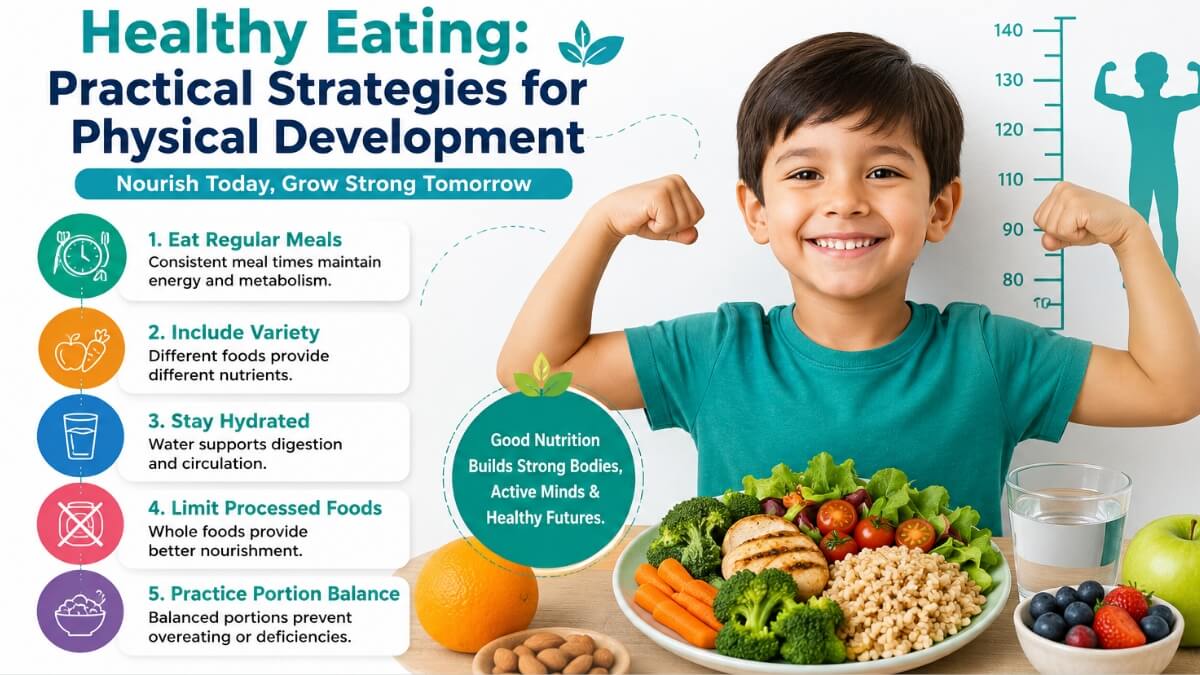
Healthy eating habits plays a crucial role in supporting physical development during childhood,as the body requires consistent nourishment to grow and function properly. Proper nutrition fuels growth, strengthens bones and muscles, and supports overall well-being. Essential nutrients such as protein, calcium, iron, and vitamins help build muscle tissue, increase bone density, and support energy production. When children receive balanced meals regularly, physical development becomes more stable and efficient. Without proper nutrition, the body may grow more slowly, lose strength, and experience reduced physical performance.
Early childhood is a critical period for establishing healthy eating patterns that influence long-term physical health. When balanced eating habits are introduced early, these behaviors often continue into adolescence and adulthood. Nutrition experts emphasize that repeated exposure to healthy foods helps shape preferences and reduces the likelihood of poor dietary habits later in life. A nutritious diet supports healthy weight management, improves coordination, and provides the stamina needed for daily movement and physical activity. In addition, well-nourished bodies are better equipped to handle physical challenges, recover from activity, and maintain consistent energy levels throughout the day.
Encouraging healthy eating is not solely about growth in height or weight; it is also about building a strong foundation for lifelong well-being. A balanced diet supports immune function, emotional balance, and physical resilience. When nutritious foods become part of daily routines, physical development is supported naturally and sustainably. This guide focuses on practical strategies that promote healthy eating habits in a realistic and approachable way. By emphasizing balanced meals, food variety, positive mealtime experiences, and consistent routines, healthy eating can become a lasting habit that supports physical development and overall health well into adulthood.
Why Healthy Eating Matters for Physical Development
Physical development depends heavily on the nutrients children receive daily. Proteins support muscle growth. Calcium and vitamin D strengthen bones. Iron helps deliver oxygen to growing tissues. Meanwhile, fruits and vegetables provide essential vitamins that support energy, immunity, and overall growth. According to the World Health Organization (WHO), “Proper nutrition during childhood is fundamental to growth, development, and lifelong health.” This highlights how daily food choices directly influence height, strength, and physical endurance. When meals include balanced nutrients, the body can build strong muscles, maintain healthy bones, and support organ development. In contrast, poor nutrition may lead to delayed growth, low energy levels, and weaker immunity. Therefore, healthy eating acts as the foundation for steady and balanqced physical development during childhood.
Experts also emphasize that nutrition affects more than just physical size. The American Academy of Pediatrics (AAP) states, “Nutrition is a key component of healthy growth and development, influencing physical strength, bone health, and metabolic function.” This means that consistent access to nutrient-rich foods supports coordination, stamina, and overall body function. Fruits and vegetables supply antioxidants that protect growing cells, while whole grains provide sustained energy for daily activities. Iron-rich foods help prevent fatigue and support active movement. Moreover, healthy eating habits established early often continue into later life. As UNICEF explains, “Well-nourished children are better able to grow, learn, play, and participate fully in society.” When balanced nutrition becomes part of everyday routines, physical development progresses more smoothly. As a result, children gain the strength, resilience, and vitality needed for healthy growth and long-term well-being.
Start with Balanced and Regular Meals
Balanced and regular meals play a vital role in supporting physical development and overall health. Consistent meal routines help the body understand when to expect nourishment, which supports better digestion and steady energy levels throughout the day. According to the American Academy of Pediatrics, “Regular, balanced meals provide the nutrients children need for healthy growth and development.” When meals and snacks are spaced evenly, energy dips are reduced, and the body can focus on growth rather than compensating for nutritional gaps. This consistency also supports metabolism and helps maintain healthy weight patterns during growing years.
Each meal should include a thoughtful mix of whole grains, lean proteins, healthy fats, and colorful fruits or vegetables. Whole grains supply lasting energy, while proteins help build and repair muscles. Healthy fats support brain function and nutrient absorption. Fruits and vegetables provide essential vitamins and minerals that strengthen bones, boost immunity, and support overall physical growth. The World Health Organization (WHO) notes, “A balanced diet is essential for normal growth, physical development, and active living.” When meals follow this balanced structure, the body receives steady nourishment needed for strong bones, healthy muscles, and sustained physical activity. Over time, regular and balanced meals create a stable foundation for physical development and long-term well-being.
Encourage Variety and Nutrient-Rich Foods
Encouraging a wide variety of nutrient-rich foods is essential for child health development. Different foods provide different vitamins and minerals, each playing a unique role in growth and strength. According to Harvard T.H. Chan School of Public Health, “No single food can supply all the nutrients the body needs, which is why dietary variety is so important.” Fruits and vegetables provide antioxidants and vitamins that support immunity and tissue growth. Legumes and whole grains offer fiber and plant-based protein for sustained energy. Dairy, eggs, and lean meats contribute calcium, iron, and high-quality protein, which help build strong bones and muscles. When meals include diverse food groups, the body receives balanced nourishment that supports steady physical development.
Variety also helps reduce picky eating habits over time. Repeated exposure to different foods allows children to become familiar with new tastes and textures in a positive way. The American Academy of Pediatrics explains, “Children may need multiple exposures to a new food before accepting it.” This gradual process builds comfort and encourages healthier preferences without pressure. As more foods are introduced regularly, acceptance increases naturally. Over time, these habits support better energy levels, improved physical performance, and stronger growth patterns. When variety becomes part of daily meals, healthy eating feels normal and enjoyable, creating a strong foundation for lifelong physical well-being.
Food Groups for Kids in Healthy Eating
Fruits
Fruits provide essential vitamins, minerals, and natural energy. They support immunity, digestion, and overall growth. Fresh, frozen, or dried fruits can be included daily to add variety and nutrition.
Vegetables
Vegetables are rich in vitamins, minerals, and fiber. They support bone health, muscle function, and digestion. Including a range of colorful vegetables helps provide different nutrients needed for physical development.
Grains (Prefer Whole Grains)
Grains supply energy for daily activities and growth. Whole grains such as brown rice, oats, and whole-wheat bread provide fiber and long-lasting energy that supports active bodies.
Protein Foods
Protein is essential for building and repairing muscles. This group includes lean meats, fish, eggs, beans, lentils, nuts, and seeds. Protein supports strength, growth, and overall physical development.
Dairy or Dairy Alternatives
Dairy foods such as milk, yogurt, and cheese provide calcium and vitamin D, which are important for strong bones and teeth. Fortified plant-based alternatives can also support bone health.
Healthy Fats
Healthy fats support brain development and help the body absorb vitamins. Sources include nuts, seeds, avocados, olive oil, and fatty fish. These fats also provide energy for growing children
Including all food groups in daily meals helps children receive balanced nutrition. When meals are varied and nutrient-rich, physical development, energy levels, and overall well-being improve naturally.
food groups for kids in healthy eating: in a chart
This chart explain healthy eating for physical development in a simple and visual way.
| Food Group | Key Nutrients | Benefits for Physical Development | Examples |
|---|---|---|---|
| Fruits | Vitamins, antioxidants, fiber | Boost immunity, support growth and energy | Apples, bananas, oranges, berries |
| Vegetables | Vitamins, minerals, fiber | Strengthen bones, muscles, and digestion | Carrots, spinach, broccoli, tomatoes |
| Grains (Whole Grains) | Carbohydrates, fiber, B vitamins | Provide energy and support active growth | Brown rice, oats, whole-wheat bread |
| Protein Foods | Protein, iron, zinc | Build muscles and support strength | Eggs, fish, chicken, beans, lentils |
| Dairy / Alternatives | Calcium, vitamin D, protein | Strengthen bones and teeth | Milk, yogurt, cheese, fortified soy milk |
| Healthy Fats | Healthy fats, vitamin E | Support brain development and energy | Nuts, seeds, avocado, olive oil |
Healthy and Unhealthy Foods for Physical Development
Healthy eating for physical development includes choosing foods that provide essential nutrients while limiting those that offer little nutritional value. Healthy foods such as fresh fruits, vegetables, whole grains, lean proteins, dairy or fortified alternatives, healthy fats, and water support steady growth, strong bones, muscle development, and sustained energy. These foods supply vitamins, minerals, protein, and healthy fats that help the body build tissue, maintain strength, and perform daily physical activities effectively. When nutrient-rich foods are included regularly, physical development progresses in a balanced and natural way.
Unhealthy foods, on the other hand, often contain high amounts of sugar, salt, and unhealthy fats while lacking essential nutrients. Items such as sugary snacks, fried foods, processed meats, refined grains, packaged snacks, and sugary drinks may provide quick energy but do not support proper growth. Frequent consumption of these foods can lead to energy crashes, reduced strength, and slower physical development. Limiting unhealthy foods and prioritizing nutritious options helps create a strong foundation for physical growth, better performance, and long-term health.
Healthy and Unhealthy Foods for Physical Development: in a chart
Healthy foods provide the nutrients needed for strong bones, muscles, and energy, while unhealthy foods may slow growth and reduce physical performance. Choosing nutrient-rich foods regularly supports healthy physical development and long-term well-being.
| Healthy Foods | Benefits for Physical Development | Unhealthy Foods | Why They Should Be Limited |
|---|---|---|---|
| Fresh fruits | Provide vitamins, energy, and immunity | Sugary candies | High sugar, low nutrients |
| Vegetables | Support bone, muscle, and digestion | Fried foods | High unhealthy fats |
| Whole grains | Provide long-lasting energy | Refined grains | Low fiber and nutrients |
| Lean proteins | Build muscles and strength | Processed meats | High salt and preservatives |
| Dairy / fortified alternatives | Strengthen bones and teeth | Sugary dairy desserts | Excess sugar |
| Nuts and seeds | Support brain and energy | Packaged snacks | High salt and additives |
| Healthy oils | Help nutrient absorption | Trans fats | Harmful for growth |
| Water | Maintain hydration and energy | Sugary drinks | Energy crashes and poor nutrition |
Make Healthy Eating a Positive Experience
Creating a positive mealtime environment plays an important role in developing healthy eating habits and supporting physical growth. Calm and stress-free meals help children associate food with comfort and enjoyment rather than pressure. According to the American Academy of Pediatrics, “A positive eating environment helps children listen to their hunger and fullness cues and supports healthier eating behaviors.” When meals are relaxed, children are more open to eating balanced foods and maintaining regular routines. Pleasant conversations, consistent schedules, and a welcoming atmosphere make mealtimes something to look forward to, which supports better nutrient intake and steady physical development.
Enjoyable meals also encourage children to explore new foods without fear or resistance. The World Health Organization (WHO) notes, “Supportive family environments are linked to healthier dietary patterns and improved child development.” When meals are shared, children observe healthy habits and feel emotionally secure, which can improve appetite and willingness to try different foods. Emotional well-being and nutrition are closely connected, as stress can affect digestion and growth. Shared meals help build structure, trust, and positive routines. Over time, these experiences strengthen healthy eating patterns, support physical growth, and contribute to overall well-being in a natural and lasting way.
Limit Processed and Sugary Foods
Limiting processed and sugary foods is essential for healthy physical development. Highly processed items often contain excessive sugar, salt, and unhealthy fats, which can disrupt normal growth patterns. According to the World Health Organization (WHO), “Diets high in free sugars increase the risk of unhealthy weight gain and poor nutrition in children.” While these foods may offer quick bursts of energy, they lack the vitamins, minerals, and proteins required for building strong bones and muscles. Frequent consumption can also lead to energy crashes, reduced concentration, and lower physical endurance, all of which may affect daily activity and overall development.
Replacing processed snacks with natural, nutrient-rich alternatives supports steadier growth and long-lasting energy. Fresh fruits, vegetables, nuts, yogurt, and whole grains provide essential nutrients that help maintain strength and vitality. The American Heart Association explains, “Reducing added sugars in children’s diets supports better heart health, weight management, and overall growth.” Gradual changes are often more effective than strict restrictions, as they allow healthier habits to develop naturally. Over time, choosing whole foods over processed options helps the body function efficiently, supports sustained energy levels, and creates a strong foundation for healthy physical development and long-term well-being.
Encouraging healthy eating habits is one of the most effective ways to support physical development in children. Balanced meals, nutrient-rich foods, positive routines, and limited processed options all contribute to steady growth and strength. When healthy eating becomes part of daily life, physical development improves naturally, creating a strong foundation for lifelong well-being
Healthy eating provides essential nutrients such as protein, calcium, iron, and vitamins that support muscle growth, bone strength, and energy. Balanced nutrition ensures steady physical development and helps children stay active, healthy, and resilient.
Parents can encourage healthy eating by offering a variety of nutrient-rich foods, creating positive mealtime environments, and including fruits, vegetables, whole grains, and lean proteins in daily meals. Consistent routines and repeated exposure help children develop lasting healthy habits.
Physical activity complements healthy eating by strengthening muscles and bones, improving coordination, and regulating appetite. Active children use nutrients efficiently, supporting growth, energy levels, and overall physical development.
