

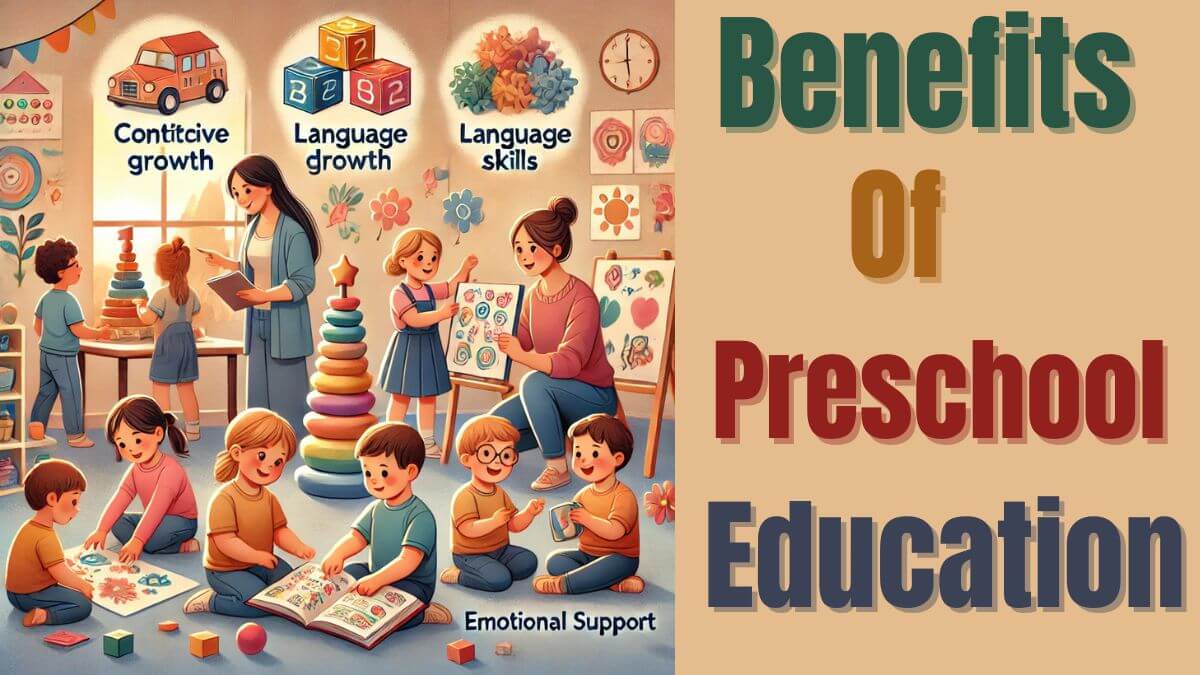
Preschool education is a fundamental stepping stone in a child’s development, providing essential benefits that significantly impact future success. During these formative years, children experience rapid brain development, making it a critical time for learning. In a preschool setting, children engage in structured activities that promote social, emotional, and cognitive growth. They learn to interact with peers, follow instructions, and express their thoughts, which lays the groundwork for essential skills such as critical thinking and problem-solving. Furthermore, studies consistently show that preschool children are better prepared for the academic challenges in elementary school. They also tend to exhibit stronger social skills, contributing to positive interactions and relationships. Therefore, recognizing the importance of preschool education is vital, as it equips children with the necessary tools to thrive both in school and in life, ultimately setting the stage for a successful and fulfilling future.
Benefits of Preschool Education
Preschool education offers a strong foundation for children’s lifelong learning. It promotes social, emotional, and cognitive development, preparing young minds for the structured environment of school. Through play and interactive activities, children learn essential skills like sharing, cooperation, and communication. Additionally, preschool introduces routines that help children feel secure and ready for the school day, fostering responsibility and independence.
Moreover, early education provides a stimulating environment that boosts cognitive abilities, enhancing language, math, and problem-solving skills. The structured playtime, art, and storytelling activities nurture creativity and critical thinking, essential for success in school and beyond. Furthermore, preschool allows children to explore and develop curiosity in a supportive setting, helping them adapt to diverse social environments. With the guidance of trained educators, children gain confidence, social adaptability, and a love for learning. Thus, preschool education lays a solid groundwork, enhancing children’s readiness for primary education and overall growth.
Social and Emotional Development
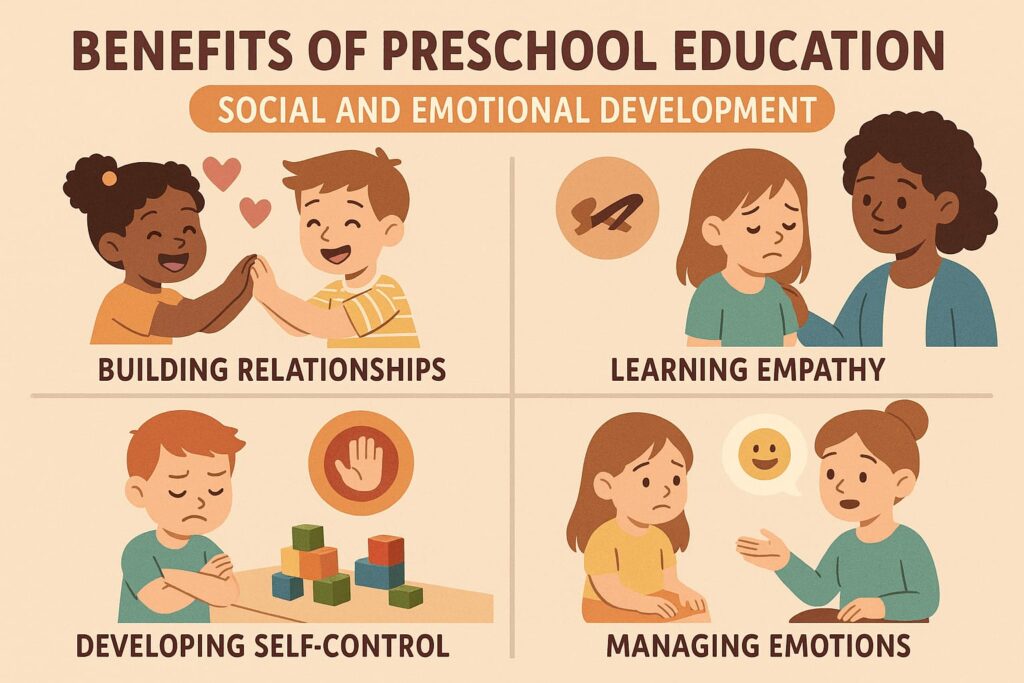
One of the key benefits of preschool education lies in fostering social and emotional development. In a structured preschool setting, children interact daily with peers and teachers, creating a rich environment for learning vital social skills. They practice sharing, taking turns, and cooperating with others, which helps in forming positive relationships. Additionally, preschool supports emotional growth, allowing children to recognize and manage their feelings more effectively. They develop empathy by understanding others’ perspectives, and they learn conflict-resolution skills. Altogether, these early experiences build a strong foundation for personal and academic success, preparing them for future social interactions.
Key Tip: Encourage children to express their feelings and thoughts during interactions with others. This promotes emotional intelligence and a deeper understanding of social dynamics.
Cognitive and Language Development
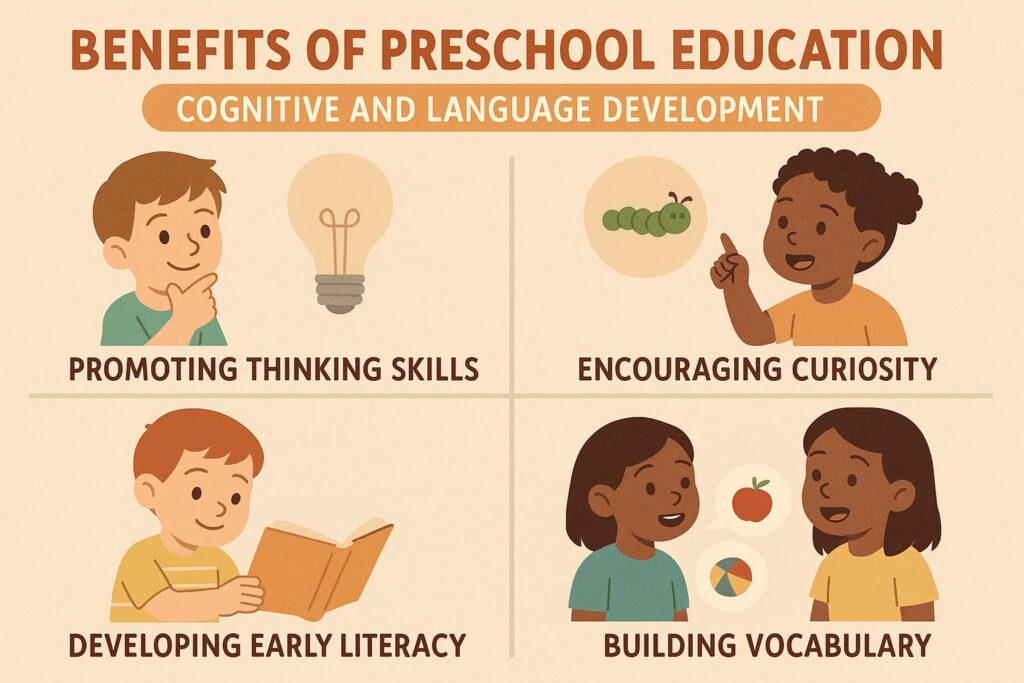
Preschool education plays a vital role in fostering cognitive and language development. In these early years, children are introduced to foundational concepts such as numbers, letters, shapes, and colors, which ignite their cognitive growth. This early exposure enhances problem-solving skills and encourages critical thinking. Additionally, preschool provides a rich environment for language development. Through activities like storytelling, songs, and engaging conversations, children expand their vocabulary and strengthen communication skills. These experiences are instrumental, as they not only prepare children for academic success in elementary school but also boost their confidence in expressing ideas and interacting with others.
Key Tip: Reading to children regularly and engaging in meaningful conversations can significantly boost their language development, preparing them for a smooth transition into formal schooling.
Building a Lifelong Love for Learning

Preschool introduces children to the idea that learning is enjoyable and rewarding. Through engaging, play-based activities, preschool fosters a positive attitude toward education, helping children see learning as a fun and exciting process. This early enthusiasm can greatly impact their future, as children who associate learning with enjoyment are more likely to remain motivated and curious. Furthermore, preschool activities encourage exploration and creativity, allowing children to discover new interests. By cultivating this positive outlook early on, preschool lays a strong foundation for a lifelong love of learning, making children more resilient and eager to explore new ideas throughout school and beyond.
Key Tip: Encourage learning through play. Choose activities that spark curiosity and interest, whether it’s building blocks, puzzles, or simple science experiments.
Preparation for School Readiness

One of the greatest benefits of preschool education is its role in preparing children for school readiness. In preschool, children become familiar with routines, basic academic concepts, and the structure of a classroom environment. This early introduction helps them adjust smoothly to kindergarten and beyond, as they’ve already developed essential skills like listening to instructions, following schedules, and collaborating with peers. Additionally, preschool introduces children to activities that build their fine motor and cognitive skills, preparing them for more structured learning. This strong foundation supports a confident transition into formal schooling, easing the shift and setting them up for future success.
Key Tip: Support school readiness by incorporating small tasks that encourage independence, such as letting children dress themselves or pack their own backpacks.
Boosting Physical Development

In addition to cognitive and social growth, preschool plays a crucial role in boosting physical development. Through engaging activities like outdoor play, arts and crafts, and structured movement exercises, children enhance both fine and gross motor skills. For example, cutting with scissors and drawing support fine motor development, while running and climbing strengthen larger muscle groups. This focus on physical skills ensures children are prepared not only mentally but also physically for school tasks, such as holding a pencil, managing school supplies, and participating in sports. As a result, they gain the confidence and coordination needed for success in a classroom setting.
Key Tip: Provide opportunities for active play at home, such as running, jumping, or throwing a ball, to support physical development alongside preschool activities.
Enhancing Creativity and Imagination
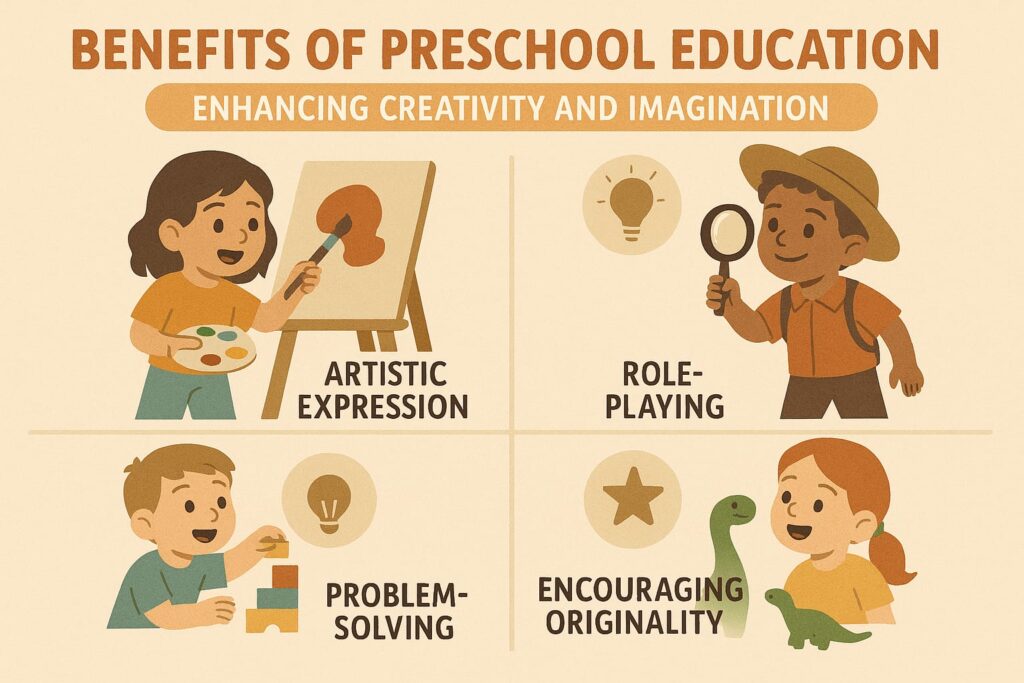
Preschool education greatly enhances creativity and imagination by offering children diverse opportunities, such as arts and crafts, dramatic play, and storytelling. Through these activities, children can express themselves, explore unique ideas, and gain confidence in their creative abilities. Moreover, these early creative experiences are linked to stronger problem-solving skills and greater innovation as they grow. When children are encouraged to think creatively, they develop flexibility in their thinking and a willingness to approach challenges from new angles. As a result, fostering creativity in preschool not only enriches their early learning experience but also contributes to lifelong cognitive and social benefits.
Key Tip: Offer creative materials like crayons, paint, or clay at home. Let children take the lead in their projects, helping them build confidence in their ideas.
Encouraging Independence and Responsibility

Preschool provides a safe environment where children can begin developing independence and responsibility. In this setting, they learn to take care of their belongings, make choices, and solve simple problems on their own. For instance, children are encouraged to put away toys, choose activities, and share their ideas during group discussions. These experiences foster a sense of autonomy and help build self-esteem. Furthermore, developing independence and responsibility at an early age is essential for overall growth and lays the groundwork for future success in school and life. As a result, preschool prepares children to navigate challenges with confidence and resilience.
Key Tip: Encourage small responsibilities at home, such as tidying up toys or helping set the table. This reinforces the habits of independence and accountability learned in preschool.
Building a Supportive Foundation for Special Needs
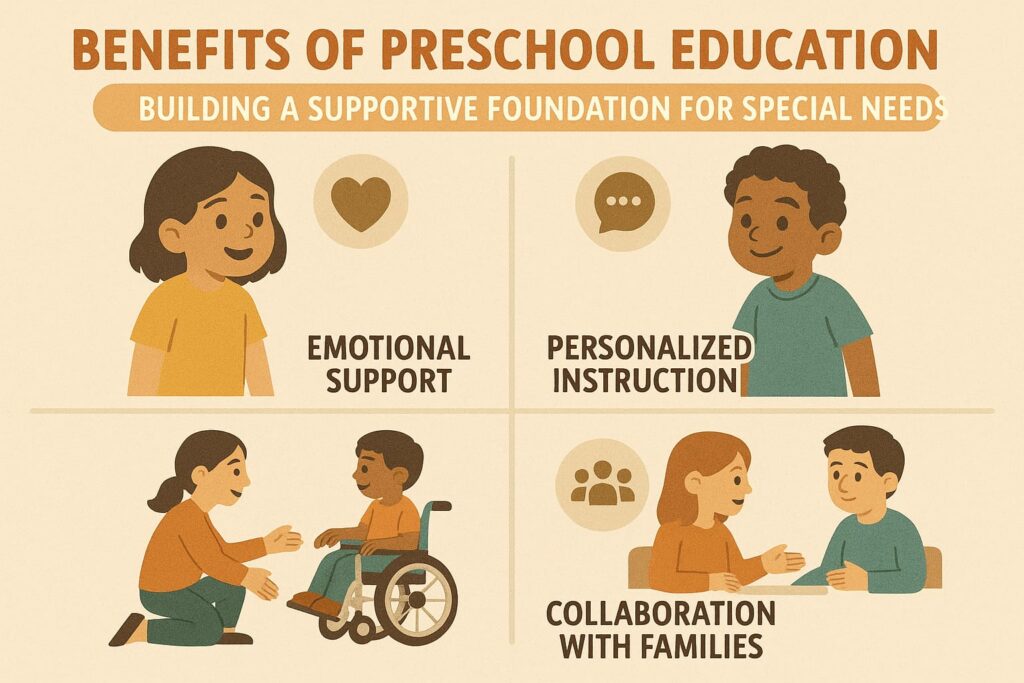
Preschool education offers vital benefits for children with special needs, providing early intervention in a structured environment. Educators can identify developmental delays, allowing for timely, targeted support. This early assistance builds skills in communication, social interaction, and emotional regulation. Additionally, inclusive preschool settings promote social skills and confidence, as children with special needs learn alongside peers. Preschool thus plays an essential role in helping these children reach their potential, establishing a strong foundation for future growth and development.
Key Tip: Collaborate with preschool teachers and specialists to ensure that a child with special needs receives individualized attention and resources.
Individualized Learning Approaches
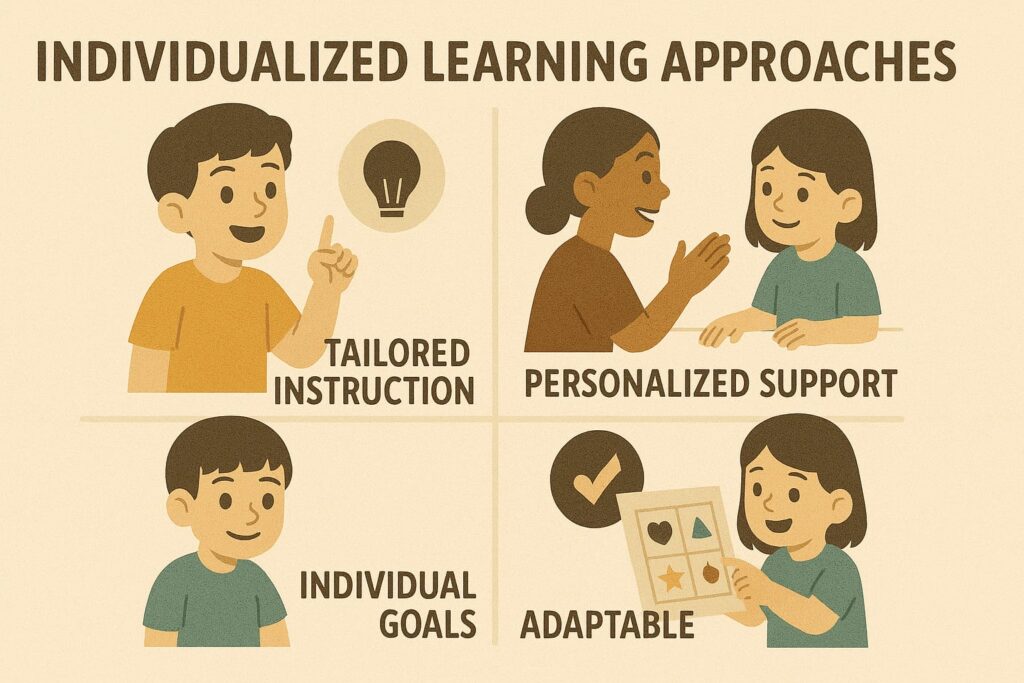
Preschools often use individualized learning approaches to support each child’s unique needs and pace. With tailored activities and specialized support, educators provide the right tools for progress in key areas. This personalized approach allows children with special needs to advance at their own pace, building confidence through small successes. Additionally, individualized learning creates an inclusive environment where all children can engage and thrive together. These tailored strategies help children develop essential skills in a way that suits them, laying a strong foundation for future growth.
Key Tip: One effective way to support individualized learning in preschool is to observe each child’s interests and strengths closely.
Enhanced Communication Skills

Preschool environments offer structured opportunities for children to build communication skills. Through activities like group play, storytime, and guided discussions, children with special needs gain valuable support in developing language and social communication. This early exposure helps them practice expressing thoughts, listening, and understanding social cues. Additionally, consistent communication practice fosters confidence, encouraging active participation. As a result, preschool plays a vital role in establishing foundational communication skills that support children academically, socially, and emotionally in the future.
Key Tip: Encourage interactive activities like group play and Storytime to help children practice and build communication skills early.
Why Preschool Education Matters for Every Child
Preschool education plays a crucial role in shaping a child’s future, offering a strong foundation for both academic and personal success. During these early years, children experience rapid brain development, and preschool provides a supportive environment that nurtures growth. Through structured activities, children develop essential skills, including social, emotional, and cognitive abilities. Studies show that children who attend preschool often perform better in later school years and build stronger social connections. Moreover, by associating learning with positive experiences, preschool encourages a lifelong love of learning. Overall, preschool prepares children for the challenges and opportunities ahead, making it invaluable.
In conclusion, preschool education is essential for building a child’s social, emotional, and cognitive skills, setting a foundation for lifelong success. Enrolling in preschool prepares children for future challenges and nurtures curiosity and resilience. Start exploring local preschools today to support a child’s bright future.
Preschool education provides children with foundational skills in areas like social interaction, early literacy, and emotional regulation. It encourages curiosity, helps develop motor skills, and sets a strong base for future academic success by introducing structured learning environments early on.
In preschool, children learn how to share, cooperate, and resolve conflicts in a safe, supervised setting. These interactions help them develop social skills that are crucial for building friendships, understanding empathy, and feeling comfortable in group settings.
Yes, preschool plays a significant role in cognitive development. Activities that focus on problem-solving, early numeracy, and language skills stimulate a child’s brain, improving memory, attention, and overall learning capacity. This foundation helps prepare children for more advanced concepts as they enter formal schooling.
