


Motor skills are essential for a child’s overall development, encompassing both fine and gross motor abilities. These skills play a vital role in everyday activities such as walking, writing, eating, and even social interactions. By focusing on enhancing a child’s motor skills, parents and educators can support physical coordination, strength, and independence. Furthermore, developing these skills early sets the stage for success in school, sports, and daily life. Encouraging activities that build motor skills not only benefit physical growth but also boost confidence and cognitive abilities, forming a strong foundation for lifelong learning and achievement.
In this guide, we will explore practical ways to support a child’s motor development and ensure they achieve their full potential.
Understanding Motor Skills: The Basics
Motor skills are essential for daily activities, and are categorized into two types: fine motor skills and gross motor skills. Dr. John Hutton, a pediatric expert, explains, “These skills form the foundation for tasks like writing, walking, and playing.” Encouraging practice through play and daily activities promotes growth, helping children develop essential coordination and strength.
- Fine motor skills involve small movements like picking up small objects, writing, and using utensils.
- Gross motor skills refer to larger movements like walking, running, jumping, and balancing.
Both types of motor skills are developed through practice and exploration. By providing your child with the right opportunities, you can encourage their development and set them up for success.
Encourage Physical Activity and Play
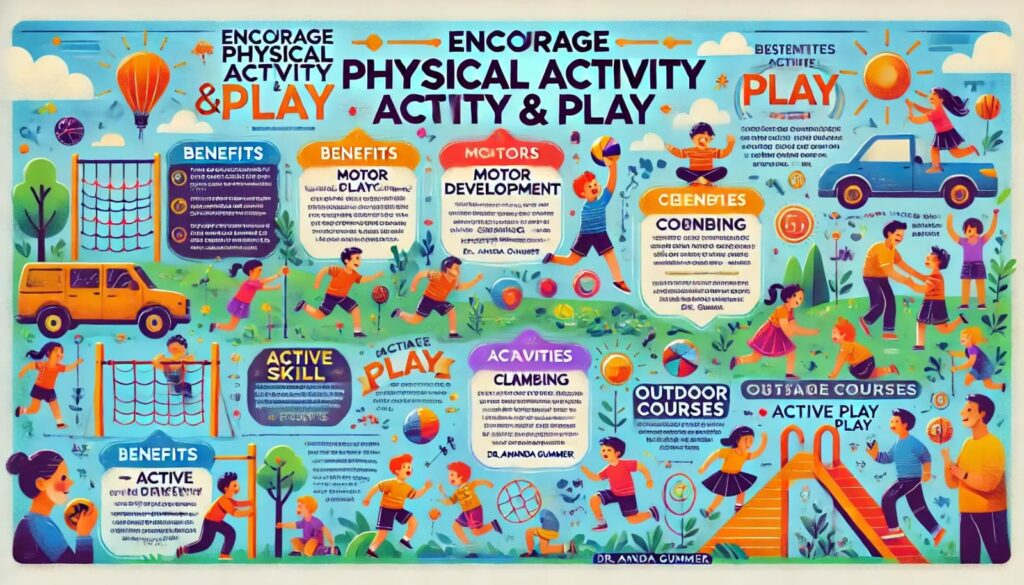
Encouraging physical activity and play is crucial for developing both fine and gross motor skills. Activities that enhance balance, coordination, and strength are particularly beneficial. Dr. Amanda Gummer, a child development expert, states, “Active play is a natural way for children to develop essential motor skills while having fun.” Simple activities like jumping, climbing, or dancing can boost coordination and confidence. Additionally, outdoor games like tag or obstacle courses encourage teamwork and physical fitness. As children engage in these activities, they build strength and improve flexibility, which are vital for their overall growth and development.
For Gross Motor Skills:
- Running, jumping, and climbing help improve balance and strength. Try outdoor games like tag or obstacle courses to keep things exciting.
- Dancing to music is a fun way to improve coordination and rhythm while boosting confidence.
- Swimming builds overall muscle strength and enhances coordination.
For Fine Motor Skills:
- Building with blocks or playing with puzzles improves hand-eye coordination.
- Drawing, coloring, or painting strengthens finger muscles and improves dexterity.
Offer Interactive Toys
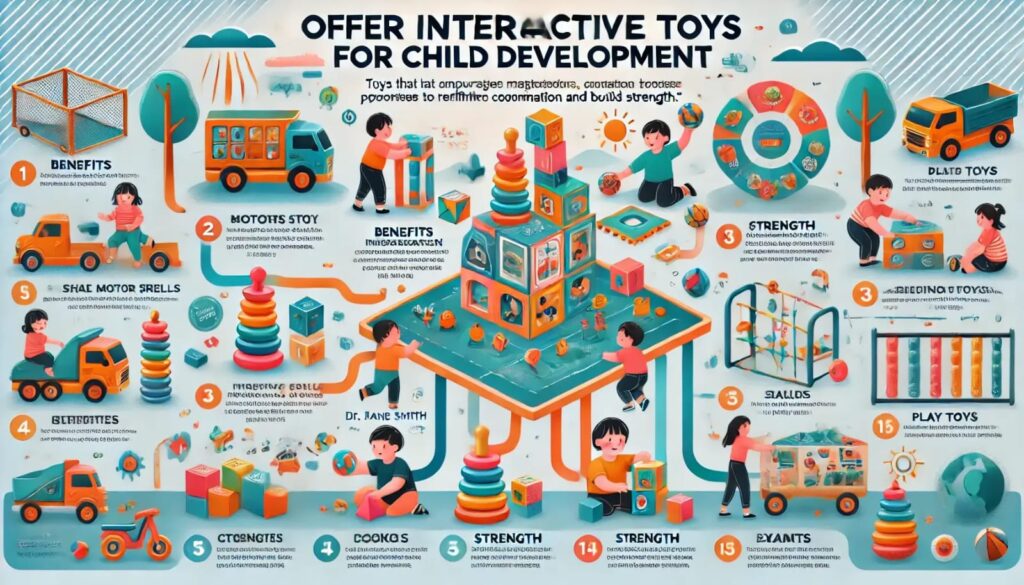
Interactive toys are vital for developing motor skills as they engage children in fun, hands-on activities. Dr. Jane Smith, a leading child psychologist, explains, “Toys that encourage manipulation, stacking, or movement provide children with opportunities to refine coordination and build strength.” For example, shape sorters and building blocks improve fine motor skills by enhancing hand-eye coordination. Similarly, stacking toys fosters problem-solving abilities and dexterity. Moreover, balls and play mats promote gross motor activities like crawling or rolling. By incorporating these toys into playtime, children can develop critical skills while enjoying engaging and stimulating experiences.
- Shape sorters, stacking toys, and building sets help refine both fine and gross motor skills.
- Bouncy balls or soft play mats encourage crawling, standing, and walking.
Interactive toys that require problem-solving or hand-eye coordination can also enhance cognitive development.
Practice Hand-Eye Coordination

Practicing hand-eye coordination is essential for developing skills like writing and catching. Dr. Susan Harper, a child development specialist, emphasizes, “Activities requiring precision and focus significantly enhance a child’s hand-eye coordination and confidence.” Simple tasks such as throwing and catching a softball improve timing and coordination. Moreover, cutting paper with child-safe scissors strengthens hand muscles while teaching control. Additionally, threading beads or pasta helps refine fine motor skills and concentration. These activities are not only fun but also prepare children for everyday tasks. Consistently practicing hand-eye coordination lays the foundation for success in both school and play.
- Throwing and catching a ball: Start with a softball and move to a larger one as your child improves.
- Cutting with child-safe scissors: This simple activity strengthens hand muscles and improves control.
- Stringing beads or threading pasta: These activities improve finger dexterity and control.
Foster Fine Motor Development Through Everyday Activities

Fostering fine motor development through daily routines is both practical and effective. Dr. Emily Carter, an occupational therapist, explains, “Involving children in everyday tasks strengthens fine motor skills while building independence.” For example, activities like buttoning clothes, using utensils during meals or brushing teeth enhance hand dexterity and control. Additionally, simple tasks like pouring water or peeling stickers improve grip and coordination. These activities are not only beneficial but also seamlessly integrated into a child’s daily life. By encouraging participation in these routines, children develop essential skills that prepare them for more complex tasks like writing and drawing.
- Feeding themselves with utensils enhances hand control.
- Dressing themselves or buttoning clothes promotes fine motor strength.
- Washing hands or brushing teeth encourages the development of both fine and gross motor skills.
These tasks also foster independence and confidence.
Use Technology as a Tool, Not a Crutch

Using technology wisely can support motor skill development without over-reliance. Dr. Laura Markham, a parenting expert, states, “Educational apps and games can be valuable tools when balanced with active play.” Interactive apps that focus on drawing, tracing, or problem-solving enhance fine motor skills and hand-eye coordination. Additionally, games requiring gestures, like swiping or tapping, improve finger dexterity. However, it’s crucial to balance screen time with physical activities to ensure holistic growth. By choosing age-appropriate and engaging technology, parents can turn screen time into a productive learning experience while avoiding the pitfalls of excessive digital exposure.
Look for apps that encourage drawing, tracing, or shaping. These types of activities can enhance fine motor development in a fun, interactive way.
Set Up a Safe and Stimulating Environment

Creating a safe and stimulating environment is essential for encouraging motor skill development. Dr. Rebecca White, a child development specialist, highlights, “Children thrive when they have spaces that promote exploration and movement without fear of injury.” Setting up obstacle courses with cushions or mats can improve balance and coordination, while open areas for crawling or running foster gross motor skills. Additionally, providing access to toys like stacking blocks or play gyms keeps children engaged in skill-building activities. By designing a secure and inviting space, children gain confidence to practice new movements, enhancing their physical abilities and overall development. Keep the following tips in mind:
- Create safe spaces for a child to move freely and explore. This allows them to practice their skills without fear of injury.
- Incorporate obstacles such as pillows, cushions, or furniture that they can climb over or crawl under.
- Provide open spaces for running, hopping, or other gross motor activities.
When children feel free to explore, they naturally build their confidence and motor skills.
Be Patient and Celebrate Small Wins
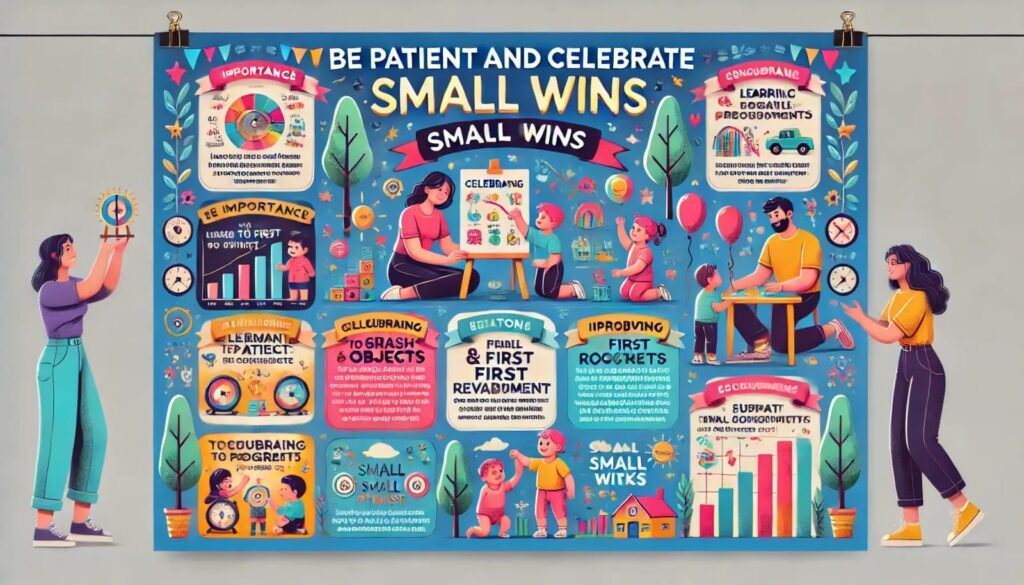
Patience and encouragement are key to supporting motor skill development. Dr. Katherine Lewis, a pediatric development expert, advises, “Recognizing and celebrating small milestones fosters a child’s confidence and motivation to progress.” Every child grows at their own pace—some may quickly master new movements, while others need more time. Simple achievements, like stacking a block or climbing a step, are significant steps in their journey. Additionally, offering positive reinforcement helps children feel supported and eager to try again. By staying patient and celebrating small wins, caregivers create a nurturing environment that encourages steady and confident motor skill growth.
Encouragement goes a long way. Offer praise and celebrate their achievements, whether it’s catching their first ball or mastering a new dance move.
Actionable Tips for Child’s Motor Skills Development
Encourage activities like dancing or playing catch to boost balance, coordination, and strength, while interactive toys like building blocks enhance fine motor skills. Everyday tasks such as buttoning clothes or using utensils also support motor skill development through practical practice. Here’s a quick recap of the strategies:
- Encourage daily physical activity and play.
- Choose toys that stimulate motor skills.
- Practice hand-eye coordination with simple activities.
- Foster motor development through everyday tasks.
- Limit screen time and use educational apps selectively.
- Create a safe and stimulating environment for exploration.
- Celebrate small milestones and be patient.
Providing the right tools and opportunities lays a strong foundation for a child’s motor skills, supporting their physical, emotional and cognitive development. Taking time to observe and encourage a child’s motor skills allows them to thrive as they develop essential abilities that will benefit them throughout life.
Remember, every child is different, but with consistent encouragement and the right environment, all children can build strong motor skills and gain confidence in their abilities.
Motor skill milestones vary by age but typically include activities like rolling over (3–6 months), crawling (6–10 months), walking (12–18 months), and improved hand-eye coordination for drawing or writing (2–5 years).
Simple activities like playing with puzzles, practicing with crayons, hopping on one foot, or engaging in outdoor sports can effectively enhance both fine and gross motor skills in a fun and interactive way.
Signs of motor skill delays may include difficulty holding small objects, avoiding physical activities, or not reaching age-appropriate milestones like walking or running. Consulting a pediatrician or therapist can help address these concerns early.

2 Comments
В мессенджере Telegram появилась функция звезд.
Теперь участники могут выделять важные чаты.
Это позволяет быстро находить нужную заметку.
звезды в тг купить цена
Функция комфортна для ежедневного общения.
С использованием звёзд легко оставить ключевые моменты.
Такой инструмент сохраняет время и делает общение проще.
Индивидуалки — это яркие личности, которые берегут свою свободу.
Они отдают предпочтение к самостоятельному подходу в взаимодействии.
Такие девушки обычно обладают сильным характером и сформированными жизненными установками.
Они открыто демонстрировать свои убеждения.
https://lugansk.spaxam.net/
Общение с ними часто получается осмысленным.
Они способны слышать собеседника и строить искренние отношения.
Такие девушки мотивируют окружающих своей аутентичностью.
Они идут своим путем, не подстраиваясь под сторонние ожидания.