


Nutrition is essential for children’s overall growth, development, and long-term health. Proper nutrition provides the necessary vitamins, minerals, and energy needed for physical growth, cognitive development, and a strong immune system. In fact, healthy eating habits established during childhood can shape lifelong well-being. As children grow rapidly during their early years, the foods they consume play a critical role in supporting their mental and physical abilities. Without proper nutrition, children are more susceptible to health issues such as malnutrition, weakened immunity, and developmental delays. Therefore, understanding why nutrition is important for children is key to helping them thrive and reach their full potential.
Why Is Nutrition Important for Children?
Nutrition is the foundation of a child’s overall health. During early childhood, proper nutrition supports brain development, strengthens the immune system, and fuels physical growth. It also helps prevent common childhood diseases like obesity and malnutrition, both of which can lead to long-term health problems. Without the right nutrients, children may struggle with developmental delays, learning difficulties, and weakened immunity. Children require essential nutrients to develop strong bones, muscles, and organs. Additionally, a balanced diet enhances cognitive function, allowing for better focus and learning in school. Furthermore, nutritious foods can help stabilize mood and energy levels, contributing to emotional well-being.
Moreover, establishing healthy eating habits early in life lays the foundation for lifelong wellness. For example, introducing a variety of fruits, vegetables, and whole grains encourages children to make healthier choices as they grow.
The Impact of Nutrition on Child Growth

Children’s bodies require a variety of nutrients to grow and function properly. Essential nutrients include vitamins, minerals, proteins, fats, and carbohydrates. Each of these nutrients plays a specific role in development:
• Vitamins and Minerals:
Vitamins and minerals significantly impact child growth and development. First, vitamins like A, C, and D, as well as minerals like calcium and iron, are critical for bone strength, eye health, and overall immunity. For instance, vitamin D and calcium strengthen bones, while iron plays a crucial role in cognitive development. Moreover, a balanced diet rich in fruits, vegetables, and whole grains provides the necessary vitamins and minerals for optimal growth. Additionally, deficiencies in these nutrients can lead to stunted growth and health issues. Therefore, ensuring that children receive adequate nutrition is vital for promoting their overall well-being and fostering healthy development throughout childhood.
• Proteins:
Proteins play a vital role in child growth and development. First and foremost, proteins are the building blocks of the body, crucial for muscle growth, cell repair, and hormone production. For instance, adequate protein intake supports the development of strong muscles and tissues, which is essential during the rapid growth phases of childhood. Moreover, proteins contribute to the immune system, helping children fight off infections and illnesses. Additionally, incorporating a variety of protein sources, such as lean meats, dairy, legumes, and nuts, ensures children receive all the necessary amino acids for optimal health. Therefore, a protein-rich diet is essential for fostering healthy growth and development in children.
• Healthy Fats:
Healthy fats are crucial for child growth and overall development. First, these fats provide essential fatty acids that the body cannot produce on its own. For instance, healthy fats, such as omega-3 fatty acids, are necessary for brain development and cognitive function. Moreover, they support the absorption of fat-soluble vitamins like A, D, E, and K, promoting overall health. Additionally, including sources of healthy fats, such as avocados, nuts, seeds, and fatty fish, in a child’s diet can enhance their energy levels and improve mood. Therefore, prioritizing healthy fats is essential for fostering optimal growth and cognitive development in children.
• Carbohydrates:
Carbohydrates are fundamental to child growth and overall health. First, they provide energy for daily activities, supporting everything from play to learning. For instance, carbs are the body’s primary energy source, fueling both physical and mental performance. Additionally, carbohydrates help maintain steady blood sugar levels, preventing energy crashes that can lead to irritability and fatigue. Moreover, choosing complex carbohydrates, such as whole grains, fruits, and vegetables, offers additional nutrients and fiber, which promote digestive health. Therefore, incorporating a variety of healthy carbohydrates into a child’s diet is essential for supporting their energy needs and fostering optimal growth and development.
The impact of nutrition on child growth in a chart
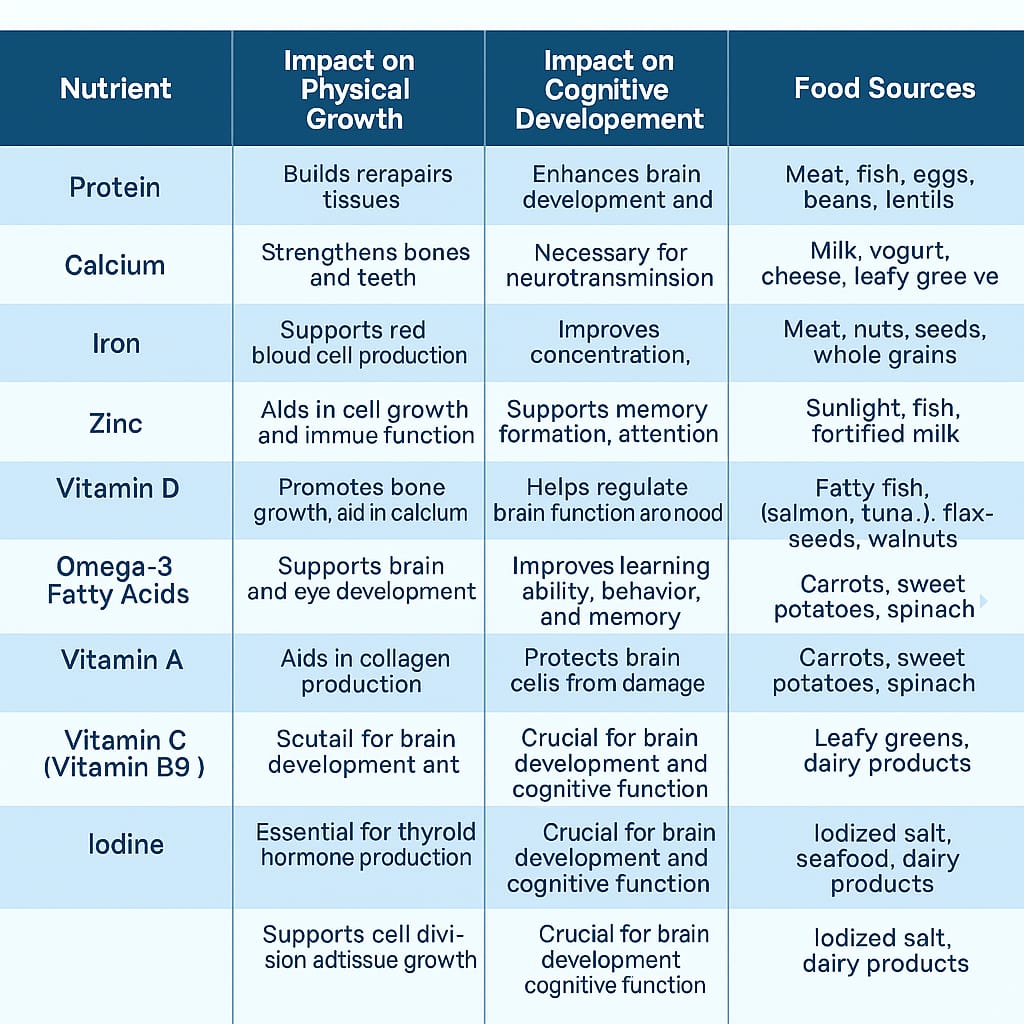
Here’s a simple chart showing the impact of nutrition on child growth, outlining key nutrients and their roles in physical and cognitive development:
| Nutrient | Impact on Physical Growth | Impact on Cognitive Development | Food Sources |
|---|---|---|---|
| Protein | Builds and repairs tissues, supports muscle growth | Enhances brain development and function | Meat, fish, eggs, beans, lentils |
| Calcium | Strengthens bones and teeth | Necessary for neurotransmission and memory | Milk, yogurt, cheese, leafy green vegetables |
| Iron | Supports red blood cell production, boosts energy | Improves concentration, cognitive performance | Red meat, beans, spinach, fortified cereals |
| Zinc | Aids in cell growth and immune function | Supports memory formation, attention, and learning | Meat, nuts, seeds, whole grains |
| Vitamin D | Promotes bone growth, aids in calcium absorption | Helps regulate brain function and mood | Sunlight, fish, fortified milk |
| Omega-3 Fatty Acids | Supports brain and eye development | Improves learning ability, behavior, and memory | Fatty fish (salmon, tuna), flaxseeds, walnuts |
| Vitamin A | Supports eye health, immune function | Enhances visual processing and cognitive function | Carrots, sweet potatoes, spinach |
| Vitamin C | Aids in collagen production, boosts immunity | Protects brain cells from damage, supports memory | Citrus fruits, strawberries, bell peppers |
| Folate (Vitamin B9) | Supports cell division and tissue growth | Crucial for brain development, prevents neural tube defects | Leafy greens, beans, fortified grains |
| Iodine | Essential for thyroid hormone production, growth | Crucial for brain development and cognitive function | Iodized salt, seafood, dairy products |
This chart summarizes how specific nutrients are essential for children’s physical and cognitive development, providing guidance on the best food sources for each.
Importance of Balanced Meals for Children

A balanced diet ensures that children get all the nutrients they need. But what does a balanced meal look like for a child?
• Fruits and Vegetables:
Fruits and vegetables are vital components of balanced meals for children. First, half of the child’s plate should be filled with colorful fruits and vegetables, ensuring a variety of nutrients. For instance, these foods provide essential vitamins, minerals, and fiber necessary for healthy growth and development. Moreover, fruits and vegetables support immune function and help prevent chronic diseases later in life. Additionally, their high fiber content aids digestion and promotes satiety, reducing the likelihood of overeating. By incorporating a rainbow of fruits and vegetables into daily meals, caregivers can instill healthy eating habits that will benefit children throughout their lives.
• Whole Grains :
Whole grains are essential for balanced meals for children. First, opting for whole grains like oats, brown rice, and whole-wheat bread ensures that children receive vital nutrients. For instance, these grains are rich in fiber, which aids digestion and promotes a healthy gut. Moreover, whole grains provide sustained energy, helping children stay focused and active throughout the day. Additionally, they contain important vitamins and minerals that support overall growth and development. By incorporating whole grains into meals, caregivers can foster healthier eating habits while providing children with the nutrition they need for optimal physical and cognitive development.
• Lean Proteins:
Lean proteins are crucial for balanced meals for children. First, lean proteins like chicken, fish, beans, and eggs provide essential amino acids necessary for growth. For instance, these proteins support muscle growth and repair, which is vital during childhood when development is rapid. Moreover, lean proteins help maintain healthy body weight by promoting satiety, making children feel full longer. Additionally, they play a significant role in supporting the immune system and helping children fight off illnesses. By incorporating a variety of lean protein sources into meals, caregivers can ensure that children receive the nutrition needed for overall health and development.
• Dairy or Dairy Alternatives:
Dairy and dairy alternatives are essential components of balanced meals for children. First, milk, yogurt, and cheese are rich in calcium and vitamin D, which are crucial for bone health. For instance, these nutrients help build strong bones and teeth, supporting growth during childhood. Moreover, dairy products also provide protein and essential vitamins, promoting overall health and development. Additionally, for those who are lactose intolerant or prefer plant-based options, alternatives such as almond milk or soy yogurt can offer similar nutritional benefits. By including a variety of dairy or dairy alternatives in meals, caregivers can help ensure children receive the nutrients necessary for healthy growth and development.
Common Nutritional Deficiencies in Children

Despite the availability of nutritious food, many children experience nutrient deficiencies that can affect their health and development. Here are some common deficiencies:
• Iron Deficiency:
Iron is crucial for producing red blood cells. Without enough iron, children may develop anemia, leading to fatigue and weakness. Additionally, iron deficiency can delay cognitive and physical development, which affects a child’s growth and learning abilities. Moreover, low iron levels can weaken the immune system, making children more susceptible to infections. Parents need to ensure their child consumes iron-rich foods like lean meats, beans, and fortified cereals. In addition, regular check-ups with a healthcare professional can help detect iron deficiency early. By addressing this common nutritional deficiency, children can develop strong and healthy.
• Vitamin D Deficiency:
Vitamin D is important for bone health and the immune system. Without sufficient Vitamin D, children are at risk of developing weakened bones, which can lead to conditions like rickets. Furthermore, a deficiency can increase their vulnerability to infections, as Vitamin D plays a key role in strengthening the immune system. In addition to bone and immune health, Vitamin D supports proper muscle function, which is vital for overall physical development. To prevent deficiencies, children need to get enough sunlight exposure and consume Vitamin D-rich foods like fortified dairy products, fatty fish, and egg yolks.
• Calcium Deficiency:
Without enough calcium, children may face issues with bone development and a higher risk of fractures. Calcium is essential for building strong bones and teeth, especially during the critical growth phases of childhood. Moreover, a calcium deficiency can lead to problems with muscle function and even affect the heart’s ability to contract properly. To support healthy development, children need to consume calcium-rich foods like dairy products, leafy greens, and fortified alternatives. Additionally, ensuring adequate calcium intake early in life can help prevent future bone issues, including osteoporosis.
Tips for Parents: How to Encourage Healthy Eating in Children

Encouraging healthy eating in children starts with creating a positive food environment. First, introduce a variety of colorful fruits and vegetables to make meals exciting. Next, set a good example by eating nutritious foods yourself. Additionally, involve children in meal planning and preparation to spark their interest. Furthermore, try to avoid using food as a reward or punishment, which can lead to unhealthy habits. Finally, be patient, as developing healthy eating patterns takes time.
• Set a Good Example:
Children are more likely to adopt healthy eating habits when they see their parents or caregivers doing the same. By eating balanced meals together as a family, you create an environment that promotes nutritious choices. Additionally, showing enthusiasm for healthy foods encourages children to try new things. Moreover, consistently making healthier options available at home reinforces positive habits. As a result, children will naturally mimic these behaviors, building a foundation for lifelong healthy eating.
• Involve Children in Meal Preparation:
Encourage children to help with grocery shopping and meal preparation, as this fosters a sense of responsibility and involvement. By allowing them to choose healthy ingredients, they’ll be more excited to try new foods. Additionally, involving them in the cooking process helps them understand the value of nutritious meals. Furthermore, this hands-on experience builds essential life skills while creating positive associations with healthy eating. Over time, children are more likely to develop lasting, healthy eating habits.
• Offer Variety:
Introduce new foods regularly to expand your child’s palate and encourage curiosity about different flavors. Offering a variety of options ensures they get a range of nutrients necessary for their growth and development. Additionally, mixing familiar favorites with new ingredients makes trying new foods less overwhelming. Furthermore, variety helps prevent picky eating and keeps meals interesting. By providing diverse, colorful meals, children are more likely to enjoy balanced diets and embrace healthier choices.
• Limit Sugary Snacks:
Reduce sugary drinks and processed snacks to promote healthier eating habits in children. Instead, offer nutritious alternatives like fruits, nuts, or yogurt, which provide essential vitamins and minerals. Additionally, limiting sugar helps prevent energy crashes and supports better concentration. Moreover, by replacing sugary options with healthier snacks, children can develop a preference for wholesome foods. Over time, this shift will encourage more balanced snacking choices that benefit their overall health.
• Create a Routine:
Establish regular meal and snack times to keep hunger and cravings in check, helping children maintain consistent energy levels throughout the day. By creating a routine, children are more likely to develop a healthy relationship with food and avoid overeating. Additionally, predictable eating times ensure they get the nutrients they need at proper intervals. Moreover, a set schedule reduces impulsive snacking on unhealthy foods. Over time, this routine encourages mindful eating habits that support long-term well-being.
How Nutrition Supports Mental and Emotional Well-Being
Good nutrition isn’t just about physical health; it also impacts a child’s mental and emotional well-being. Studies show that a balanced diet rich in nutrients can improve concentration, memory, and learning abilities. Omega-3 fatty acids, found in fish, and antioxidants, found in fruits and vegetables, support brain function and reduce stress levels in children.
On the flip side, poor nutrition, such as diets high in sugar and processed foods, has been linked to behavioral issues like hyperactivity and difficulty focusing. Ensuring that children eat nutritious foods can lead to better academic performance and overall happiness.
Fresh tip; Incorporating omega-3 fatty acids from sources like fatty fish, walnuts, and flaxseeds into the diet can significantly boost mental and emotional well-being.
The Role of Nutrition in Preventing Childhood Obesity
Childhood obesity has become a major concern worldwide, with poor eating habits, sedentary lifestyles, and easy access to fast food contributing to rising obesity rates. Nutrition plays a crucial role in preventing this issue. Ensuring children eat balanced meals with controlled portions helps maintain a healthy weight by providing the right nutrients without overconsumption. Additionally, incorporating regular physical activity, such as outdoor play or sports, supports a healthy metabolism and promotes weight management. Moreover, teaching children about the importance of nutrition and exercise fosters lifelong habits that can prevent obesity and related health problems.
How to Create Healthy Mealtime Habits for a Child
Creating healthy mealtime habits for children is essential for their overall well-being and development. Good nutrition is the foundation for physical growth, cognitive development, and emotional health. Here’s how to foster healthy eating habits:
. Establish a Routine
- Set Regular Meal Times: Consistency helps children understand when to expect meals, fostering a sense of security. Aim for three main meals and two healthy snacks each day.
- Create a Family Meal Environment: Whenever possible, sit down together as a family. This promotes healthy eating and allows for positive interactions around food.
. Offer a Variety of Foods
- Introduce Diverse Options: Encourage children to try different fruits, vegetables, whole grains, and proteins. This helps them develop a taste for various foods and ensures they get essential nutrients.
- Involve Children in Meal Planning: Let them help choose meals and snacks. This involvement can increase their interest in trying new foods.
. Model Healthy Eating
- Be a Role Model: Demonstrate healthy eating habits. Children are more likely to adopt these habits when they see adults making nutritious choices.
- Discuss Nutrition: Talk about the benefits of different foods. This encourages a positive attitude towards healthy eating.
. Limit Sugary and Processed Foods
- Offer Healthier Alternatives: Instead of sugary snacks, provide fruits, yogurt, or nuts. Keeping unhealthy options out of the home can make it easier for children to choose nutritious foods.
- Educate on Moderation: Teach children that it’s okay to enjoy treats occasionally but emphasize the importance of balance and moderation.
. Make Mealtimes Enjoyable
- Create a Positive Atmosphere: Avoid distractions like TV or smartphones during meals. Encourage conversation and make mealtime a relaxed, enjoyable experience.
- Get Creative with Food Presentation: Fun shapes and colors can make meals more appealing. Try arranging fruits and vegetables in fun designs.
. Encourage Independence
- Let Them Serve Themselves: Allowing children to serve their own portions can help them learn about portion control and listen to their hunger cues.
- Teach Cooking Skills: Involve children in cooking simple meals. This not only teaches them valuable skills but also helps them understand nutrition better.
. Promote Listening to Hunger Cues
- Teach Them to Recognize Hunger: Encourage children to eat when they’re hungry and stop when they’re full. This fosters a healthy relationship with food.
- Avoid Forcing Food: Forcing children to eat can lead to negative associations with mealtime. Allow them to choose how much to eat
By implementing these strategies, parents can create a positive mealtime environment that encourages healthy eating habits in children. This foundation will promote a lifelong appreciation for nutritious foods and a healthy lifestyle.
Healthy Mealtime Habits Chart
| Steps | Description |
|---|---|
| Plan Balanced Meals | Include fruits, vegetables, lean proteins, and whole grains. |
| Set a Routine | Establish consistent mealtimes for a sense of security and hunger regulation. |
| Screen-Free Mealtime | Eliminate distractions like TV and gadgets to encourage mindful eating. |
| Involve Kids in Prep | Let children help prepare meals to teach them about nutrition and create interest in healthy foods. |
| Serve Appropriate Portions | Start with small portions and let everyone ask for more if needed, promoting healthy eating habits. |
| Stay Positive and Patient | Avoid pressuring children; model good eating habits and create a relaxed atmosphere. |
These steps will help turn mealtime into a healthy, enjoyable experience for the whole family!
Encouraging Healthy Eating in Schools and Childcare Settings
Parents and caregivers aren’t the only ones responsible for children’s nutrition. Schools and childcare centers play an important role in shaping healthy eating habits. By offering nutritious meals and snacks, they help set the foundation for a lifetime of good health. Moreover, these institutions can create an environment that encourages children to explore and enjoy a variety of healthy foods. Collaboration between parents, educators, and policymakers is essential to ensure all children have access to healthy food in these environments. Together, they can develop effective strategies that promote nutrition education, healthy menus, and supportive eating practices, ultimately fostering a culture of health in children.
Fresh tip; Introduce fun, hands-on cooking activities in schools and childcare settings to engage children in healthy eating while teaching them the importance of nutrition and food preparation.
Understanding the importance of nutrition for children is just the first step. To truly make an impact, it’s vital to take action by encouraging healthy eating habits at home, in schools, and throughout communities. With the right nutrition, children will grow up healthy, strong, and ready to take on the challenges of the future. By providing balanced meals, staying informed, and promoting good habits, we can ensure the well-being of future generations.
Now is the time to prioritize children’s nutrition for long-term success and health. Make small changes today to create a healthier tomorrow!
Proper nutrition provides essential nutrients like proteins, vitamins, and minerals that are vital for a child’s physical development. A balanced diet supports healthy bone growth, muscle development, and energy levels, ensuring children meet important developmental milestones. Without adequate nutrition, children may experience stunted growth or delayed physical development.
Yes, poor nutrition can negatively impact a child’s cognitive development. Nutrients like omega-3 fatty acids, iron, and zinc play a crucial role in brain development and function. Children who lack proper nutrition may face learning difficulties, reduced concentration, and memory problems, which can affect their academic performance and long-term intellectual growth.
Establishing healthy eating habits during childhood sets the foundation for lifelong health. Children who learn to eat a balanced diet are more likely to maintain healthy habits into adulthood, reducing the risk of chronic illnesses like obesity, diabetes, and heart disease. Early nutrition also strengthens their immune system, helping them resist common childhood infections and illnesses.

14 Comments
This article on the importance of nutrition for children is a crucial read for parents and caregivers. Proper nutrition is fundamental for a child’s growth and development, impacting everything from physical health to cognitive function. The connection between a balanced diet and enhanced learning capabilities is particularly noteworthy. Studies indicate that children who consume a variety of nutrients tend to perform better academically and maintain better concentration .
Understanding why nutrition is important for children helps support their growth, development, and overall well-being, laying the foundation for a healthy future.
Proper nutrition provides the necessary vitamins, minerals, and energy needed for physical growth, cognitive development, and a strong immune system.This article on the importance of nutrition for children is a crucial read for parents and caregivers.
Great post! Proper nutrition is the foundation for a child’s growth and development. Teaching kids healthy eating habits early on sets them up for a lifetime of wellness and vitality!
Nutrition is crucial for children because it directly impacts their growth, development, and overall well-being. Proper nutrition provides the essential vitamins and minerals needed for physical growth, cognitive development, and immune function. A balanced diet helps children build strong bones and muscles, maintain a healthy weight, and develop energy for daily activities. Furthermore, good nutrition fosters better concentration and learning in school, setting the stage for lifelong healthy habits. By instilling a love for nutritious foods early on, parents can empower their children to make healthier choices throughout their lives, ultimately leading to better health outcomes.
Nutrition is essential for children’s growth and development, providing the necessary nutrients for building strong bones, muscles, and a healthy immune system. A balanced diet supports brain development, boosts energy levels, and fosters concentration, ensuring children thrive physically and mentally as they grow.
This article on the importance of nutrition for children is incredibly insightful! It highlights how proper nutrition lays the foundation for healthy growth, development, and learning. I love how it emphasizes not just the physical benefits but also the impact on cognitive function and emotional well-being. The practical tips for parents on meal planning and encouraging healthy eating habits are really helpful. It’s so important for us to instill good nutrition habits early on, as they can last a lifetime. Thank you for shedding light on such a vital topic—every parent should read this!
Nutrition plays a crucial role in a child’s growth and development. A balanced diet provides essential nutrients that support physical health, cognitive function, and emotional well-being. Proper nutrition helps children maintain a healthy weight, strengthens their immune system, and reduces the risk of chronic diseases. By instilling healthy eating habits early on, we set the foundation for a lifetime of good health. It’s important for parents and caregivers to prioritize nutritious foods and educate children about making healthy choices to ensure they thrive both now and in the future.
Nutrition is the foundation of a child’s overall health. The practical tips for parents on meal planning and encouraging healthy eating habits are really helpful. Thank you for sharing this topicc
Nutrition is vital for children’s growth and development! Proper nutrients support their physical health, cognitive function, and overall well-being. What are some of your favorite healthy meals or snacks for kids? Share your tips and recipes!
Proper nutrition is crucial for children’s growth, development, and overall health, providing the energy and nutrients needed for their active lifestyles. A balanced diet with a variety of foods supports cognitive function, immune health, and lifelong healthy habits.
Proper nutrition helps children maintain a healthy weight, strengthens their immune system, and reduces the risk of chronic diseases. By instilling healthy eating habits early on, we set the foundation for a lifetime of good health. It’s important for parents and caregivers to prioritize nutritious foods and educate children about making healthy choices to ensure they thrive both now and in the future.
Plunge into the vast universe of EVE Online. Shape your destiny today. Conquer alongside thousands of pilots worldwide. [url=https://www.eveonline.com/signup?invc=46758c20-63e3-4816-aa0e-f91cff26ade4]Play for free[/url]
Very good info. Lucky me I found your site by accident
(stumbleupon). I have book marked it for later!
Also visit my web site: briansclub