


Ensuring an infant receives proper nutrition is one of the most critical factors in their growth and development. The nutritional needs of infants differ significantly from those of older children and adults. Understanding these needs will not only help parents and caregivers provide the best start for a child’s life but also support healthy development both mentally and physically. Essential nutrients like proteins, healthy fats, vitamins, and minerals, such as calcium and iron, are vital. This guide provides a comprehensive breakdown of the nutritional requirements for infants and offers practical tips for meeting them, ensuring a strong foundation for lifelong well-being.
Why Infant Nutrition Matters
The first year of life is marked by rapid growth. An infant’s brain, body, and immune system are developing at an extraordinary pace. Proper nutrition during this period is crucial for:
- Supporting cognitive development
- Building a strong immune system
- Promoting healthy physical growth
With these goals in mind, it’s essential to understand what the nutritional needs of infants are and how to meet them effectively.
Key Nutritional Needs of Infants
Breast Milk or Formula: The Foundation of Infant Nutrition
Breast milk is often considered the gold standard for infant nutrition. It contains the right balance of nutrients that infants need in the early months, such as:
- Proteins: Essential for tissue growth and development
- Fats: Crucial for brain development and energy
- Carbohydrates: The primary source of energy, supporting growth
- Vitamins and Minerals: Including calcium for bone development and iron for blood health
For mothers who are unable to breastfeed, infant formula provides an excellent alternative. It is carefully designed to meet the nutritional needs of infants and is often fortified with additional vitamins and minerals, such as Vitamin D and DHA, which promote brain and eye development.
Introduction of Solid Foods (Around 6 Months)
Once infants reach around six months of age, their nutritional requirements change. This is when introducing solid foods becomes necessary to complement breast milk or formula. It’s important to start with iron-rich foods as iron reserves from birth begin to deplete by this age. These include:
- Iron-fortified cereals
- Pureed meats
- Lentils and beans
Other nutrient-dense foods like fruits, vegetables, and grains can follow. Introducing a variety of foods early on helps ensure a balanced intake of vitamins, minerals, and antioxidants, promoting long-term health.
Key Nutrients for Infant Development
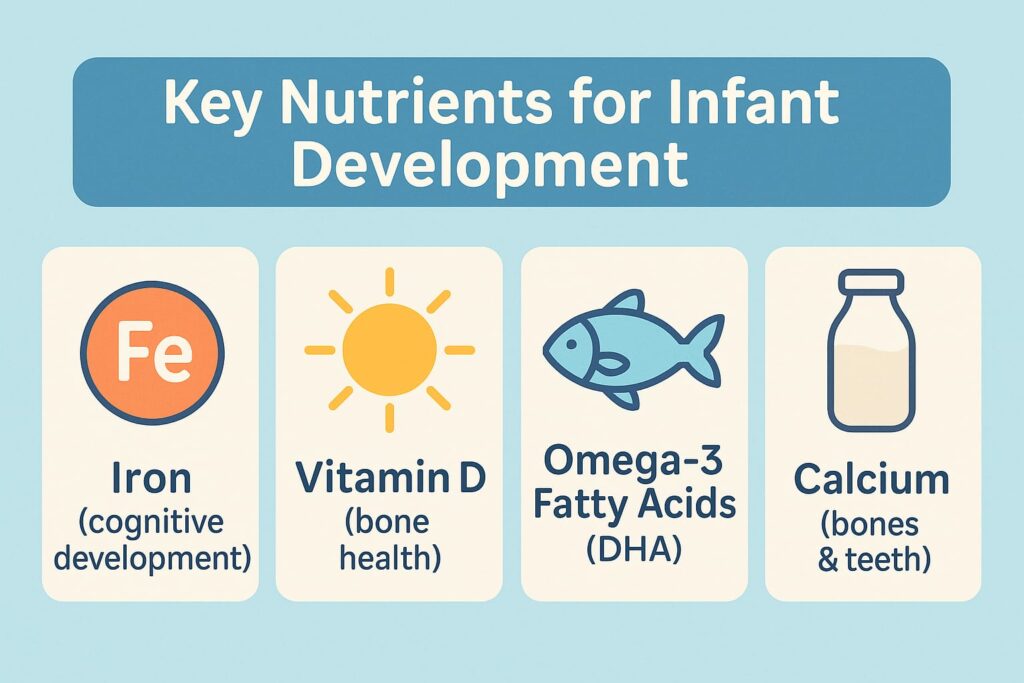
Key nutrients for infant development are essential for supporting rapid growth, brain development, and overall health. Nutrients like calcium help build strong bones, while iron supports cognitive function and red blood cell production. Healthy fats are crucial for brain development, and vitamins aid in immune function. Providing a balanced intake of these nutrients through breast milk, formula, and solid foods is vital to ensure infants develop properly.
Iron
Iron is crucial for infants’ red blood cell production and cognitive development. Adequate iron intake prevents anemia, which can hinder growth and development. As solids are introduced, prioritizing iron-rich foods is essential to support their health and overall development
Vitamin D
Vitamin D is crucial for bone health and calcium absorption. Since breast milk doesn’t provide enough Vitamin D, pediatricians often recommend supplements from birth. Formula-fed infants typically receive adequate Vitamin D as it’s included in the formula.
Omega-3 Fatty Acids (DHA)
DHA, a type of omega-3 fatty acid, supports brain and eye development. Breast milk contains DHA, and most formulas are now fortified with it. As infants transition to solid foods, including DHA-rich foods such as fish can support ongoing brain development.
Calcium
Calcium is vital for infants as it supports the growth of strong bones and teeth. Essential sources include breast milk, formula, and fortified foods, ensuring they receive the required calcium for healthy development. This mineral is crucial in building a solid foundation for lifelong bone health.
Chart of Key Nutritional Needs of Infants:
Here’s a chart outlining the Key Nutritional Needs of Infants:
| Nutrient | Why It’s Important | Sources | Recommended Age |
|---|---|---|---|
| Protein | Essential for tissue growth and repair | Breast milk, formula, pureed meats, legumes | Birth onwards |
| Fats | Crucial for brain development and energy | Breast milk, formula, avocado, oils | Birth onwards |
| Iron | Supports red blood cells and brain function | Iron-fortified cereals, pureed meats, lentils | 6 months onwards |
| Calcium | Builds strong bones and teeth | Breast milk, formula, fortified baby cereals | Birth onwards |
| Vitamin D | Aids calcium absorption and bone health | Vitamin D supplements, fortified formula | Birth onwards (supplement often needed) |
| Omega-3 Fatty Acids (DHA) | Supports brain and eye development | Breast milk, formula, fish (later stages) | Birth onwards |
| Carbohydrates | Primary energy source | Breast milk, formula, fruits, grains | Birth onwards |
| Zinc | Supports immune system and cell growth | Pureed meats, fortified cereals, legumes | 6 months onwards |
| Vitamin A | Promotes vision and immune function | Carrots, sweet potatoes, breast milk | 6 months onwards |
| Fiber | Promotes healthy digestion | Fruits, vegetables, grains (for older infants) | 6-12 months onwards |
This chart provides a simple breakdown of the key nutrients infants need, why they are important, and where they can be sourced from.
Practical Tips for Meeting the Nutritional Needs of Infants
Exclusive Breastfeeding for the First 6 Months
The World Health Organization (WHO) recommends exclusive breastfeeding for the first six months of life, as it provides all the necessary nutrients an infant needs for optimal growth. Breast milk not only supplies essential vitamins and minerals but also strengthens the immune system. However, for mothers who choose formula feeding, selecting one that closely mimics the nutrient profile of breast milk is important to ensure the infant receives proper nourishment. Additionally, during this period, it’s crucial to avoid introducing solid foods, as breast milk or formula alone is sufficient to support healthy development and build a strong nutritional foundation.
Follow Hunger Cues
Infants often let their caregivers know when they are hungry or full, making it important to follow these cues. Signs of hunger include lip-smacking, sucking on hands, or becoming fussy. On the other hand, when they turn away from the bottle or breast, it indicates they’ve had enough, helping you avoid overfeeding. Additionally, being attentive to these signals fosters a positive feeding experience, ensuring infants eat when they’re ready. Furthermore, responding to hunger cues encourages healthy eating habits, as it allows infants to develop self-regulation in their food intake, promoting balanced nutrition and overall well-being.
Introduce Solids Gradually
Start with single-ingredient foods and wait a few days between introducing new items to monitor for allergies. This allows you to identify any potential allergic reactions early on. Gradually, as your infant adjusts, move to more complex foods while ensuring a balanced intake of proteins, fats, and carbohydrates. For example, begin with simple purees of vegetables or fruits, then slowly add grains and protein sources like lentils or soft meats. Additionally, incorporating healthy fats from sources like avocado promotes brain development. By introducing solids gradually, you ensure your infant’s digestive system adapts well, supporting healthy growth and development.
Provide a Variety of Textures and Flavors
Offering different textures and flavors helps develop healthy eating habits and ensures infants receive a broad spectrum of nutrients. For instance, introduce mashed, soft, or finely chopped foods that are easy to swallow. As your baby grows, gradually offer thicker or more solid textures to encourage chewing. Additionally, providing a variety of flavors, such as sweet from fruits or mild bitterness from vegetables, broadens their palate. This approach not only fosters a love for nutritious foods but also exposes infants to new experiences. Moreover, introducing diverse foods early on can reduce picky eating habits later in childhood.
Avoid Sugary or Processed Foods
While it might be tempting to offer sweets, processed foods, and sugary drinks, these provide little nutritional value and can harm an infant’s health. Instead, prioritize whole foods that offer essential vitamins, minerals, and nutrients necessary for growth. For example, fruits, vegetables, and whole grains promote development, while protein sources like lean meat and lentils build muscle. Additionally, introducing healthy fats, such as avocado or olive oil, supports brain development. Furthermore, avoiding sugary or processed foods helps establish healthy eating habits early on. This sets a strong foundation for long-term well-being and optimal physical growth.
Common Nutritional Concerns for Infants

Common nutritional concerns for infants include ensuring they receive adequate breast milk or formula, which provides essential nutrients for growth. Iron deficiency is a worry, especially as they transition to solid foods. Allergies, particularly to cow’s milk or soy, can also arise. Vitamin D deficiency is another concern, often requiring supplementation. Introducing a balanced diet with diverse nutrients is key to preventing malnutrition.
Food Allergies
Food allergies are a significant nutritional concern for infants, and introducing common allergens like peanuts, eggs, and dairy should be done cautiously. It’s crucial to consult with a pediatrician before offering these foods, especially when there is a family history of allergies. Moreover, starting with small amounts and monitoring for reactions can help identify potential sensitivities early. If an allergic reaction occurs, immediate medical attention may be required. Although some infants may outgrow certain food allergies, taking preventive steps is essential for their safety and overall nutritional well-being during early development.
Picky Eating
Picky eating is another common nutritional concern in infants, as some may refuse certain foods. However, staying patient is key to helping them develop a balanced diet. While infants might initially reject new foods, consistent exposure can eventually lead to acceptance. Additionally, offering a variety of healthy options encourages infants to explore different tastes and textures. It’s important not to pressure them but to keep meals positive and stress-free. Over time, this approach often helps overcome picky eating habits, ensuring they receive the nutrients necessary for proper growth and development.
Vitamin D Deficiency
Vitamin D deficiency is a common concern in the nutritional needs of infants, particularly those who are exclusively breastfed or have limited sun exposure. Since breast milk contains low levels of Vitamin D, these infants may not receive adequate amounts naturally. Therefore, supplements or Vitamin D-fortified foods are essential in preventing deficiency. Moreover, ensuring infants get sufficient sunlight can also help their bodies produce this vital nutrient. Without enough Vitamin D, infants may face risks of rickets or impaired bone development, highlighting the importance of addressing this concern through proper nutrition and sun exposure.
Encouraging Healthy Eating Habits

Encouraging healthy eating habits in children involves offering a variety of nutritious foods and creating a positive mealtime environment. Parents should model balanced eating, avoiding processed or sugary snacks. It’s important to introduce healthy foods early, allowing children to explore new flavors and textures. Consistent meal routines, with limited distractions, help establish good habits. Encouragement without pressure fosters a lifelong positive relationship with food.
Create a Positive Mealtime Environment
Mealtimes should be a pleasant experience, free from distractions like TV or smartphones, allowing infants to focus on eating and fully engage with their food. By creating a calm environment, caregivers help infants develop mindful eating habits, which foster a positive relationship with food. Additionally, this focused approach supports better digestion and encourages healthy eating behaviors. Moreover, offering a variety of nutritious foods during meals reinforces these positive associations and ensures infants meet their nutritional needs. A peaceful, distraction-free setting not only enhances the eating experience but also helps establish long-term healthy habits for children as they grow.
Offer Water with Solid Foods
Once solid foods are introduced, offering small amounts of water helps infants stay hydrated and supports healthy eating habits. Additionally, water aids digestion without adding unnecessary sugars, making it an ideal choice alongside meals. Furthermore, introducing water early helps infants develop a taste for it, reducing the likelihood of preferring sugary drinks later on. Avoid offering juice or sweetened beverages, as these can lead to unhealthy preferences and interfere with meeting infants’ nutritional needs. By focusing on water, caregivers promote hydration and help establish a foundation for lifelong healthy eating and drinking habits.
Lead by Example
Infants learn by observing, which is why caregivers who model healthy eating habits are more likely to encourage infants to adopt the same practices as they grow older. For instance, when caregivers eat a variety of nutritious foods, it sends a positive message about the importance of a balanced diet. Additionally, eating meals together creates a healthy food environment where infants can see the benefits of making wholesome food choices. Moreover, leading by example helps establish long-term habits, making it easier for infants to develop a preference for nutrient-rich foods as they transition to solid meals.
The first year of life is filled with crucial milestones, and proper nutrition is key to ensuring optimal growth and development. Understanding the nutritional needs of infants and offering a variety of nutrient-rich foods early on can set the stage for a lifetime of healthy eating. Whether breastfeeding, formula-feeding, or introducing solids, providing infants with the right nutrients supports their physical, cognitive, and emotional development.
By following the practical tips outlined in this guide, caregivers can feel confident they are meeting the dietary needs of their infants and promoting overall well-being. Don’t hesitate to consult with healthcare professionals if you’re ever in doubt, as their guidance can help ensure your infant thrives.
Calcium is crucial for building strong bones and teeth in infants. It helps support healthy skeletal development, which is essential during the early stages of rapid growth.
Iron supports the production of red blood cells and is vital for cognitive development. Adequate iron intake helps prevent anemia, which can negatively affect growth and brain function.
Healthy fats are essential for brain development in infants, supporting cognitive function and overall brain growth. These fats also provide energy for physical development.
